
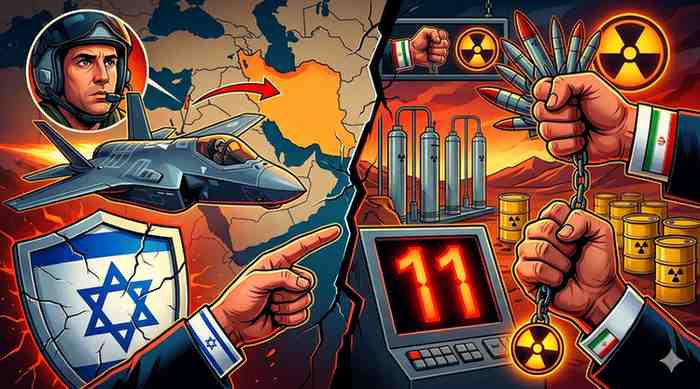
Jerusalem, May 2026 — A senior IDF official has delivered a blistering assessment of the recent conflict with Iran, warning that the military campaign will be viewed as “one big failure” if Tehran is permitted to keep its current stockpile of enriched uranium. As the smoke clears from conventional strikes, Israeli intelligence highlights a chilling
Jerusalem, May 2026 — A senior IDF official has delivered a blistering assessment of the recent conflict with Iran, warning that the military campaign will be viewed as “one big failure” if Tehran is permitted to keep its current stockpile of enriched uranium. As the smoke clears from conventional strikes, Israeli intelligence highlights a chilling reality: Iran may already possess enough material to assemble a dozen nuclear warheads.
The “Breakout” Math: 11 Bombs in Waiting
The core of Israel’s alarm centers on approximately 450 kg of uranium enriched to 60% purity. While 90% is considered weapons-grade, the jump from 60% to 90% is technically minor and can be achieved rapidly.
Israeli officials estimate this specific stockpile is sufficient for roughly 11 nuclear bombs. Beyond this, Iran holds over 1,000 kg of 20% enriched uranium and nearly 8,500 kg of low-enriched material. The sheer volume of this “nuclear dust” means that even if facilities are damaged, the raw material for a nuclear breakout remains intact and hidden.
The Global Tug-of-War Over “Nuclear Dust”
The U.S. and its allies are reportedly weighing a “global treasure hunt” to locate and remove this material. President Trump has suggested a joint operation where U.S. and Iranian teams would “excavate” and ship the uranium out of the country.
However, the international community is divided on who should hold the keys:
- Russia: Has offered to host the stockpile, leveraging its history with the 2015 nuclear deal to restore its diplomatic relevance .
- China: Prefers “down-blending” the uranium—diluting it to lower, safer levels—to ensure regional stability and protect its massive energy interests in the Gulf.
Sovereignty or Capitulation? Tehran’s Defiance
For Tehran, the enriched uranium is more than a fuel; it is a symbol of scientific achievement and resistance against “economic terrorism”. Iranian officials have labeled any demand to ship the material to the U.S. as a “non-starter”.
Domestically, the regime portrays its enrichment capability as a hard-won right under international law. Handing it over would be viewed internally as a total surrender, making a diplomatic breakthrough notoriously difficult despite the crushing weight of sanctions.
The Extraction Challenge
Even if a deal is reached, the physical logistics are a nightmare. Much of the sensitive material is believed to be stored in deep underground tunnels or damaged facilities near Isfahan. Retrieving it would require specialized radiation equipment, secure international escorts, and a level of transparency that Iran has historically refused.
Bottom Line
The conventional war may have degraded Iran’s missiles and navy, but it has left the nuclear heart of the regime untouched. As long as the 60% enriched stockpile remains on Iranian soil, Israel views the threat as active and imminent. Without a “concrete arrangement” to remove the uranium, the IDF warns that the cycle of violence is far from over.











Leave a Comment
Your email address will not be published. Required fields are marked with *