
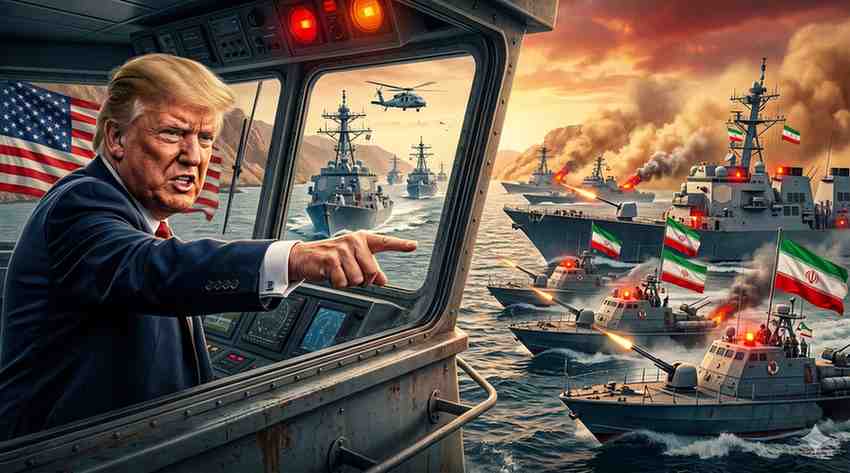
Washington/Tehran, May 2026 — Donald Trump’s latest Middle East strategy, dubbed “Project Freedom,” has sent shockwaves through global energy markets and triggered a fierce military standoff with Iran. What the White House describes as a “humanitarian mission” to rescue stranded merchant ships, Tehran has branded a “delusional” provocation that could shatter the fragile regional ceasefire
Washington/Tehran, May 2026 — Donald Trump’s latest Middle East strategy, dubbed “Project Freedom,” has sent shockwaves through global energy markets and triggered a fierce military standoff with Iran.
What the White House describes as a “humanitarian mission” to rescue stranded merchant ships, Tehran has branded a “delusional” provocation that could shatter the fragile regional ceasefire and ignite a full-scale naval war.
The “Project Freedom” Gambit
Starting May 4, the United States will launch a large-scale initiative to assist dozens of neutral vessels trapped in the Strait of Hormuz. These ships, caught in the crosshairs of ongoing regional hostilities, are reportedly running dangerously low on food, fuel, and medical supplies for their crews.
Trump’s rhetoric initially suggested a return to high-seas naval escorts, but U.S. officials have since clarified a more nuanced approach. Instead of physical “shepherding,” the U.S. Navy will establish a Maritime Coordination Cell. This hub will use over 100 aircraft and advanced surveillance drones to identify “safe corridors” clear of mines, guiding commercial tankers through the world’s most dangerous choke point.
A Massive Military Footprint
Despite the “advisory” label, the scale of the operation is anything but small:
- Personnel: Roughly 15,000 U.S. service members across the Persian Gulf and Gulf of Oman are being mobilized.
- Hardware: A fleet of land and sea-based fighters, maritime patrol planes, and unmanned surface vessels will provide 24/7 “domain awareness.”
- Rules of Engagement: Trump has warned that any attempt to interfere with these “mercy missions” will be met with forceful military retaliation.
Iran’s “Atomic Bomb” Response
Iran has wasted no time in condemning the move. Ibrahim Azizi, head of the Iranian Parliament’s foreign policy committee, stated clearly that any U.S. movement into the Strait under the guise of “freedom of navigation” would be treated as a direct violation of the ceasefire.
In a chilling metaphor, Deputy Parliament Speaker Ali Nixad likened the Strait of Hormuz to Iran’s “atomic bomb,” emphasizing the country’s power to paralyze global energy flows at will. Tehran is now drafting laws to:
- Ban Hostile Ships: Permanently bar Israeli-flagged vessels and restrict U.S. passage.
- Transit Tolls: Enact a new “maritime regime” where vessels must obtain Iranian authorization and pay fees for “safety and guidance” services.
The Bottom Line
The Strait of Hormuz carries one-fifth of the world’s oil and LNG traffic. By launching Project Freedom, Trump is betting that surveillance and “route planning” can bypass Iranian control without sparking a direct combat engagement. However, with Iran hardening its stance and declaring that the waterway will “never return to its pre-war state,” the line between a humanitarian escort and a military blockade has never been thinner.
As of May 4, the world isn’t just watching a shipping lane—it’s watching a powder keg.











Leave a Comment
Your email address will not be published. Required fields are marked with *