
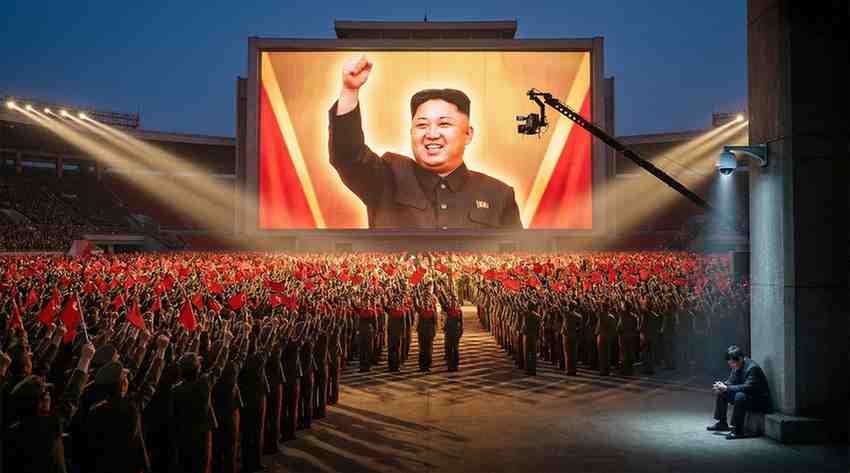
Pyongyang, March 2026 — The results of North Korea’s 15th Supreme People’s Assembly (SPA) elections are in, and while the outcome was never in doubt, a tiny decimal point has sent shockwaves across social media. Kim Jong Un’s Workers’ Party swept all 687 seats with a staggering 99.93% of the vote, but it is the
Pyongyang, March 2026 — The results of North Korea’s 15th Supreme People’s Assembly (SPA) elections are in, and while the outcome was never in doubt, a tiny decimal point has sent shockwaves across social media. Kim Jong Un’s Workers’ Party swept all 687 seats with a staggering 99.93% of the vote, but it is the remaining 0.07% that has broken the internet.
The 0.07% Mystery: Dissent or Strategy?
For the first time since 1957, North Korean state media has officially acknowledged that a fraction of voters cast ballots against the state-approved candidates. While 0.07% sounds like a rounding error, in a nation that historically demands absolute unanimity, the admission is unprecedented.
Analysts suggest this isn’t a sign of crumbling control, but a calculated propaganda tactic. By reporting a microscopic margin of opposition, the regime aims to:
- Create an Illusion of Democracy: Providing a veneer of “choice” to international observers.
- Identify Local Grievances: Acting as a controlled “release valve” for internal frustrations.
- Perform an Informal Census: With a reported 99.99% voter turnout, the election serves as a mandatory headcount to track every citizen.
The “Illusion of Choice” Mechanics
Despite the talk of dissent, the electoral process remains a far cry from “free and fair.” Each of the 687 constituencies featured only one candidate pre-selected by the Workers’ Party.
Technically, voters can reject a candidate, but the process is designed to deter it. To vote “no,” an individual must use a separate ballot box in a non-secret environment, an act viewed by experts as virtually treasonous. This public display of defiance explains why the dissenting percentage remains so infinitesimally small.
Dark Humor and the “Missing” Voters
The internet has reacted to the news with a wave of dark humor and concern. Viral posts have flooded platforms with “moments of silence” for the 0.07%, with many joking—or perhaps fearfully speculating—that the North Korean population might see a “0.07% decrease” by the summer. The acknowledgment of opposition in a closed system has turned a rigid political event into a global digital punchline.
A Pivot Toward Regional Instability
The newly elected assembly, which includes high-ranking figures like Kim Yo Jang (the leader’s sister) and Foreign Minister Choe Son Hui, is set to convene on March 22nd.
Beyond the formalities of reappointing Kim Jong Un as head of the State Affairs Commission, the SPA is expected to trigger a major geopolitical shift. Reports indicate the assembly may revise the Constitution to formally declare South Korea a “hostile state.” This would codify Kim’s recent rhetoric and signal a permanent departure from the goal of peaceful reunification, heightening tensions across the peninsula.
Bottom Line The 15th SPA election wasn’t about choosing leaders; it was about reinforcing the state’s grip. The 0.07% dissent is likely a carefully curated statistic—a mask of transparency worn by a regime that remains one of the most controlled environments on Earth.









Leave a Comment
Your email address will not be published. Required fields are marked with *