
New Delhi, February 2026 —At the prestigious AI Impact Summit, Infosys co-founder and industry veteran Kris Gopalakrishnan delivered a clear-eyed assessment of India’s future in the global artificial intelligence race. His message was simple: India doesn’t need to mimic Silicon Valley’s brute-force approach. Instead, by dominating low-power computing and localized applications, the country can secure
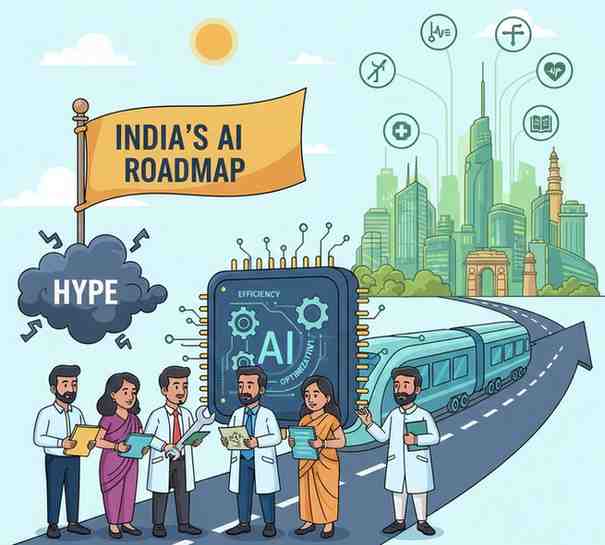
New Delhi, February 2026 —At the prestigious AI Impact Summit, Infosys co-founder and industry veteran Kris Gopalakrishnan delivered a clear-eyed assessment of India’s future in the global artificial intelligence race. His message was simple: India doesn’t need to mimic Silicon Valley’s brute-force approach. Instead, by dominating low-power computing and localized applications, the country can secure a spot in the world’s top three AI powers.
The Application Engine: A Bid for Number One
Gopalakrishnan argues that the true impact of AI isn’t found in research papers, but in deployment. India currently boasts the world’s second or third-largest pool of IT professionals, providing a massive workforce ready to integrate AI into real-world scenarios.
Because of this unparalleled developer base, India is already deploying AI at a scale few other nations can match. In the realm of practical, sector-specific applications—from agriculture to healthcare—Gopalakrishnan predicts India could potentially become the world’s number one player.
Multilingual Mastery: Breaking the English Barrier
While the first wave of Large Language Models (LLMs) was predominantly English-centric, India is pivoting toward a different goal: multimodal and multilingual sovereignty.
By developing models that cater specifically to India’s diverse linguistic landscape, the domestic tech industry is creating a “sovereign AI” ecosystem. This focus on local context ensures that AI benefits the masses, not just the English-speaking elite, positioning India to be a top-three global contender in model development.
The Low-Power Revolution
The most significant shift in strategy involves a move away from energy-hungry processors. Gopalakrishnan emphasized that the future of the industry belongs to low-power computing.
By investing heavily in research for energy-efficient chips, India aims to create the next generation of processors. This isn’t just about saving electricity; it’s about making AI hardware affordable and sustainable, allowing India to leapfrog nations still tethered to legacy, high-consumption hardware.
A Platform for the Next Generation
The AI Impact Summit itself highlighted India’s growing influence, drawing participation from over 50 government ministers. For “Gen Z” entrepreneurs and startups, this signifies a shift in the global center of gravity. The summit provided a roadmap for young businesses to stop being mere consumers of foreign tech and start becoming the architects of a new, efficient computing world.
Bottom Line
The era of “AI at any cost” is being challenged by India’s “AI for impact” philosophy. By focusing on low-power hardware and localized software, India is betting that efficiency, not just size, will determine the winners of the next decade. As Gopalakrishnan noted, the goal is no longer just to participate in the AI world, but to define its direction.












Leave a Comment
Your email address will not be published. Required fields are marked with *