
Sana’a, July 2026 — A fragile, years-long peace in the Middle East has shattered overnight. A ballistic missile and armed drone strike by Iran-backed Houthi rebels on Saudi Arabia’s Abha International Airport has abruptly ended the quiet maintained since a 2022 UN-brokered truce. What was once a localized civil war now threatens to drag the
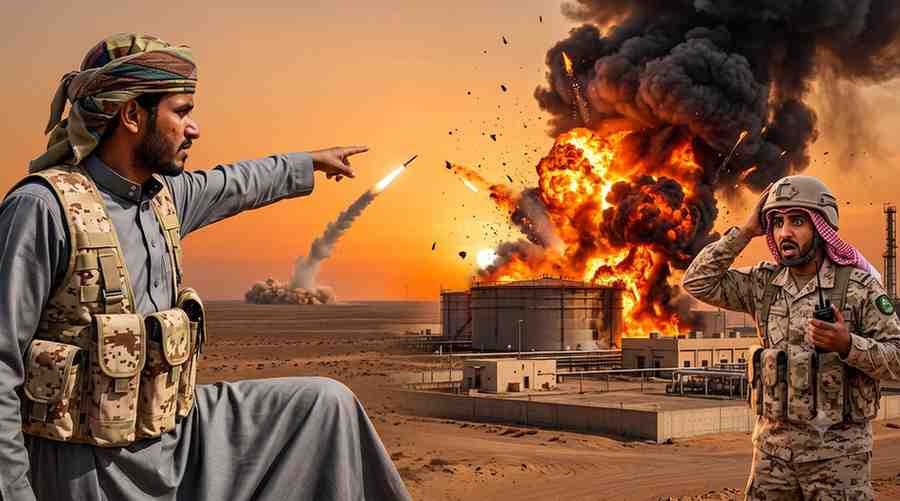
Sana’a, July 2026 — A fragile, years-long peace in the Middle East has shattered overnight. A ballistic missile and armed drone strike by Iran-backed Houthi rebels on Saudi Arabia’s Abha International Airport has abruptly ended the quiet maintained since a 2022 UN-brokered truce. What was once a localized civil war now threatens to drag the region back into a volatile, high-stakes proxy conflict.
The Trigger: A Blocked Flight at Sana’a Runway
The sudden spiral began with a high-stakes standoff in the skies. Yemen’s internationally recognized government reported that an Iranian aircraft was flying toward the Houthi-controlled capital of Sana’a. On board were senior Houthi leaders returning from Iran, where they had attended the funeral of Supreme Leader Ayatollah Ali Khamenei.
Calling the flight a direct violation of their sovereignty, the Yemeni government took drastic preemptive action—bombing the runway of Sana’a International Airport to block the plane from landing. The aircraft was forced to divert and make a landing in the Houthi-controlled port city of Al Hudaydah.
The Houthi Retaliation: Blaming Riyadh
Though the official Yemeni government claimed responsibility for the runway bombing, the Houthis pointed their finger directly at Saudi Arabia. Acting on the belief that the Yemeni government cannot take major military actions without Riyadh’s approval, the rebels quickly launched retaliatory strikes.
Using ballistic missiles and explosive drones, they targeted Saudi Arabia’s Abha International Airport. While Saudi air defenses intercepted the incoming threats, the bold cross-border attack marks the end of a four-year period of relative calm where both sides had avoided direct military confrontation.
Axis of Resistance and the Shifting Power Play
The conflict in Yemen has long been fueled by deep-seated religious and geopolitical divides.
- The Houthi Shift: The Houthis, belonging to the Zaidi Shia sect, seized Sana’a in 2014, forcing the Sunni-led government to flee.
- The Saudi-Iran Proxy War: Saudi Arabia intervened to prevent a Shia-led government backed by Iran from securing a long, hostile border.
- The Iranian Link: While Tehran officially denies supplying the rebels, Western intelligence asserts that Iran provides the Houthis with the advanced missile technology, drones, and training that make them a key arm of its “Axis of Resistance.”
Global Choke Points and $100 Oil
The fallout of this escalation extends far beyond the borders of Yemen and Saudi Arabia, threatening to choke the global economy. Security experts warn that a wider war puts the Bab-el-Mandeb Strait—a vital maritime corridor connecting Asia to Europe—directly in the crosshairs of Houthi disruption.
Coupled with ongoing tensions near the Strait of Hormuz, the threat to global shipping has already sent shockwaves through energy markets. Oil prices immediately jumped past $85 per barrel following the news, with analysts warning that a sustained conflict could easily push oil back toward the $100 mark.
Bottom Line
The strike on Abha International Airport has laid bare the fragile reality of peace in the Middle East. With symbolic infrastructure targeted and key maritime trade routes exposed, the regional conflict has shifted from a cold standoff back to an active, dangerous war.












Leave a Comment
Your email address will not be published. Required fields are marked with *