





BOCA CHICA, TX — On a dusty coastline in South Texas, the trajectory of human spaceflight shifted permanently. SpaceX’s fifth integrated flight test (IFT-5) of the Starship system didn’t just reach space; it brought the hardware back in a way that many experts deemed impossible only a few years ago. The “Chopstick” Catch: Science Fiction
BOCA CHICA, TX — On a dusty coastline in South Texas, the trajectory of human spaceflight shifted permanently. SpaceX’s fifth integrated flight test (IFT-5) of the Starship system didn’t just reach space; it brought the hardware back in a way that many experts deemed impossible only a few years ago.
The “Chopstick” Catch: Science Fiction Becomes Reality
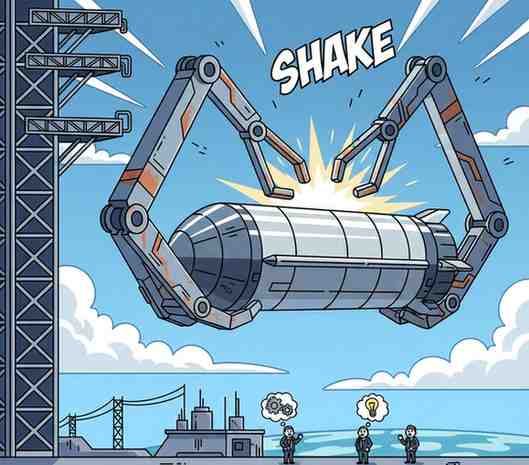
The undisputed climax of the mission occurred roughly seven minutes after liftoff. The 232-foot-tall Super Heavy booster, having finished its job of hauling the Starship spacecraft toward orbit, performed a precision “boostback burn” to return to the launch site.
As the booster descended, it ignited its Raptor engines to slow to a hover next to the “Mechazilla” launch tower. In a display of terrifying precision, the tower’s massive mechanical “chopstick” arms swung shut, snaring the stainless-steel giant while it was still suspended in mid-air.
Engineering Over Ego: Removing the Legs
The decision to “catch” a rocket rather than land it on legs is a calculated gamble. By removing landing gear from the booster, SpaceX stripped away tons of dead weight, allowing for more fuel and heavier payloads.
More importantly, this success proves the “rapid reusability” concept. By returning the booster directly to the launch mount, SpaceX aims to slash the turnaround time between flights from months to hours—a necessity for the high-frequency launches required to build a city on Mars.
A Trial by Fire in the Indian Ocean
While the booster stole the headlines, the Starship spacecraft (Ship 30) faced its own odyssey. Reentering the atmosphere at hypersonic speeds, the vehicle was encased in a 3,000-degree plasma field.
SpaceX engineers had completely overhauled the thermal protection system for this flight, replacing 12,000 tiles and adding a secondary backup layer. Despite visible “burn-through” on one of the forward flaps—which glowed white-hot and began to melt on camera—the ship held together. It executed a perfect flip maneuver and a soft splashdown in the Indian Ocean, hitting its target with centimeter-level accuracy.
The Domino Effect: NASA and Beyond
The success of IFT-5 is a massive win for NASA’s Artemis program. Starship is the designated lander for the Artemis III mission, which seeks to put boots back on the Moon.
Yesterday’s flight proved that the most powerful rocket ever built is not just a “big engine,” but a highly controllable, reusable robot. For the space industry, the message is clear: the cost of reaching the stars is about to plummet, and the era of expendable rocketry is officially nearing its end.


















Leave a Comment
Your email address will not be published. Required fields are marked with *