
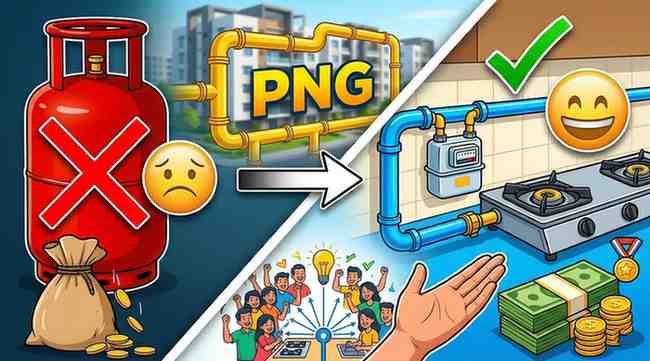
NEW DELHI, March 2026 — The Indian government has launched a nationwide campaign urging domestic and commercial Liquid Petroleum Gas (LPG) users to transition to Piped Natural Gas (PNG). What officials describe as a “cleaner and safer future” is being supported by a wave of corporate incentives aimed at dismantling the traditional cylinder-based economy. Breaking
NEW DELHI, March 2026 — The Indian government has launched a nationwide campaign urging domestic and commercial Liquid Petroleum Gas (LPG) users to transition to Piped Natural Gas (PNG). What officials describe as a “cleaner and safer future” is being supported by a wave of corporate incentives aimed at dismantling the traditional cylinder-based economy.
Breaking the Cylinder Cycle
For decades, the red LPG cylinder has been a staple of Indian kitchens, but the Ministry of Petroleum and Natural Gas is now framing it as an outdated model. Sujata Sharma, Joint Secretary at the Ministry, emphasized that the shift to PNG is not merely a preference but a strategic move toward energy efficiency.
PNG offers several advantages over traditional cylinders:
- Safety: Eliminates the risk of high-pressure storage and cylinder handling.
- Convenience: Provides an uninterrupted 24/7 supply without the need for booking or refills.
- Space-saving: Removes the need for bulky storage within small urban kitchens.
Corporate Incentives: Paying to Switch
To ensure the transition isn’t just a government mandate, major City Gas Distribution (CGD) companies have rolled out lucrative incentives to lure customers.
- Indraprastha Gas Limited (IGL): Offering ₹500 worth of free gas to domestic consumers who start using PNG by March 31st.
- Mahanagar Gas: Introducing a waiver on security deposits, removing the high entry cost that previously deterred lower-income households.
- GAIL and BPCL: Deploying additional resources to accelerate infrastructure installation in existing PNG networks.
The Digital Overhaul: 90% Online Adoption
The push for PNG coincides with a massive digital transformation in how Indians manage their energy. According to ministry data:
- Online Bookings: 90% of all gas-related transactions are now handled via digital portals.
- Security Authentication: The success rate of the Delivery Authentication Code (DAC) has surged from 53% to 72%, significantly reducing theft and unauthorized diversions.
Cracking Down on the “Cylinder Mafia”
As the government pushes users toward pipelines, it is simultaneously tightening the noose around illegal LPG practices. State governments have been ordered to establish control rooms to monitor hoarding and black marketing.
- Massive Inspections: Over 1,100 surprise inspections have been conducted at retail outlets and distributor points.
- State-Level Crackdowns: Massive raids have been reported in Uttar Pradesh, Haryana, Madhya Pradesh, and Assam to prevent artificial shortages during the transition phase.
The “Dual Connection” Trap
A critical focus of the new policy is consumers who hold both PNG and LPG connections. The government has issued a clear request: Surrender the LPG connection if you have PNG. Officials argue that holding both creates an artificial strain on the supply chain and prevents the expansion of subsidies to truly needy households.
Bottom Line
The era of waiting for a delivery truck is ending. By incentivizing the switch to PNG and digitizing the entire energy ecosystem, the government is looking to replace a “heavy and hazardous” legacy with a streamlined, invisible utility. For the consumer, the message is simple: the pipeline is cheaper, safer, and ready to install.












Leave a Comment
Your email address will not be published. Required fields are marked with *