




New Delhi, April 2026 — As the Strait of Hormuz remains effectively “locked” following high-stakes U.S. and Israeli strikes on Iranian leadership, global observers are drawing sharp parallels between today’s energy crisis and the 1956 Suez Canal emergency. The comparison highlights a profound evolution in India’s foreign policy: a transition from the “Moral Authority” of
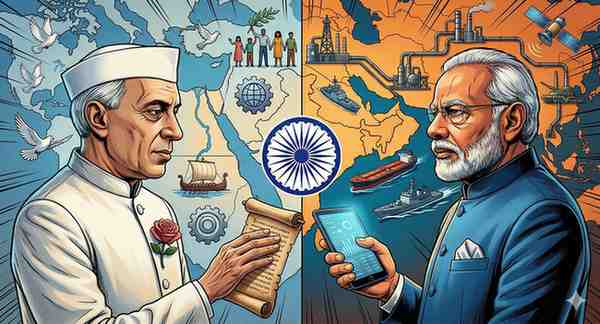
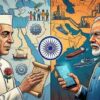
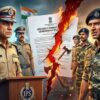
New Delhi, April 2026 — As the Strait of Hormuz remains effectively “locked” following high-stakes U.S. and Israeli strikes on Iranian leadership, global observers are drawing sharp parallels between today’s energy crisis and the 1956 Suez Canal emergency. The comparison highlights a profound evolution in India’s foreign policy: a transition from the “Moral Authority” of Pandit Jawaharlal Nehru to the “Pragmatic Realism” of Prime Minister Narendra Modi.
While the 1950s saw India roar with ethical clarity against imperialism, the India of 2026 has adopted a calculated, strategic silence that prioritizes national interest over global commentary.
1956: The Era of the “Moral Hammer”
In 1956, when Britain, France, and Israel launched a tripartite attack on Egypt following the nationalization of the Suez Canal, Nehru did not hesitate to condemn the act as “naked colonialism”. India’s stance was not backed by military might but by a unique moral weight that forced Cold War rivals—the U.S. and the Soviet Union—onto the same side against the European powers.
Nehru positioned India as the “conscience of the world,” proving that a nation could alter global geography through sheer diplomatic credibility without a UN veto.
2026: The Power of Strategic Silence
Fast forward to the February 2026 Hormuz crisis. When Iran choked the world’s most vital oil artery in retaliation for the elimination of its top leadership, New Delhi did not issue a grand moral decree. Instead, the Modi government opted for “Organized Silence”.
Key shifts in this pragmatic approach include:
- Selective Condemnation: India avoided condemning the U.S.-Israeli strikes, recognizing them as essential defense and technology partners.
- Energy Management: Rather than relying on ideals, India diversified instantly, doubling crude imports from Russia via the Arctic route and the Vladivostok-Chennai corridor.
- Tier-2 Diplomacy: While other nations sought headlines as mediators, Modi engaged in direct “energy diplomacy” with Iranian President Pezeshkian. The result? Indian tankers received a “silent green signal” through the blocked strait while the rest of the world remained locked out.
The Ideological Clash: Voice vs. Weight
Critics argue that India’s current silence makes it “irrelevant” in global peace efforts. However, the administration’s stance reflects the logic that India’s primary duty is to protect its own citizens from the fallout of distant wars.
Nehru’s idealism, while granting India a global voice, famously left the country militarily underprepared in 1962. Conversely, Modi’s pragmatism focuses on “India First”—ensuring months of emergency oil reserves and rupee-based trade mechanisms to shield the domestic economy from energy inflation.
Bottom Line
In 1956, India gave the world a voice; in 2026, India is asserting its weight. While Nehru’s universal morality remains the root of Indian identity, Modi’s realism has become its shield. The Hormuz crisis of 2026 proves that New Delhi is no longer interested in being the world’s umpire if the price is its own economic stability.









Leave a Comment
Your email address will not be published. Required fields are marked with *