
Strait of Hormuz, April 2026 — The United States has officially initiated a naval blockade of the Strait of Hormuz, a dramatic escalation in the West Asia conflict following the collapse of peace talks in Islamabad. While the move aims to paralyze Iran’s maritime trade, shipping data from the first 24 hours reveals a complex
Strait of Hormuz, April 2026 — The United States has officially initiated a naval blockade of the Strait of Hormuz, a dramatic escalation in the West Asia conflict following the collapse of peace talks in Islamabad. While the move aims to paralyze Iran’s maritime trade, shipping data from the first 24 hours reveals a complex reality: the waterway is severely choked, yet defiant symbols of international trade are already slipping through the net.
The blockade, announced by President Donald Trump on Sunday, has turned one of the world’s most vital energy arteries into a high-stakes zone of geopolitical friction.
A Ghost Town at Sea
The sheer scale of the disruption is evident in the numbers. Before the conflict began on February 28, the Strait of Hormuz averaged over 130 vessel crossings per day. On day one of the formal U.S. blockade, that number plummeted to just eight successful crossings.
U.S. Central Command reported that six vessels complied with instructions from American forces, turning back toward Iranian ports. However, the remaining eight ships that crossed suggest that the “seal” on the Strait is far from airtight.
The Chinese Defiance
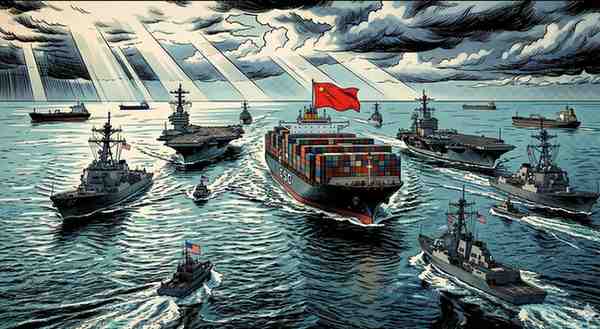
The most significant moment of the blockade’s first day was the passage of the Rich Stari, a Chinese-owned tanker manned by a Chinese crew. Carrying approximately 250,000 barrels of methanol, it is expected to be the first vessel to exit the Gulf entirely since the blockade began.
The symbolism of a Chinese ship ignoring the American directive was immediate. Beijing’s foreign ministry wasted no time, branding the blockade “dangerous and irresponsible” and warning that it would only serve to heighten regional instability.
Navigating the Legal Grey Zones
The enforcement of the blockade is already facing technical and legal hurdles. Of the eight vessels that crossed, three were Iran-linked tankers. However, because they were bound for non-Iranian ports—such as those in the UAE—they were technically exempt from the current U.S. mandate, which specifically targets vessels “calling at Iranian ports.”
Other notable crossings included:
- The Peace Golf: A Panama-flagged tanker bound for the UAE, carrying petrochemical feedstocks.
- The Meriken: A U.S.-sanctioned tanker heading to Iraq to load fuel oil, despite its history of transporting Iranian and Russian crude.
A Contested Waterway
Critics and maritime experts have raised serious concerns regarding the legality of the move. As an international waterway, the Strait of Hormuz is protected under international maritime law, which guarantees the right of “transit passage.”
By imposing a blockade, the U.S. is testing the limits of international law and the patience of global powers like China. The intermittent nature of the enforcement on day one suggests significant gaps that may allow “shadow fleet” vessels to continue operating through third-party transfers.
Bottom Line
The era of unrestricted trade through the Strait of Hormuz has ended, replaced by a “choke-hold” that has reduced traffic by over 90%. However, with Chinese tankers and technically exempt vessels still navigating the waters, the blockade is currently a leaky sieve rather than a solid wall. The coming days will determine if Washington will tighten its grip—and how far Beijing is willing to go to break it.











Leave a Comment
Your email address will not be published. Required fields are marked with *