





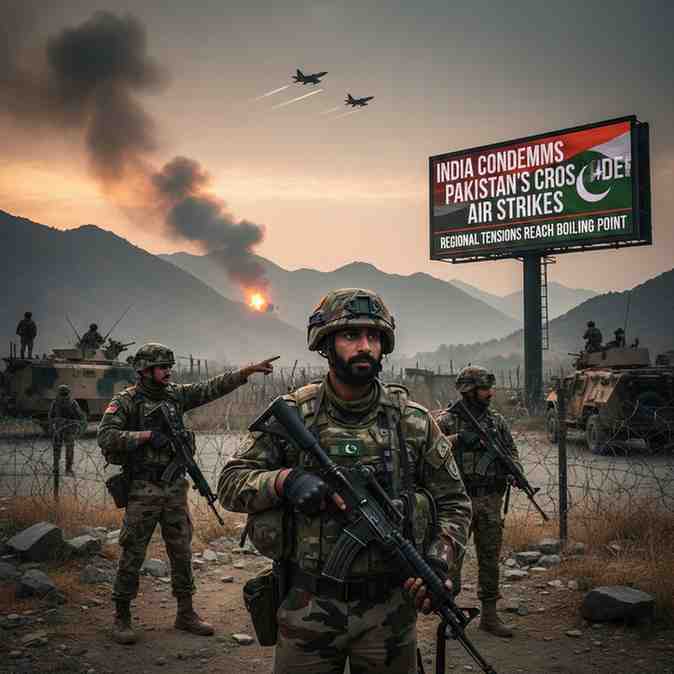
New Delhi, February 23, 2026 — India has issued a sharp diplomatic rebuke following Pakistan’s Sunday air strikes on Afghan soil, characterizing the military action as a desperate move to “externalize internal failures.” The escalation, which has left at least 18 civilians dead, marks a dangerous new chapter in the volatile relationship between Islamabad and
New Delhi, February 23, 2026 — India has issued a sharp diplomatic rebuke following Pakistan’s Sunday air strikes on Afghan soil, characterizing the military action as a desperate move to “externalize internal failures.” The escalation, which has left at least 18 civilians dead, marks a dangerous new chapter in the volatile relationship between Islamabad and the Taliban-led government in Kabul.
Retaliation or Aggression? The Sunday Strikes
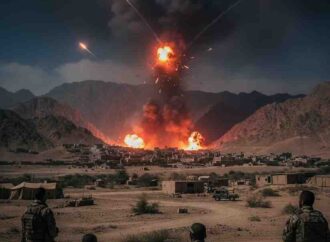
On February 22, the Pakistan Air Force launched targeted strikes in eastern Afghanistan, specifically hitting sites in the Nangarhar and Paktika provinces. Pakistan’s Ministry of Information defended the move as a retributive response to a wave of suicide bombings inside its borders—most notably a February 6 attack on an Islamabad mosque that claimed 31 lives.
Islamabad claims it successfully neutralized 80 militants from the Tehreek-e-Taliban Pakistan (TTP) and ISKP. However, Afghan authorities present a grimmer picture, reporting that the strikes leveled civilian homes and a religious seminary, killing women and children.
India’s Reaction: A Call for Sovereignty
External Affairs Ministry spokesperson Randhir Jaiswal stated on Monday that India “strongly condemns” the strikes, especially as they occurred during the holy month of Ramadan.
The Indian response was two-pronged:
- Humanitarian Concern: Expressing deep alarm over civilian casualties.
- Geopolitical Critique: Reiterating that Pakistan cannot solve its domestic security crises by violating the territorial integrity of its neighbors. New Delhi reaffirmed its steadfast support for a sovereign and stable Afghanistan, free from external military interference.
The Wider Fallout: Global and Local Ties
The strikes have cast a shadow over several major diplomatic developments in New Delhi this week:
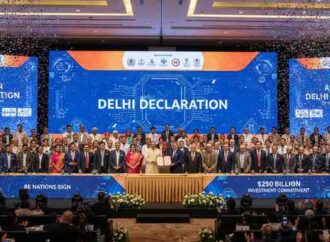
- The Delhi Declaration: Just days prior, 89 nations endorsed a “human-centric” AI framework in Delhi, emphasizing global peace and social good—a sentiment now jarred by the regional violence.
- Trade Uncertainty: Prime Minister Modi and Brazilian President Lula da Silva, meeting at Hyderabad House, adopted a “wait and watch” approach to new 15% U.S. import tariffs, even as they signed a major critical minerals pact to bypass traditional supply chains.
The “Durand Line” Dilemma
Tensions between Pakistan and the Taliban have reached a historic low. Despite Islamabad’s initial celebration of the Taliban’s 2021 return, the current administration in Kabul refuses to recognize the Durand Line as a formal border and has warned of a “measured and appropriate response” to the recent violation of its airspace.
Bottom Line
What was once a tactical alliance between Islamabad and the Taliban has devolved into a cycle of “self-defense” claims and “sovereignty” violations. India’s vocal condemnation signals a shift in the region: New Delhi is no longer just a bystander but a vocal defender of Afghan sovereignty against Pakistani military adventurism.
















Leave a Comment
Your email address will not be published. Required fields are marked with *