






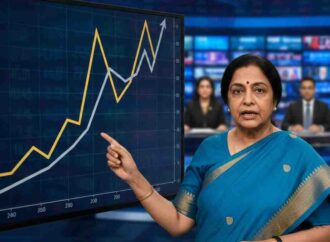
New Delhi, February 2026 —The Indian gold and silver markets are witnessing an “unbelievable spike,” with prices surging far beyond traditional seasonal fluctuations. Speaking at a recent briefing, Union Finance Minister Nirmala Sitharaman clarified that while India remains a massive consumer, the current rally is being driven by a significant shift in global institutional behavior.
New Delhi, February 2026 —The Indian gold and silver markets are witnessing an “unbelievable spike,” with prices surging far beyond traditional seasonal fluctuations. Speaking at a recent briefing, Union Finance Minister Nirmala Sitharaman clarified that while India remains a massive consumer, the current rally is being driven by a significant shift in global institutional behavior.
As precious metals hit record highs, the government and the Reserve Bank of India (RBI) are closely monitoring the impact on the nation’s trade deficit and domestic inflation.
The “Central Bank Effect” on Prices
Historically, gold price movements were largely dictated by consumer demand in major markets like India and China. However, the Finance Minister noted a fundamental change in the global landscape: International central banks are now aggressively buying and storing gold and silver. “The spike is largely due to central banks also buying and storing,” Sitharaman explained. This institutional hoarding has pushed international prices to levels that impact Indian households, which are entirely dependent on imports for every ounce of gold consumed domestically.
Import Trends: Volume vs. Value
The government provided a detailed breakdown of how these price hikes have affected India’s import bill over the last year:
- The December Threshold: From April to December, the total value of gold imports remained relatively stable at around $50 billion. During this period, the rise in global prices was largely offset by a decrease in the volume of gold being imported.
- The January Spurt: This balance shifted in January, which saw a sudden “spurt” in both the volume and the total value of imports. Economic analysts are currently reviewing these figures to determine if this represents a long-term shift in demand.
Macroeconomic Resilience
Despite the high cost of imports, the government maintained a confident outlook on India’s “robust and strong” external sector. The Current Account Deficit (CAD) remains manageable, currently projected to stay within the 1% of GDP range.
This stability is attributed to several factors:
- FDI Inflows: Massive investment commitments from tech giants like Amazon and Google, totaling over $62 billion, along with new commitments in data centers.
- Foreign Reserves: India’s foreign exchange reserves remain sufficient to absorb fluctuations in the precious metals market without triggering an economic crisis.
- New Trade Agreements: Recently signed international trade pacts are expected to further strengthen the current account moving forward.
Bottom Line
While domestic demand remains a factor, the era of gold prices being driven solely by the “Indian wedding season” is over. With global central banks treating precious metals as a primary safety net, Indian consumers are now competing with the world’s largest financial institutions. For now, the government remains watchful but confident, noting that India’s broader economic foundations are strong enough to weather the “unbelievable spike” in prices.




















Leave a Comment
Your email address will not be published. Required fields are marked with *