




Key Highlights Ask anyone who commutes in the Indo-Gangetic Plain and you’ll hear the same line: fog now feels like it arrives earlier, stays longer, and leaves later. North India’s winter of 2026 (Dec 2025–Feb 2026) is expected to retain the classic ingredients for extended fog episodes—high near-surface moisture, low wind speed, and stable atmospheric
Key Highlights
- Fog duration is heavily driven by night-time humidity, calm winds, and shallow mixing—conditions IMD routinely flags in winter bulletins and extended-range forecasts.
- Western disturbances can both help and worsen: they may increase winds (clearing air) or raise humidity and cloudiness (supporting persistent fog).
- Urban heat, aerosols, and local emissions provide condensation nuclei, enabling denser fog and haze—especially in the Indo-Gangetic Plain.
- Longer fog spells don’t automatically mean “colder winter”; they often mean “stagnant winter.”
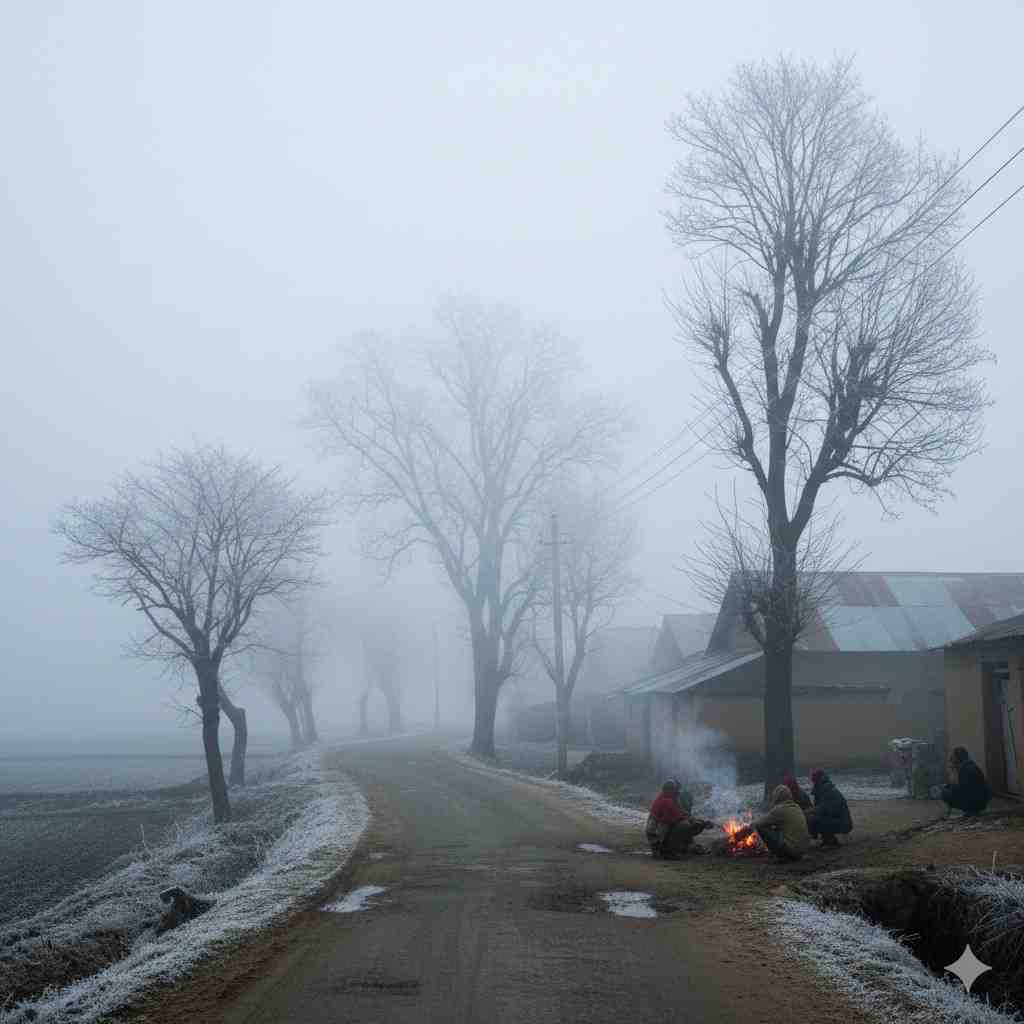
Ask anyone who commutes in the Indo-Gangetic Plain and you’ll hear the same line: fog now feels like it arrives earlier, stays longer, and leaves later. North India’s winter of 2026 (Dec 2025–Feb 2026) is expected to retain the classic ingredients for extended fog episodes—high near-surface moisture, low wind speed, and stable atmospheric layers that keep the boundary layer shallow.
Fog forms when the air near the ground cools to its dew point. In North India, long winter nights, clear skies, and dry continental air can cool surfaces quickly. But for fog to persist, the atmosphere must remain calm enough that the moisture and pollutants are not mixed upward. IMD’s winter-season outlook and extended-range forecasts repeatedly talk about dense fog conditions during night and morning hours in parts of northwest and adjoining regions—an operational clue that the meteorological setup is alive.
Why does it feel longer now? One reason is “stagnation windows” have become more common in perception and experience. Even short runs of low winds can trap moisture from irrigation canals, rivers, and urban water bodies. Add local emissions—traffic exhaust, biomass burning, and industrial plumes—and you create abundant particles that fog droplets can form around. These aerosols don’t just degrade air quality; they can also support thicker, more persistent fog and haze.
Western disturbances complicate the story. These systems often bring cloudiness, drizzle, or light rain/snow to the Western Himalayan Region. Sometimes they increase wind speed and ventilation across the plains, helping disperse both moisture and pollutants. At other times, they increase humidity, add cloud cover that reduces daytime warming, and keep the lower atmosphere moist—conditions that can sustain fog even if minimum temperatures are not unusually low. IMD’s extended-range products often mention the influence of western disturbances on rainfall/snowfall over the Himalayas, and that influence can ripple into the plains’ visibility.
Urban form matters too. Heat retained by concrete can delay evening cooling in dense cores, but once cooling begins, street-level canyons can trap cold air and moisture. This creates local pockets where fog hugs the ground and clears slowly, even as nearby open areas improve.
The takeaway for winter 2026 is blunt: longer fog episodes are less about “some new kind of cold” and more about repeated stagnant-air conditions. If winds stay weak and humidity stays high at night, fog will feel like it has extended working hours. That’s why highways, airports, and rail networks increasingly treat fog as an operational risk, not merely a seasonal vibe.
Official reference points for readers: IMD extended-range forecasts; IMD winter seasonal outlook (Dec 2025–Feb 2026); CPCB air-quality bulletins and winter action materials.



















Leave a Comment
Your email address will not be published. Required fields are marked with *