

Beijing, May 2026 — The highly anticipated bilateral summit between U.S. President Donald Trump and Chinese President Xi Jinping has concluded, delivering a stark message to the world: the era of America easily dictating trade terms to Beijing is definitively over. What President Trump aggressively marketed as a “very successful” diplomatic visit actually masks an
Beijing, May 2026 — The highly anticipated bilateral summit between U.S. President Donald Trump and Chinese President Xi Jinping has concluded, delivering a stark message to the world: the era of America easily dictating trade terms to Beijing is definitively over.
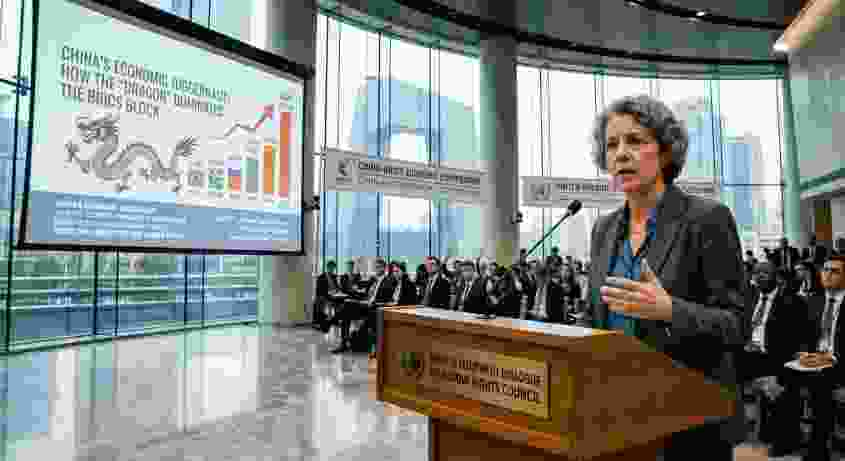
What President Trump aggressively marketed as a “very successful” diplomatic visit actually masks an economic reality check, highlighting China’s decade-long pivot toward strategic independence.
The 750-Plane Illusion The centerpiece of the summit’s hype was a supposed mega-deal for China to purchase 750 Boeing aircraft. In reality, the confirmation stopped at just 200 planes. The illusion of a massive economic victory quickly shattered on Wall Street. Instead of surging, Boeing’s stock prices actually fell following the announcement. Investors had anticipated a firm commitment for at least 500 aircraft, exposing the vast gap between political rhetoric and on-the-ground reality. Furthermore, the deal remains highly unconstructed, lacking specific models or delivery timelines.
A Decade of Decoupling Prior to 2015, China was heavily dependent on American technology, consumers, and Western investments. Today, the dynamic has flipped. Sanctions and trade wars initiated during Trump’s first term served as a wake-up call for Beijing. Instead of folding, China accelerated its drive for self-sufficiency in artificial intelligence, semiconductors, electric vehicle batteries, and telecommunications. The undeniable U.S. leverage that once existed has largely evaporated.
The Fall of Boeing and the Rise of COMAC Boeing’s struggles in China aren’t just political; they are reputational. Following the disastrous fatal crashes, China was the first major aviation authority to ground the 737 MAX, fundamentally damaging Boeing’s brand and signaling China’s independent regulatory power. While European rival Airbus capitalized on this vulnerability by localizing production and deepening political ties, Beijing’s true endgame is homegrown. China’s state-owned aerospace manufacturer is aggressively pushing the COMAC C919 to directly challenge the Boeing 737 MAX and Airbus A320 Neo. Just as Huawei challenged Apple and BYD challenged Tesla, COMAC is being positioned to dethrone Western aerospace dominance.
A Mutual, Yet Reluctant, Dependency Despite its ambitions, China still relies on Western technology for critical components like advanced jet engines. Furthermore, with a booming middle class and massive airport expansions, China will need an estimated 9,000 new aircraft over the next two decades—a demand COMAC cannot currently meet alone. Simultaneously, the U.S. desperately needs this market. Boeing is a strategic industrial asset that supports hundreds of thousands of American jobs.
Bottom Line The 2026 summit was less about striking historic deals and more about managing escalating tensions. As the dust settles, the reality is clear: Washington can no longer negotiate from a position of absolute dominance, and Beijing is playing the long game for complete technological sovereignty.










Leave a Comment
Your email address will not be published. Required fields are marked with *