

New Delhi, May 2026 — The ongoing Delhi Excise Policy case has taken a drastic turn, moving from corruption allegations to a direct and dangerous confrontation with the Indian judiciary. What began as a legal defense strategy has now escalated into what experts call “bench hunting,” prompting imminent criminal contempt proceedings against Arvind Kejriwal and
New Delhi, May 2026 — The ongoing Delhi Excise Policy case has taken a drastic turn, moving from corruption allegations to a direct and dangerous confrontation with the Indian judiciary.
What began as a legal defense strategy has now escalated into what experts call “bench hunting,” prompting imminent criminal contempt proceedings against Arvind Kejriwal and his political faction.
Selling a Narrative as “Victimhood” For years, Arvind Kejriwal’s political playbook thrived on the “system against me” model. First, it was rival politicians, then the central government, followed by investigative agencies like the CBI and ED.
The structure was consistent: portray the state apparatus as biased to maintain a victim narrative. The truth: this strategy has now reached the doors of the judiciary, crossing the line from political defense to institutional intimidation.
Social Media and Intimidation: The New Battleground From coordinated social media campaigns to edited videos, political operatives launched attacks targeting Delhi High Court’s Justice Swarana Kanta Sharma after she stayed a favorable lower court order.
But behind the scenes, legal boundaries were heavily breached:
- Organized Smear Campaigns: Personal attacks and political narratives were spread online, dragging the judge’s family into the public eye to create pressure.
- Bench Hunting: The primary goal was to force the judge’s recusal to secure a more favorable bench—a manipulative practice the Indian judiciary strictly prohibits.
This created a massive institutional friction: instead of utilizing standard legal appeals to a division bench or the Supreme Court, the battle was deliberately fought outside the courtroom to manufacture public distrust.
Civil Disobedience or Criminal Contempt? Legal experts emphasize the severe difference between “civil contempt” (willfully disobeying a court order) and “criminal contempt.”
What was billed as political criticism is, in fact, criminal contempt wrapped in a victimhood narrative. Obstructing the delivery of justice, intimidating a judge, and creating a hostile environment fall strictly under the latter, carrying severe legal consequences.
The End of the “Blame the System” Playbook?
- The Judiciary: For the courts, allowing “bench hunting” would mean surrendering the justice system to political bargaining. Every powerful entity would start demanding judges of their choice.
- The Political Class: A strict ruling on this contempt case will serve as a definitive message that the judiciary cannot be turned into a political battlefield.
Bottom Line The era of using state institutions as a political punching bag is facing its strongest test. With criminal contempt proceedings looming, the masks are off: legitimate legal recourse is being ignored in favor of organized intimidation, and the courts are refusing to play along.
Article 2: Hinduism at the Crossroads of Politics
New Delhi, May 2026 — A profound philosophical debate is clashing with modern electoral calculations as India grapples with the true definition of Hinduism.
What the Supreme Court and historical scholars define as a fluid “way of life,” political strategists are increasingly attempting to mould into a rigid, unified vote bank.
Selling an Eternal Order as a “Rigid Religion” For millennia, Sanatan Dharma existed not as a strict religious code but as a broad geographical and cultural identity. The structure was beautifully fluid: it accommodated polytheism, nature worship, and even atheistic schools of thought like the Charvaka philosophy.
The illusion of a singular, boxed-in “Hinduism” was first created by 19th-century British colonizers for administrative convenience. The truth: the faith was never bound by one book, one prophet, or one rigid set of rules, yet it is now being repackaged to fit a Western, Abrahamic framework.
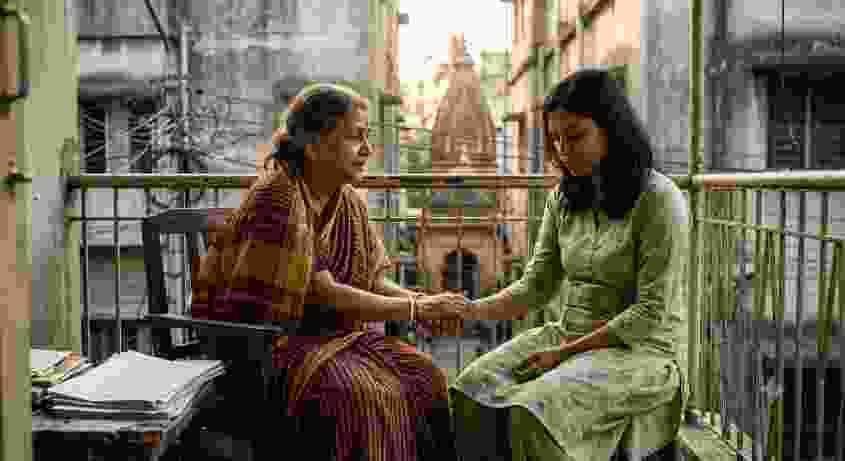
Bengal’s Cultural Crossroads: Faith vs. Politics From the teachings of Sri Ramakrishna Paramahansa to the socio-cultural carnival of Durga Puja, Bengal traditionally embraced a secular, all-inclusive form of worship.
But behind the scenes, a demographic and political shift is occurring:
- Cultural Inclusivity: For the average Bengali, Durga Puja is a celebration of a daughter returning home, blending devotion with cultural festivities and food without contradiction.
- Aggressive Consolidation: To counter deeply rooted regional political machineries, strategists are replacing traditional, inclusive chants with aggressive political slogans, demanding a united front based on religious identity.
This created a massive cultural friction: a battle between a deeply personal “way of life” and the pressing demand for a consolidated political identity driven by demographic insecurities.
Democracy’s Compulsion or Cultural Loss? In the realm of 21st-century politics, democracy is a game of numbers. A diverse, loosely connected cultural base cannot be easily mobilized into a unified voting bloc.
What is billed as defending the faith is, in part, an electoral compulsion to create a defined identity with clear boundaries. The boundless ocean of Hinduism is being forced into a rigid mold simply because a unified, agitated group votes together.
The End of the All-Inclusive Philosophy?
- The Seekers: For those who view their faith as a personal spiritual journey, the politicization of Hinduism threatens to erase the beauty of an ideology that respects even atheists.
- The Strategists: For political architects, defining strict boundaries is seen as a necessary evolution to ensure the survival and consolidation of their demographic base against perceived threats.
Bottom Line The effort to turn Sanatan Dharma into an aggressive political identity is less about theology and more about electoral survival and mass mobilization. As the lines between ancient philosophy and modern politics blur, the real question emerges: in the rush to defend the faith at the ballot box, is India risking the very inclusivity that makes it eternal?







Leave a Comment
Your email address will not be published. Required fields are marked with *