
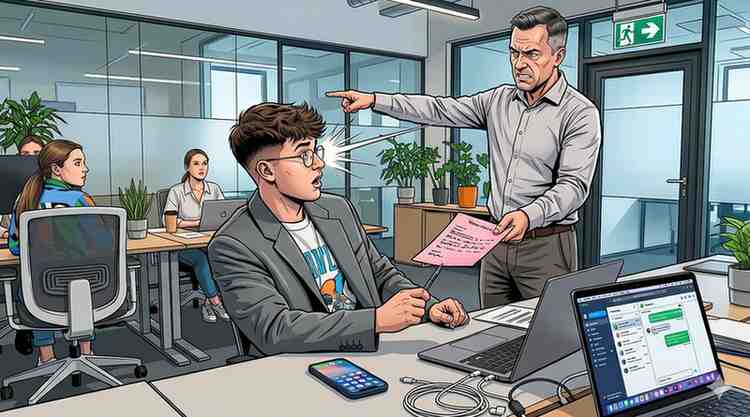
New Delhi, May 2026 — Across the globe, from America and Europe to India, a common complaint is echoing through corporate corridors: Gen Z employees are not sticking around. What was once whispered in HR meetings has now become a loud corporate outcry, with many companies openly admitting they are actively avoiding hiring Gen Z
New Delhi, May 2026 — Across the globe, from America and Europe to India, a common complaint is echoing through corporate corridors: Gen Z employees are not sticking around. What was once whispered in HR meetings has now become a loud corporate outcry, with many companies openly admitting they are actively avoiding hiring Gen Z candidates.
What employers describe as a crisis of professionalism, critics argue is a fundamental clash between an outdated corporate system and a generation fundamentally reshaped by technology and global crises.
The Employer’s Frustration
The narrative from the corporate side is stark. HR surveys and workplace studies from platforms like LinkedIn and Gallup paint a picture of a workforce in turmoil. Employers report increasing frustration with Gen Z hires, citing a lack of professionalism, poor communication skills, punctuality issues, and a disregard for traditional office etiquette.
The most glaring statistic, however, is the turnover rate. Companies report that Gen Z employees exhibit an alarming lack of long-term loyalty, with a high propensity for “job hopping.” They are quick to resign, showing what older generations interpret as impatience and a refusal to respect authority. The global crisis in employee engagement is disproportionately evident in this younger demographic, leading to the emergence of the “Hired then Fired” era.
A Generation Forged in Crisis
However, labeling Gen Z as merely “lazy” or “undisciplined” oversimplifies a complex reality. This is the first generation to grow up entirely in the smartphone era, profoundly influenced by the validation culture of social media and the overwhelming influx of constant information. Their maturity was forged in the crucible of the pandemic trauma.
Psychologically, they operate in a completely different environment. Studies repeatedly show that Gen Z experiences significantly higher levels of anxiety and burnout compared to previous generations. They live with an acute fear of job insecurity.
The “Why Try?” Mentality
Consider the world from their perspective: they are entering the workforce amidst climate anxiety, the looming threat of recession, sudden layoffs, and the very real possibility of AI replacing their jobs. When the traditional corporate promise of stability and long-term reward seems broken, the incentive to display unquestioning loyalty diminishes.
This environment fosters a mindset focused on immediate well-being rather than long-term corporate ladder climbing. The gig economy and the normalisation of remote work have redefined what a career looks like, making the traditional 9-to-5 office structure seem rigid and unappealing.
The Bottom Line
The conflict between Gen Z and corporate employers is not just a generational clash; it’s a structural reckoning. As companies struggle to retain young talent, the real question isn’t just about what is wrong with Gen Z, but rather whether the traditional corporate mindset can evolve fast enough to accommodate a generation that refuses to accept the old rules of the game. The “Hired then Fired” trend may be less about a failing generation and more about a failing work culture











Leave a Comment
Your email address will not be published. Required fields are marked with *