
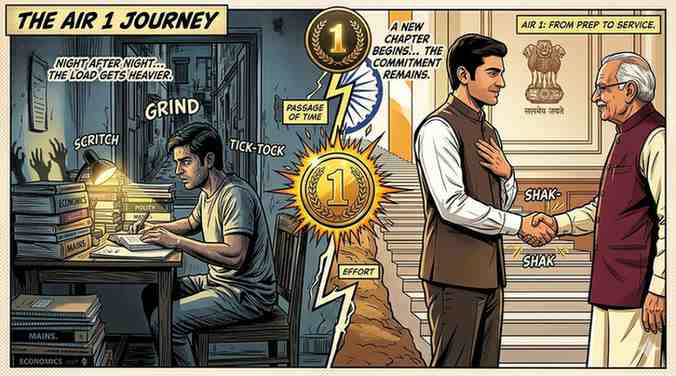
Lucknow, May 2026 — Every year, the UPSC results bring a new All India Rank 1 (AIR 1) into the national spotlight. For a few days, they are the ultimate symbol of discipline and success. But a closer look at the trajectories of the last 20 toppers reveals a complex truth: what happens after the
Lucknow, May 2026 — Every year, the UPSC results bring a new All India Rank 1 (AIR 1) into the national spotlight. For a few days, they are the ultimate symbol of discipline and success. But a closer look at the trajectories of the last 20 toppers reveals a complex truth: what happens after the cameras stop rolling is far from a fairy tale.
The Illusion of the First Rank Coaching centers print massive posters, and millions of aspirants idolize the new toppers. However, securing AIR 1 is merely an entry pass, not the final destination. The reality of governance is starkly different from writing a stellar exam. While exams test knowledge and ethics on paper, the actual field demands crisis management, navigating intense political pressures, and handling real-life emergencies like floods, riots, and poverty.
Quiet Workers vs. Celebrity Bureaucrats The last two decades show a massive divide in how toppers navigate their careers. Many choose the path of silent, grassroots impact. For instance, 2003 topper Roopa Mishra deliberately avoided the media glare, focusing quietly on health and urban administration. Similarly, 2016’s Nandini K.R. earned deep respect for her low-profile, highly impactful work on child nutrition and land reforms.
Conversely, the social media era birthed the “celebrity bureaucrat.” Tina Dabi (2015) became a household name overnight, amassing a massive Instagram following. Her tenure raises a modern administrative question: has bureaucracy become too intertwined with celebrity culture and public relations?
Innovation Over Traditional Administration Not all toppers stick to the classic route of a District Collector. Several have redefined the job through specialization. Shubhra Saxena (2008) pioneered early digital governance by delivering court summons via SMS. Anudeep Durishetty (2017) humanized the system with child-centric policies like “No Bag Day,” while Gaurav Agrawal (2013), an ex-investment banker, brought a data-driven approach to reducing road accidents and improving school inspections.
Politics and Personal Battles The bureaucratic journey is rarely smooth or purely administrative. Ira Singhal (2014) had to win a grueling legal battle against disability discrimination just to claim her rightful rank, becoming a national symbol of inclusion. Others, like 2009 topper Shah Faesal, faced a turbulent mix of civil service, regional politics, and detention, proving that even top officers cannot always escape the complex gravity of political ecosystems.
Bottom Line The UPSC exam might identify the brightest minds, but a rank sheet does not guarantee a lasting legacy. Often, an AIR 1 might fade from public memory, while an officer with an average rank becomes a legend through their tireless fieldwork. In the end, the exam grants access to the corridors of power, but only compassion, patience, and ground-level resilience earn true respect.





Leave a Comment
Your email address will not be published. Required fields are marked with *