
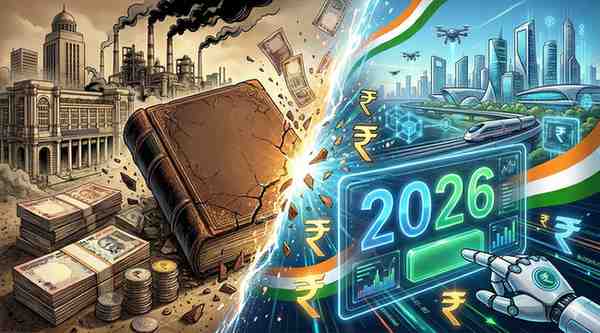
New Delhi, April 1, 2026 — As the clock struck midnight, the Indian economy pressed a massive “reset” button. Today marks the start of Financial Year 2026-27, ushering in a wave of sweeping legislative changes that dismantle laws standing since the 1960s. From how your salary is calculated to how you withdraw cash and cook
New Delhi, April 1, 2026 — As the clock struck midnight, the Indian economy pressed a massive “reset” button. Today marks the start of Financial Year 2026-27, ushering in a wave of sweeping legislative changes that dismantle laws standing since the 1960s.
From how your salary is calculated to how you withdraw cash and cook your meals, the rules of the game have changed overnight. For the Indian middle class, it is a day of “pocket shocks” and strategic transitions.
The Death of the 1961 Income Tax Act
After more than six decades, the complex 1961 Income Tax Act has been retired. The new code aims to end the “lawyer’s delight” by slashing sections from 819 to 536 and using simplified language.
- The Zero-Tax Threshold: Under the New Tax Regime, earners making up to ₹12.75 lakh annually (including standard deductions) will effectively pay zero tax.
- The Nudge: However, those clinging to the Old Tax Regime for HRA and home loan benefits will find no such relief. The government is clearly pushing the nation toward a mandatory, deduction-free future.
Salary Slips: More Savings, Less “Spendable” Cash
The new Labour Codes are now live, affecting 40 crore workers. The most significant change is the 50% Basic Salary Rule.
- The Math: Companies are now mandated to keep the basic pay at 50% of the total CTC.
- The Result: While this significantly inflates your Provident Fund (PF) and Gratuity—ensuring a wealthier retirement—your monthly “take-home” pay will likely drop by 5% to 10%. The state is effectively forcing today’s spenders to become tomorrow’s savers.
The End of “Free” Banking and UPI Cash
Digital India is entering its “premium” phase. Banks like HDFC, PNB, and Bandhan Bank have led the charge in reclassifying cash as a cost.
- UPI ATM Fees: Withdrawing cash via UPI is no longer a “free add-on.” It now counts toward your five monthly free transactions. The sixth withdrawal will now trigger a ₹23 plus GST fee.
- Failed Transaction Penalties: In some banks, even a failed transaction due to “insufficient balance” will now result in a ₹25 penalty.
Travel and Fuel: The Efficiency Tax
Safar (travel) just got more complicated.
- Railway Refunds: The window to cancel tickets and claim a refund has been doubled from 4 hours to 8 hours before departure. Last-minute plan changes will now directly benefit the Railway’s revenue, not the passenger’s wallet.
- E20 Petrol: Starting today, 20% Ethanol blending is mandatory nationwide. While intended to reduce oil imports, motorists face a hidden cost: Ethanol has lower energy density, meaning a 3% to 7% drop in mileage. You are paying for a full liter but traveling a shorter distance.
Five Censure Truths for 2026
- Liquidity vs. Security: Your wallet will feel lighter today so your retirement can be heavier tomorrow.
- Transparency at Peak: From ₹1 lakh rent receipts to ₹10 lakh credit card bills, the “hidden economy” is dead; everything is now auto-tracked by the Tax Department.
- End of Free Culture: Services previously viewed as “rights” (ATM access, refunds) are now “paid conveniences.”
- Formalization: Gig workers for platforms like Zomato and Uber finally get social security, funded by a slice of company turnover.
- Compliance Burden: The middle class now needs to maintain records like a CA just to claim basic HRA or PAN updates.
Bottom Line
April 1, 2026, is not about a prank; it is about Economic Realism. The masks of the old system are off: the government is trading immediate liquidity for long-term formalization. For the average Indian, the message is clear: the state is no longer subsidizing your habits—it is taxing your conveniences to fund your future.








Leave a Comment
Your email address will not be published. Required fields are marked with *