
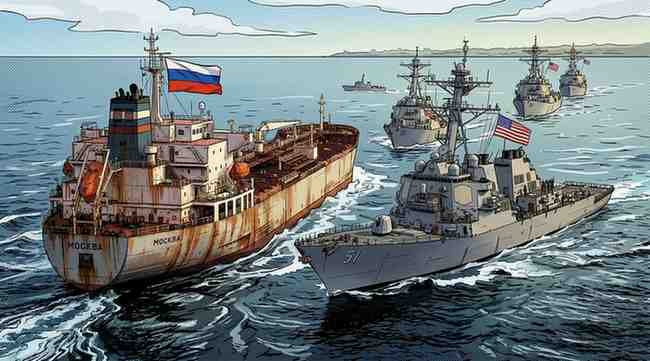
Washington D.C. / Havana, March 2026 — A major geopolitical standoff is unfolding in the Atlantic as the Russian-flagged tanker Anatoli Kulikin steams toward the Caribbean, directly defying a strict U.S. oil embargo on Cuba. Despite its official broadcast destination being listed as “Atlantis, USA”—a non-existent location—maritime analysts confirm the vessel is bound for the
Washington D.C. / Havana, March 2026 — A major geopolitical standoff is unfolding in the Atlantic as the Russian-flagged tanker Anatoli Kulikin steams toward the Caribbean, directly defying a strict U.S. oil embargo on Cuba. Despite its official broadcast destination being listed as “Atlantis, USA”—a non-existent location—maritime analysts confirm the vessel is bound for the Cuban port of Matanzas.
The shipment, expected to arrive within 48 to 72 hours, represents the first significant challenge to a deliberate U.S. strategy to choke the island’s energy supply into submission.
A Siege on Energy
Since the ouster of Venezuelan President Nicolás Maduro in January, Washington has systematically dismantled Cuba’s energy lifelines. Under pressure from President Trump, Mexico halted its deliveries, and a total ban on Venezuelan shipments was enforced.
The impact has been severe: Cuba has not imported a single drop of crude since January 9th. Trump’s message to the region has been unambiguous: any country or entity selling oil to the island will face massive retaliatory tariffs.
Moscow Tests Washington’s Resolve
The Anatoli Kulikin is not a random merchant vessel; it is a sanctioned tanker already blacklisted by the U.S., the UK, and the European Union. By utilizing this specific ship, Moscow is openly testing whether the Trump administration is willing to use military force to intercept a Russian-flagged vessel in international waters.
While another tanker, the Hong Kong-flagged Seahorse, recently abandoned its mission to Cuba after drifting for three weeks, the Kulikin appears committed to its course.
The Sanctions Paradox
The standoff comes at a moment of deep policy inconsistency for the White House. The ongoing war in Iran has caused global energy prices to skyrocket, forcing the Trump administration to selectively ease sanctions on Russian oil to stabilize the market.
However, the Treasury Department has made it clear that there are “no exceptions” for Cuba. Even as the U.S. allows Russian oil to flow elsewhere to lower global gas prices, the embargo on Havana remains absolute.
“The Honor of Taking Cuba”
President Trump has been unusually candid about the goal of the blockade. Last week, he declared he expected to have “the honor of taking Cuba,” asserting that he could do “anything I want” amid sensitive negotiations over the country’s future. For the White House, the oil embargo is not just a trade restriction—it is a primary tool for regime change.
Bottom Line
The Anatoli Kulikin is more than a tanker; it is a floating provocation. If it reaches Matanzas, it will break a months-long energy siege and potentially embolden other nations to bypass U.S. restrictions. If it is intercepted, it could spark the first direct military confrontation between the U.S. and Russia in the Caribbean in decades.











Leave a Comment
Your email address will not be published. Required fields are marked with *