





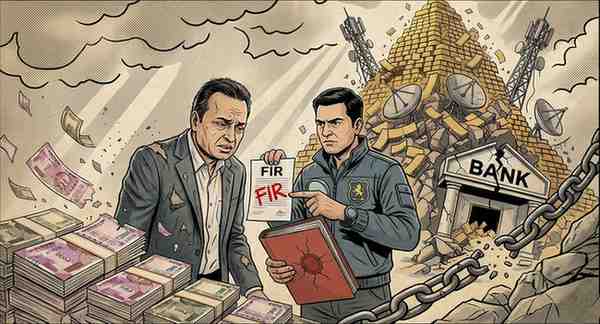
New Delhi, February 2026 — A fresh legal storm is building around industrialist Anil Ambani after the Central Bureau of Investigation (CBI) registered a new fraud case linked to loans worth more than ₹2,000 crore. The move marks a significant escalation in the regulatory pressure on the Reliance Group chairman, following years of financial turbulence
New Delhi, February 2026 — A fresh legal storm is building around industrialist Anil Ambani after the Central Bureau of Investigation (CBI) registered a new fraud case linked to loans worth more than ₹2,000 crore. The move marks a significant escalation in the regulatory pressure on the Reliance Group chairman, following years of financial turbulence and mounting debt.
The ₹2,223 Crore Loan Row
The CBI’s latest FIR centers on allegations of a massive fraud committed against the Bank of Baroda. According to the complaint, Reliance Communications Limited (RCom), along with Anil Ambani and other “unknown public servants,” allegedly cheated the bank of over ₹2,223 crore between 2013 and 2017.
The case was filed following a formal complaint by the Bank of Baroda’s stressed assets management branch in Mumbai. The FIR invokes several serious charges, including:
- Section 120B: Criminal conspiracy.
- Section 420: Cheating under the Indian Penal Code.
- Prevention of Corruption Act: Sections 13(2) and 13(1)(d), suggesting a deep dive into the role of public officials in sanctioning these loans.
From the ED to the CBI
The timing of the FIR is critical. It follows an intensive probe by the Enforcement Directorate (ED), with the CBI now launching its own separate criminal investigation. Anil Ambani appeared before the ED in Delhi today after failing to attend a scheduled deposition last week.
Investigators are reportedly examining whether bank officials were “dishonestly induced” to approve these loans and whether there was a deliberate diversion of funds.
The Fall of a Telecom Giant
Reliance Communications, once a flagship of the Ambani empire and a leader in the Indian telecom market, is currently undergoing insolvency proceedings. The company’s collapse has left a trail of unpaid debts across several public and private sector banks.
The CBI’s entry into the matter suggests that the probe will now focus on the “how” and “why” behind the credit approvals—specifically looking for evidence of money laundering or the intentional siphoning of capital during the company’s operational years.
The Role of “Unknown Public Servants”
One of the most significant aspects of the FIR is the mention of unknown public servants. This indicates that the federal agency will look beyond the corporate boardrooms of Reliance and into the halls of the banking institutions themselves. The probe seeks to determine if there was a nexus between the borrowers and the lenders that allowed such a massive “wrongful loss” to occur.
Bottom Line
The saga of the ₹2,223 crore loan row is more than just a corporate failure; it is a test of India’s anti-corruption and financial regulation frameworks. As the CBI and ED coordinate their efforts, the investigation moves into a high-stakes phase where the line between “bad business” and “criminal fraud” will be legally defined. For Anil Ambani, this case represents one of the most serious legal challenges in a career marked by both astronomical success and public financial decline.




















Leave a Comment
Your email address will not be published. Required fields are marked with *