





NEW DELHI, March 13, 2026 — As the conflict involving the United States, Israel, and Iran enters its third week, the global economy is grappling with a reality that many leaders—including U.S. President Donald Trump—appear to have initially underestimated. What was framed as a swift campaign to “topple the clerics” has evolved into a grinding
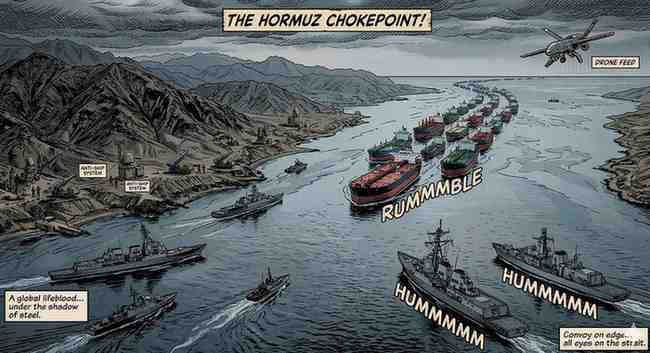
NEW DELHI, March 13, 2026 — As the conflict involving the United States, Israel, and Iran enters its third week, the global economy is grappling with a reality that many leaders—including U.S. President Donald Trump—appear to have initially underestimated. What was framed as a swift campaign to “topple the clerics” has evolved into a grinding economic war of attrition, with the Strait of Hormuz serving as Tehran’s most potent weapon.
The Chokepoint Crisis
Since the initial strikes on February 28, shipping traffic through the Strait of Hormuz has plummeted by a staggering 97%. This narrow waterway is the “jugular vein” of global trade, carrying nearly 20-25% of the world’s seaborne oil and roughly 83% of the liquefied natural gas (LNG) destined for Asian markets.
Iran’s Revolutionary Guards have vowed that not a “single liter” of oil will pass through as long as hostilities continue. While President Trump previously dismissed oil spikes as a “short-term issue” and a “small price to pay,” the reality on the ground is far more complex. Unlike previous disruptions, there are virtually no alternative routes capable of handling the volume currently trapped in the Persian Gulf.
India’s Energy Vulnerability
For India, the blockade is not just a geopolitical concern; it is a domestic emergency. Approximately 2.5 to 2.7 million barrels per day of Indian oil imports—sourced from Kuwait, Saudi Arabia, Iraq, and the UAE—transit through the Strait.
- LPG Shortages: The government has invoked emergency powers to prevent a “dry out” of domestic cooking gas, as supply lines from Qatar remain severed.
- Inflationary Pressure: Analysts warn that every $10 increase in crude prices widens India’s annual import bill by $13–14 billion, directly weakening the rupee and driving up food costs.
The “Hidden” Resource War
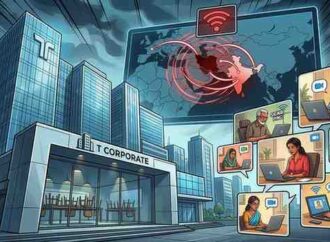
Beyond oil, the conflict has exposed a critical vulnerability in the global technology sector: Helium and Bromine.
- Helium: Essential for semiconductor manufacturing and AI data centers, nearly 25% of global supply is now off the market due to the blockade of Qatari exports.
- Bromine: With two-thirds of the world’s production originating in the conflict zone (Israel and Jordan), the supply chain for consumer electronics and advanced chips is nearing a breaking point.
Tehran’s Hardline Pivot
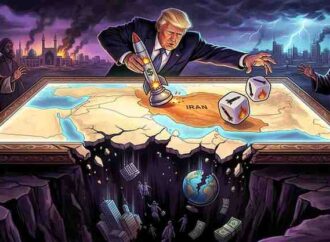
The consolidation of power under Iran’s new Supreme Leader, Mojtaba Khamenei, has signaled a rejection of early diplomatic off-ramps. Tehran’s strategy is now one of “Strategic Pressure,” demanding full war reparations for material losses and vowing to keep the Strait shut until their terms are met. This “wait and worry” tactic is designed to bleed the global economy until the political cost for the U.S. and its allies becomes unbearable.
Bottom Line
The 2026 Iran conflict has proven that in a hyper-connected world, military superiority can be neutralized by geographical leverage. As the Strait remains closed, the world is learning that the cost of “destroying a threat” may include the collapse of the very global supply chains that sustain modern life.















Leave a Comment
Your email address will not be published. Required fields are marked with *