





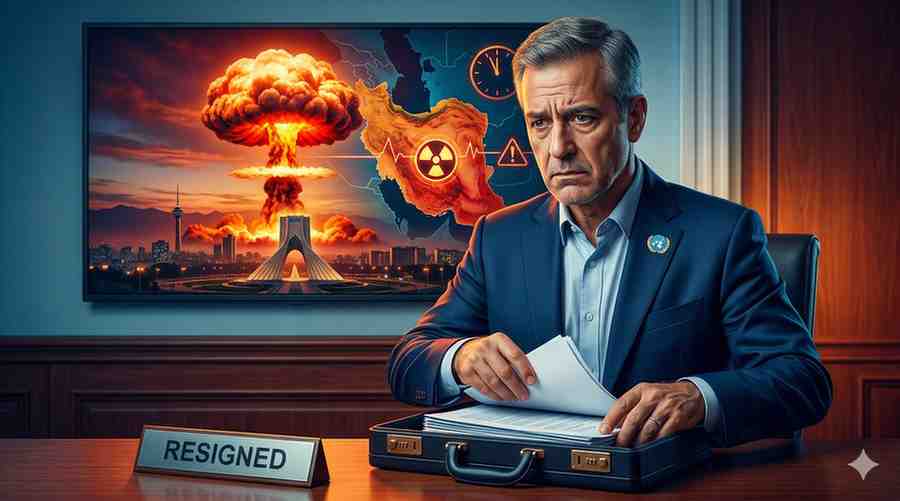
Tehran/Washington, March 2026 — The thin veneer of diplomacy in the Middle East has shattered following a massive U.S. aerial assault on Iran’s nuclear heartland. As smoke rises from Isfahan, a high-ranking UN official has resigned in protest, claiming the world is being blindsided by a secret plan for a full-scale nuclear strike. The Isfahan
Tehran/Washington, March 2026 — The thin veneer of diplomacy in the Middle East has shattered following a massive U.S. aerial assault on Iran’s nuclear heartland. As smoke rises from Isfahan, a high-ranking UN official has resigned in protest, claiming the world is being blindsided by a secret plan for a full-scale nuclear strike.
The Isfahan Strike: Targeted Destruction
The escalation turned physical late last night when U.S. forces deployed 2,000-pound “Bunker Buster” bombs against the Isfahan nuclear facility. Unlike standard munitions, these $GBU-57$ class weapons are designed to penetrate dozens of feet of earth and reinforced concrete before detonating, specifically to reach Iranian enrichment labs buried deep underground.
Isfahan is not just a city; it is Iran’s “Nuclear Backbone.” It houses the critical uranium conversion facilities that turn raw ore into the fuel needed for both nuclear energy and, potentially, weapon-grade warheads. By striking this hub, the U.S. and Israel have moved past symbolic warnings and into a phase of “deliberate escalation” intended to cripple Iran’s nuclear future permanently.
The Whistleblower: Resigning to Warn the World
The military strike was followed by a diplomatic earthquake at the United Nations. Mohammad Safa, a permanent representative for a high-level NGO with consultative status at the UN, resigned his post effectively immediately.
Safa’s departure was not a routine exit. He claimed he is “giving up his career” to leak what he describes as advanced preparations for a nuclear missile strike on Iranian soil. Safa alleged that high-level internal discussions have shifted toward the use of “tactical” nuclear options, a move he characterized as a “crime against humanity” that the UN as an institution has failed to prevent.
The “Bunker Buster” Strategy
The use of heavy penetrator munitions marks a shift in tactical intensity. Analysts note that these strikes require deep intelligence penetration and high-precision stealth bombers, such as the B-2 Spirit, to bypass Iran’s layered air defense systems.
- The Goal: Total destruction of sub-surface infrastructure.
- The Risk: A high-intensity war that moves beyond regional borders, involving maritime blockades in the Strait of Hormuz and retaliatory strikes on regional neighbors like Kuwait and Dubai.
Nuclear Realities vs. Allegations
The crisis is fueled by a long-standing “Trust Gap.” While the U.S. and Israel possess confirmed nuclear stockpiles, they have long accused Iran of using its civilian energy program as a front for weapons development—an escalation that accelerated after the U.S. withdrawal from the JCPOA (Iran Nuclear Deal).
Critics of the current military strategy argue that a nuclear strike would cause an unprecedented humanitarian disaster and a permanent stain on international law. Supporters of the hardline approach, however, maintain that Iran’s regime is immune to traditional sanctions and that only “hardened” military action can stop a nuclear-armed Tehran.
Bottom Line
The strike on Isfahan and the subsequent UN resignation suggest that the era of “shadow wars” is over. With a whistleblower claiming that nuclear plans are already on the table, the international community is now facing its most dangerous nuclear standoff in decades. Whether Safa’s warning is a final plea for peace or a harbinger of the inevitable, the “masks are off” in the fight for the Middle East.


















Leave a Comment
Your email address will not be published. Required fields are marked with *