
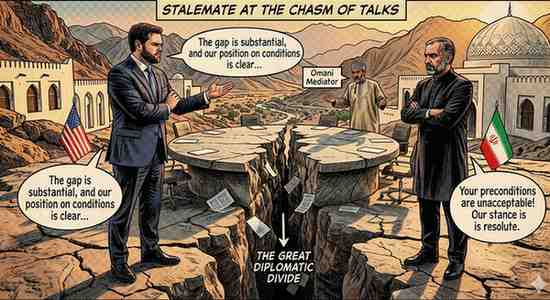
Diplomatic negotiations between the United States and Iran have hit a significant roadblock, with US Vice President JD Vance confirming that the two sides have failed to reach an agreement on key nuclear and sanctions-related issues. The impasse raises concerns about regional stability and has direct implications for India’s energy security and strategic interests in
Diplomatic negotiations between the United States and Iran have hit a significant roadblock, with US Vice President JD Vance confirming that the two sides have failed to reach an agreement on key nuclear and sanctions-related issues. The impasse raises concerns about regional stability and has direct implications for India’s energy security and strategic interests in West Asia.
New Delhi, April 2026 — Vice President JD Vance announced on Saturday that ongoing US-Iran negotiations have reached a deadlock, with both parties unable to bridge fundamental differences on uranium enrichment limits and the timeline for sanctions relief.
Why Have the Talks Broken Down?
The negotiations, which have been mediated through backchannel diplomacy involving Oman, collapsed over Iran’s insistence on immediate sanctions relief before agreeing to enhanced nuclear inspections. Washington has demanded verifiable dismantling of advanced centrifuges as a precondition for any economic concessions. Vance, speaking to reporters, described the gaps as “substantial” and indicated that the US would not compromise on verification mechanisms. Iranian Foreign Ministry sources have blamed what they call “maximalist American demands” for the failure.
What Does This Mean for India?
India watches these developments with strategic concern, given its historical energy ties with Tehran and the Chabahar Port project. A prolonged US-Iran standoff could complicate New Delhi’s efforts to balance its relationships with both Washington and Tehran. Indian refiners had been cautiously optimistic about resumed Iranian crude imports if sanctions were eased. The Ministry of External Affairs has not issued an official statement but diplomatic sources indicate that New Delhi is monitoring the situation closely.
- US-Iran talks have stalled over disagreements on sanctions relief timing and nuclear verification
- Vice President Vance ruled out American concessions without verifiable Iranian compliance
- India’s Chabahar Port operations and energy imports could face renewed uncertainty
- Regional tensions may escalate, affecting Gulf shipping routes critical to Indian trade
- European mediators are reportedly preparing a fresh diplomatic initiative
How Are Regional Powers Responding?
Saudi Arabia and the UAE have urged restraint, with both Gulf states wary of military escalation that could disrupt oil markets. Israel has welcomed the hardline American stance, with Prime Minister Netanyahu calling it “necessary for regional security.” Pakistan, which has sought to position itself as a neutral facilitator, offered to host future dialogue rounds. China, Iran’s largest trading partner, has called for “mutual respect” and criticised unilateral sanctions.
What Happens Next?
Diplomatic sources suggest that European Union foreign policy chief is preparing to visit Tehran within the coming fortnight to salvage negotiations. The International Atomic Energy Agency board meets next month and may consider referring Iran’s compliance record to the UN Security Council. For India, the immediate priority will be ensuring Chabahar Port operations remain unaffected while avoiding secondary sanctions. Energy analysts predict crude price volatility if the diplomatic freeze continues beyond the second quarter.












Leave a Comment
Your email address will not be published. Required fields are marked with *