
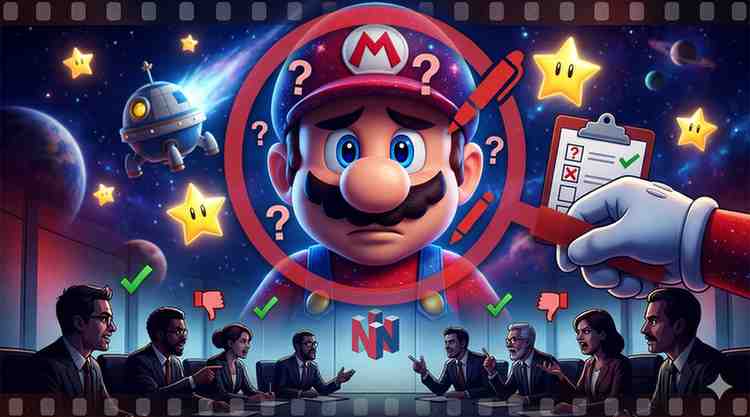
Nintendo’s upcoming Super Mario Galaxy animated film has ignited fresh debate about narrative depth in video game adaptations, with industry observers questioning whether the project prioritises visual spectacle over coherent storytelling. The controversy highlights broader tensions in Hollywood’s approach to gaming intellectual properties worth billions in global box office potential. New Delhi, April 2026 —
Nintendo’s upcoming Super Mario Galaxy animated film has ignited fresh debate about narrative depth in video game adaptations, with industry observers questioning whether the project prioritises visual spectacle over coherent storytelling. The controversy highlights broader tensions in Hollywood’s approach to gaming intellectual properties worth billions in global box office potential.
New Delhi, April 2026 — The Japanese gaming giant’s cinematic expansion faces renewed creative criticism following early previews of its Super Mario Galaxy adaptation, prompting film analysts to examine whether the video game-to-film pipeline sacrifices narrative integrity for brand recognition and merchandising opportunities.
Why Are Video Game Films Struggling With Story Structure?
The challenge of adapting interactive entertainment into passive viewing experiences remains a persistent Hollywood problem. Video games derive emotional engagement from player agency, a quality that cannot be replicated in traditional cinema. Industry experts note that studios often prioritise recreating iconic visuals and moments over constructing original narratives that work cinematically. This approach has yielded mixed results across dozens of adaptations over three decades.
What Does This Mean for India’s Growing Gaming and Film Industries?
India’s animation sector, valued at over ₹12,000 crore, watches these global developments closely for market signals. Indian studios increasingly collaborate with international gaming companies on localisation and original content development. The success or failure of high-profile adaptations directly influences investment appetite in India’s own gaming intellectual properties. Analysts at FICCI suggest Indian creators may benefit by developing narrative-first approaches that Western studios appear to be neglecting.
- Global video game film adaptations have generated over $8 billion since 2020
- Nintendo’s Illumination partnership began with the $1.3 billion Super Mario Bros. Movie in 2023
- Indian gaming market projected to reach $8.6 billion by 2027
- Animation outsourcing to Indian studios increased 34% year-over-year
- Player-driven narratives remain the biggest adaptation challenge for screenwriters
How Are Studios Responding to Criticism?
Major production houses have begun hiring gaming industry veterans as creative consultants to bridge the narrative gap. Sony’s successful approach with recent adaptations demonstrates that respecting source material while crafting standalone stories yields both critical and commercial success. Nintendo has historically maintained tight creative control, though this cautious approach sometimes limits screenwriters’ flexibility. The company has not publicly addressed the current criticism.
What Happens Next?
The coming months will prove decisive for Nintendo’s cinematic ambitions as marketing campaigns intensify before the film’s theatrical release. Industry observers expect the studio to emphasise family-friendly entertainment value over narrative complexity in promotional materials. For Indian animation professionals, these global conversations offer valuable lessons about balancing commercial appeal with storytelling craft. The outcome may reshape how gaming companies worldwide approach their most valuable intellectual properties for non-interactive media.












Leave a Comment
Your email address will not be published. Required fields are marked with *