
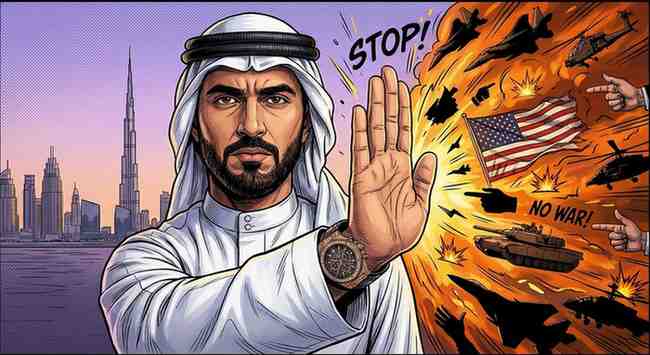
DUBAI, March 2026 — In a rare and blunt diplomatic pushback, one of the UAE’s most prominent business figures has openly rejected calls from Washington for Gulf nations to join the escalating military conflict against Iran. The defiance marks a significant rift between regional power players and U.S. strategic planners as “Operation Epic Fury” intensifies.
DUBAI, March 2026 — In a rare and blunt diplomatic pushback, one of the UAE’s most prominent business figures has openly rejected calls from Washington for Gulf nations to join the escalating military conflict against Iran. The defiance marks a significant rift between regional power players and U.S. strategic planners as “Operation Epic Fury” intensifies.
The Graham Ultimatum
The controversy erupted following remarks by U.S. Senator Lindsey Graham, who suggested that Arab partners would soon become “more directly involved” alongside the United States and Israel in military actions against Tehran. Following a classified Senate briefing, Graham claimed that regional allies were likely to increase their participation, hinting at a unified military front.
A Blunt Response from Dubai
Khalaf Ahmad Al-Habtoor, the founder of the multi-billion dollar Al-Habtoor Group, wasted no time in countering Graham’s narrative. In a public statement, Al-Habtoor made it clear that while Gulf nations recognize the Iranian threat and “do not trust” Tehran, they have no intention of becoming foot soldiers in a conflict they did not initiate.
Al-Habtoor described the current war as a “dirty game” where outside powers pursue selfish interests at the expense of regional stability. His most stinging criticism focused on a lack of consultation, noting that the region was “dragged into this dangerous escalation” by the same allies now demanding their military support.
Sons of the Gulf: Not for Sacrifice
Drawing a firm line in the sand, the tycoon asserted that Gulf countries would not “sacrifice their sons” in a war that could have been avoided through diplomacy and political solutions. He further challenged long-standing geopolitical assumptions by directly rejecting the notion that the Gulf remains entirely dependent on American military protection.
A Shift in Regional Sentiment
While the original post was later deleted, the message has resonated across the Middle East. Publicly criticizing a senior U.S. Senator during an active conflict is highly unusual for a major Gulf business figure. It reflects a growing frustration: while missiles fall on regional soil, the decisions driving the escalation are being shaped elsewhere.
Bottom Line
The exchange highlights a core tension in the current crisis. Washington may view the Gulf states as essential military partners, but regional leaders see themselves as the ones left to deal with the long-term fallout. As Al-Habtoor’s intervention suggests, Dubai is no longer willing to be a silent spectator or an automatic participant in “someone else’s war”.











Leave a Comment
Your email address will not be published. Required fields are marked with *