
New Delhi, February 2026 — The long-standing shadow of Naxalism across India’s eastern states is finally lifting. What was once described as the country’s greatest internal security threat is now being systematically dismantled, not just through military force, but through a calculated “Development vs. Extremism” strategy. The Illusion of a Revolution For over five decades,
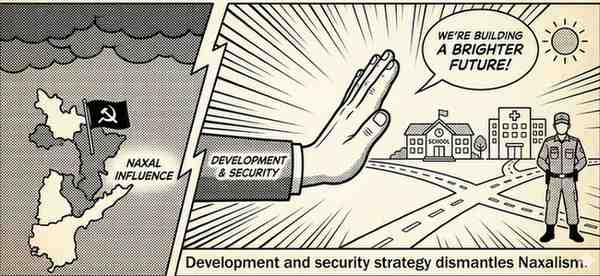
New Delhi, February 2026 — The long-standing shadow of Naxalism across India’s eastern states is finally lifting. What was once described as the country’s greatest internal security threat is now being systematically dismantled, not just through military force, but through a calculated “Development vs. Extremism” strategy.
The Illusion of a Revolution
For over five decades, the Naxalite movement—rooted in the 1967 Naxalbari uprising—sold a dream of “liberation” to India’s tribal and rural poor. Operating under the banner of Maoist ideology, leaders promised land redistribution and the overthrow of what they termed a “feudal” government.
In reality, the movement devolved into a violent insurgency that trapped local communities in a cycle of poverty. By the mid-2000s, the “Red Corridor” dominated over 200 districts. However, the ideology often masked a brutal reality: the disruption of schools, roads, and hospitals to keep local populations dependent on the insurgents for survival.
Development: The Ultimate Weapon
The tide turned when the Indian government shifted its focus from pure counter-insurgency to aggressive infrastructure building. The logic was simple: bullets cannot replace bridges.
- Aspirational Districts: Programs launched a decade ago targeted the 90+ affected districts with road connectivity, electricity, and internet.
- Breaking the Isolation: Naxalism thrived in the dark. By bringing 4G towers and all-weather roads to the jungles of Chhattisgarh and Bastar, the government effectively ended the “state of isolation” that Maoists relied on to recruit.
- Economic Inclusion: New policies addressed the “root causes” of tribal discontent, such as forest rights and mineral royalties, ensuring that locals became stakeholders in development rather than victims of displacement.
The Shrinking Footprint
The numbers tell a story of a movement in its twilight. From a peak of 96 high-intensity districts in 2010, Maoist influence has plummeted to just 41 districts today.
Security funding has been withdrawn from 20 districts that are now declared “Naxal-free,” and the number of violent incidents has dropped by over 80% compared to 2009 levels. The movement, once a sprawling network across 10 states, is now largely restricted to a few hilly pockets in Chhattisgarh and Odisha.
A Cycle Broken
Home Ministry briefings emphasize that development and security are “two sides of the same coin.” In the past, lack of progress fueled extremism, and extremism hindered progress. By providing a “digified life”—education, healthcare, and employment—the state has broken this vicious cycle.
The era of “revolutionary” violence is being replaced by the era of the “Aspirational District.” As jerseys lose the stains of conflict and tribal youth trade guns for skill-development kits, the message is clear: the most effective way to defeat an insurgency is to make it irrelevant.












Leave a Comment
Your email address will not be published. Required fields are marked with *