
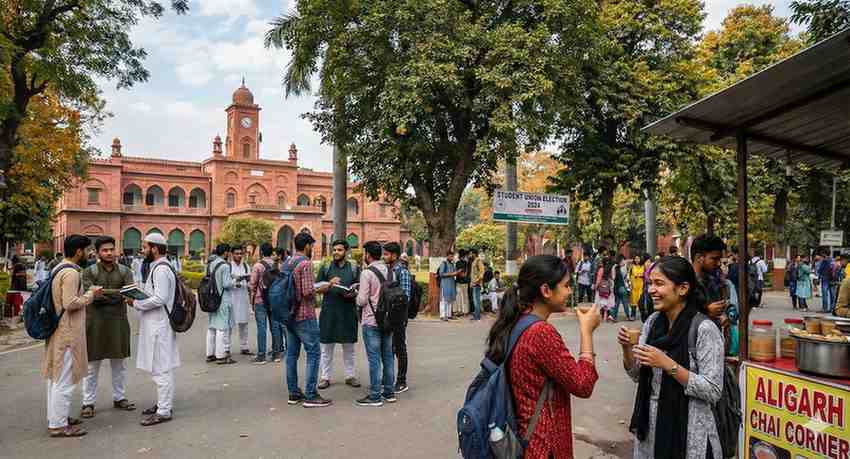
Aligarh, 2025 – Home to one of India’s most renowned institutions, Aligarh Muslim University (AMU), the city has long been a hub for academic excellence and intellectual debate. However, the evolving dynamics of campus life raise concerns about whether its culture is fostering constructive dialogue or deepening divisions. As student movements grow in intensity and societal
Aligarh, 2025 – Home to one of India’s most renowned institutions, Aligarh Muslim University (AMU), the city has long been a hub for academic excellence and intellectual debate. However, the evolving dynamics of campus life raise concerns about whether its culture is fostering constructive dialogue or deepening divisions. As student movements grow in intensity and societal tensions infiltrate university spaces, questions about the role of campus culture in shaping future leaders become ever more pressing.
A Legacy of Debate and Learning
Aligarh Muslim University, established in 1875, has been synonymous with intellectual progress and cultural discourse. According to the Ministry of Education, AMU ranks among the top 20 universities in India, with over 35,000 students enrolled in various disciplines. Historically, the university has been celebrated for its student-led organizations, debating societies, and vibrant cultural activities, which have played a pivotal role in nurturing leaders across fields.
Rising Polarization on Campuses
However, recent years have seen an increase in polarization within campus spaces. A report by the National Assessment and Accreditation Council (NAAC) notes that ideological divides among students and faculty have become more pronounced, often spilling over into protests and disruptions. Data from the University Grants Commission (UGC) highlights that student-led demonstrations at AMU have doubled in the last five years, reflecting growing dissatisfaction over issues such as academic freedom, representation, and administrative decisions.
A survey by the Aligarh Campus Research Centre found that 58% of students believe that discussions on campus are increasingly influenced by external political agendas, while 42% feel that such debates have eroded the inclusivity of campus life.
Impacts on Academic and Social Life
The effects of these tensions extend beyond debate halls. According to the All India Survey on Higher Education (AISHE), AMU’s student satisfaction scores have declined by 15% over the past decade, with students citing a lack of neutral spaces for open dialogue. Some faculty members, too, express concerns about the impact of divisive discourse on academic rigor and institutional harmony.
Despite these challenges, cultural events like Sir Syed Day and academic conferences continue to provide platforms for engagement. The AMU Students’ Union, one of the oldest in the country, organizes regular discussions aimed at bridging ideological gaps and fostering constructive dialogue.
Steps Towards Bridging Divides
Efforts are underway to restore balance and promote inclusivity within the campus culture. Initiatives such as inter-departmental dialogues and student exchange programs have been introduced to encourage collaboration and mutual understanding. Additionally, the National Education Policy (NEP) emphasizes critical thinking and the development of diverse perspectives, which institutions like AMU are beginning to integrate into their curricula.
Experts recommend the following measures to further foster dialogue on campus:
- Neutral Dialogue Platforms: Establish dedicated spaces for unbiased discussions where students can voice their concerns without fear of reprisal.
- Cultural Exchange Programs: Strengthen initiatives that promote interaction between students from different backgrounds and ideologies.
- Faculty Training: Provide faculty members with resources to mediate discussions and maintain neutrality in academic spaces.
- Policy Transparency: Enhance transparency in administrative decisions to build trust among students and faculty.
Conclusion
Aligarh’s campus culture remains a microcosm of broader societal shifts, reflecting both its challenges and opportunities. While the university continues to serve as a beacon of knowledge, the growing divisions risk undermining its potential to foster meaningful dialogue. The path forward requires collective efforts from students, faculty, and administrators to ensure that the spirit of inclusivity and critical engagement thrives in this historic institution.












Leave a Comment
Your email address will not be published. Required fields are marked with *