
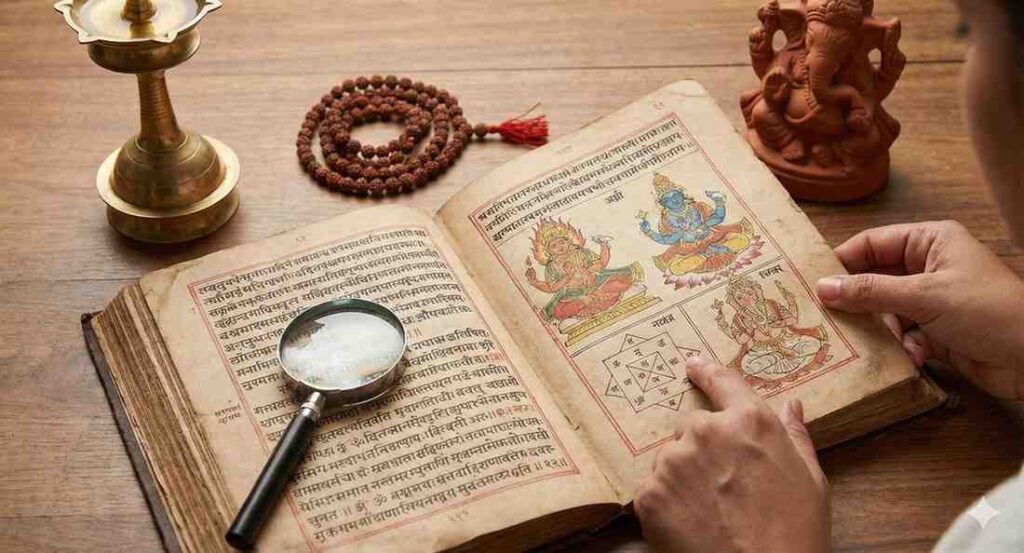
“Divine Archetypes or Metaphysical Concepts? Unpacking the Symbolism of Gods in Vedic and Shastric Texts” In the vast landscape of Hindu spirituality, the gods featured in the Vedic and Shastric texts are much more than mere deities worshipped for divine favors. These gods represent intricate concepts, philosophical ideas, and cosmic forces that govern the universe.
“Divine Archetypes or Metaphysical Concepts? Unpacking the Symbolism of Gods in Vedic and Shastric Texts”
In the vast landscape of Hindu spirituality, the gods featured in the Vedic and Shastric texts are much more than mere deities worshipped for divine favors. These gods represent intricate concepts, philosophical ideas, and cosmic forces that govern the universe. The question that arises, however, is whether the gods in these texts are symbolic representations of universal principles or literal beings that must be revered. By delving into the symbolism of these divine figures, we can understand how they serve as metaphysical constructs that intertwine the material world with the spiritual.
Gods in the Vedas: Archetypes of Cosmic Principles
The Vedic texts, particularly the Rigveda, introduce a pantheon of gods who embody the forces of nature and the universe. These gods were not static figures but symbols of cosmic principles, offering a profound reflection of the world’s inherent order and harmony.
- Indra – The Warrior and Cosmic Order:
- In the Vedic context, Indra is often seen as the king of the gods and the god of thunder and rain. However, his symbolism extends far beyond this. Indra represents the dynamic force of cosmic order—he is both a protector and a destroyer of chaos. In the Rigveda, he is depicted as a warrior who battles the demon Vritra, symbolizing the struggle between order and chaos.
- Critical Insight: Indra’s complex nature—his role as a divine protector who also displays human-like flaws—suggests that the Vedas used his character to illustrate the philosophical duality inherent in the universe. The Vedic understanding of gods like Indra points more toward abstract principles of control and liberation rather than personal divine intervention.
- Agni – The Symbol of Transformation and Knowledge:
- Agni, the fire god, holds a central place in the Vedas, often acting as the intermediary between the human and divine realms. Fire, as a physical and symbolic element, represents transformation, purification, and illumination.
- Critical Insight: Agni’s role as a mediator of offerings in sacrificial rituals symbolizes the transformation of material into spiritual energy. His importance in the Vedic rituals reflects the philosophical importance of sacrifice (Yajna) as a cosmic act that sustains the balance of the universe. Agni, therefore, is not merely a fire god but a metaphor for spiritual evolution through the transformation of offerings into divine blessings.
- Surya – The Cosmic Eye:
- Surya, the sun god, is a pervasive figure in Vedic texts, symbolizing the eye of the cosmos, the source of life, and the illumination of knowledge. The Aditya Hridayam, a hymn dedicated to Surya, illustrates him as a source of both physical light and spiritual wisdom.
- Critical Insight: Surya’s symbolism points to the dual nature of light: it reveals truth and also exposes the inherent flaws of existence. This concept parallels the Upanishadic teachings where light, or knowledge, is seen as essential for attaining moksha (liberation) and understanding the nature of Brahman (universal consciousness).
Gods in the Shastras: A Shift to Righteousness, Law, and Governance
As the Vedic tradition evolved into the Shastric period, the portrayal of gods shifted to reflect more societal concerns. In texts like the Manusmriti, Arthashastra, and Bhagavad Gita, gods became symbols of moral and ethical order and were often depicted as forces that governed both individual conduct and the functioning of society.
- Shiva – The Lord of Destruction and Regeneration:
- In the Shastras, Shiva is depicted as the god of destruction, yet his role is far more intricate. He represents the cyclic nature of existence—where destruction is not an end, but a prelude to regeneration and renewal. This cosmic dance of destruction and creation is epitomized in his Nataraja form, where he dances the universe into existence and eventually dissolves it back into the ultimate reality, Brahman.
- Critical Insight: Shiva’s symbolism goes beyond the literal notion of destruction and suggests that destruction is necessary for transformation—a theme central to many philosophical schools within Hinduism. In the context of the Bhagavad Gita, his role as a destroyer also mirrors the philosophical concept of the destruction of the ego, which is necessary for spiritual liberation.
- Vishnu – The Preserver and Cosmic Balance:
- Vishnu is the god of preservation, depicted in the Shastras as the cosmic guardian who maintains dharma(righteousness) and order in the universe. Vishnu’s various avatars, such as Rama and Krishna, emphasize the intervention of divine forces in human history to restore cosmic balance whenever it is threatened by evil.
- Critical Insight: Vishnu’s symbolism represents the principle of divine intervention in times of crisis but also reflects a deeper philosophical idea that cosmic order can be maintained through ethical living and duty. This duality between Vishnu as a cosmic force and his incarnations as historical figures suggests that spiritual truth is both universal and individual. Vishnu is not merely a personal god but a symbol of the universal law of balance in the cosmos.
- Brahma – The Creator of Universes and the Divine Lawgiver:
- Brahma, in the Shastras, retains his role as the creator, but his importance fades in comparison to Vishnu and Shiva. He is the creator of the material world, but his creations are seen as subject to the cycles of time and destruction.
- Critical Insight: Brahma’s diminishing role in the Shastras reflects a shift away from an exclusive focus on creation and towards a more holistic view of the universe as a cyclical process of creation, preservation, and destruction. In this view, Brahma is a symbol of creative potential rather than a personal god worshipped for favors.
Conclusion: The Duality of Divine Symbolism
The gods in both the Vedic and Shastric texts are deeply symbolic, representing forces that transcend human understanding. While the Vedic gods like Indra, Agni, and Surya symbolize cosmic principles and natural forces, the gods of the Shastras, such as Shiva, Vishnu, and Brahma, embody more abstract philosophical concepts like dharma, cosmic balance, and the cycles of creation and destruction.
Rather than seeing these gods as mere anthropomorphic beings, it is essential to recognize them as metaphysical symbols—archetypes that reflect the complex interplay between the material and spiritual worlds. These divine figures are not limited to the mythological realm; they provide insight into the fundamental nature of existence, the cosmic law, and the human pursuit of moksha (liberation). Understanding the symbolism behind these gods helps bridge the gap between the tangible world and the higher metaphysical truths that the Vedic and Shastric traditions seek to illuminate.












Leave a Comment
Your email address will not be published. Required fields are marked with *