





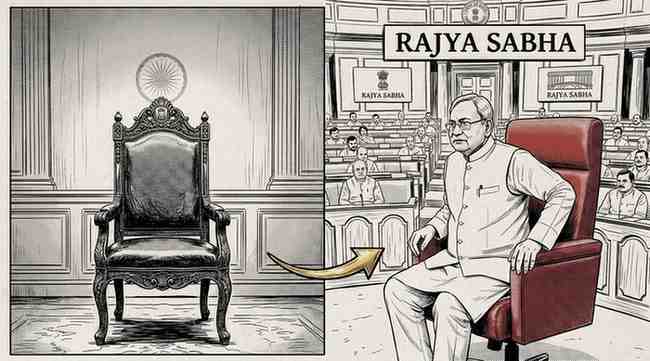
PATNA, March 2026 — After two decades as the undisputed pivot of Bihar politics, Chief Minister Nitish Kumar has stunned the nation by filing his nomination for the Rajya Sabha. The move effectively ends an era that began in 2005, marking a transition that many insiders describe as a “respectable exit” for a leader whose
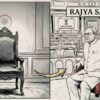
PATNA, March 2026 — After two decades as the undisputed pivot of Bihar politics, Chief Minister Nitish Kumar has stunned the nation by filing his nomination for the Rajya Sabha. The move effectively ends an era that began in 2005, marking a transition that many insiders describe as a “respectable exit” for a leader whose health and grip on the state have recently come under intense scrutiny.
A “Personal Aspiration” or a Strategic Retreat?
Accompanying Union Home Minister Amit Shah to file his papers, the 75-year-old Kumar framed the move as the completion of a parliamentary “grand slam.” Having served in the Bihar Assembly, the Legislative Council, and the Lok Sabha, he claimed a long-standing desire to finally enter the Upper House of Parliament.
However, the timing tells a different story. Just four months ago, Kumar led the NDA to a landslide victory, winning 202 out of 243 seats. Yet, he was conspicuously absent from the victory celebrations. Reports suggest that behind the “spectacular mandate,” Kumar’s declining health made a full five-year term as CM increasingly unlikely. With no Rajya Sabha seats from Bihar opening up for another two years, the BJP reportedly moved quickly to secure this transition now.
The “Delhi Durbar” and the Mandate Debate
The opposition has wasted no time labeling the move a betrayal of the voters. Former Rajasthan Deputy CM Sachin Pilot questioned if Kumar was acting of his own free will, while RJD leaders alleged the resignation statement was “drafted in Delhi.”
The core of the controversy lies in the mandate: millions of Biharis voted for a government led by Nitish Kumar. His sudden departure to a non-elected house raises a stinging question—was the election about the people’s choice, or simply a placeholder for a BJP takeover?
A Party in Existential Crisis
For the Janata Dal (United), the exit is nothing short of an earthquake. Since 2005, the JDU has been a “one-man show,” with Kumar as the sole power center.
- The Successor Vacuum: Unlike other regional parties, Kumar has no clear political heir. While his son, Nishant, has been mentioned, his shy demeanor and lifelong avoidance of the spotlight make him an unlikely “natural leader.”
- The Identity Threat: Without Kumar at the helm, the JDU faces a crisis of relevance. Protests have already broken out at the party’s Patna office as workers fear the party may eventually be swallowed by its larger ally, the BJP.
The Race for the Throne
As Nitish prepares to step down by the first week of April, the BJP finds itself in the driver’s seat of Bihar for the first time in history. The search for a new CM centers on two strategies:
- The Yadav Counter: Promoting Union Minister Nityanand Rai, a close aide to Amit Shah, to directly challenge the opposition’s Tejaswi Yadav.
- The Backward Class Card: Elevating current Deputy CM Samrat Choudhary, who hails from the influential Kushwaha community.
Bottom Line
The era of “Sushasan Babu” (Mr. Good Governance) is over. While Nitish Kumar heads to the quiet halls of the Rajya Sabha, he leaves behind a state in total political flux. The “Great Shift” isn’t just about one man moving to Delhi—it’s about the BJP finally claiming the throne in India’s most politically volatile state.












Leave a Comment
Your email address will not be published. Required fields are marked with *