





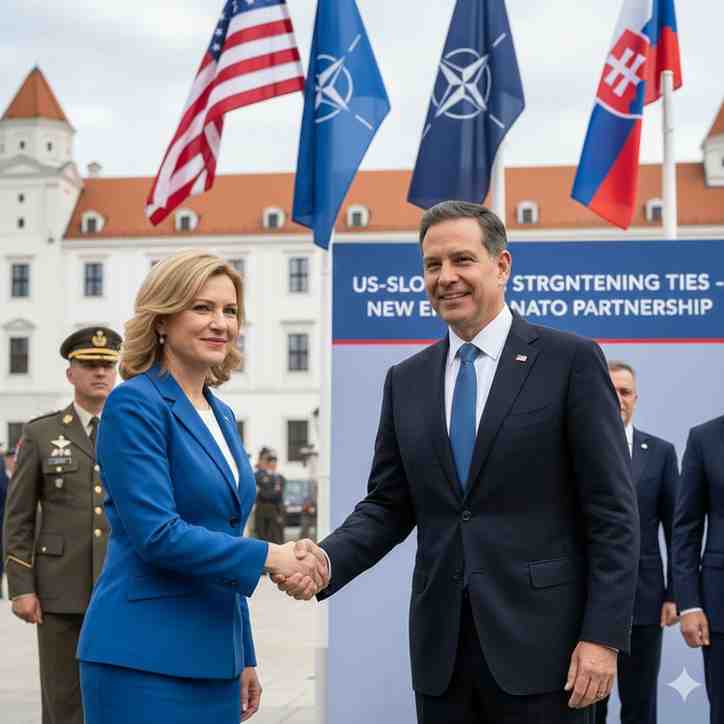
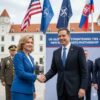
BRATISLAVA, February 2026 — In a move that redefines the trans-Atlantic alliance, U.S. Secretary of State Marco Rubio visited Slovakia this week, carrying a pointed message from the Trump administration: the era of European “vassalage” is over, and the era of “sovereign partnership” has begun. The visit, the first by a U.S. Secretary of State
BRATISLAVA, February 2026 — In a move that redefines the trans-Atlantic alliance, U.S. Secretary of State Marco Rubio visited Slovakia this week, carrying a pointed message from the Trump administration: the era of European “vassalage” is over, and the era of “sovereign partnership” has begun.
The visit, the first by a U.S. Secretary of State to Bratislava in seven years, signals a strategic pivot toward Central Europe as the cornerstone of Washington’s continental engagement.
NATO: From Dependence to Partnership
Standing alongside Slovak Prime Minister Robert Fico, Rubio addressed growing anxieties about a U.S. withdrawal from NATO. He dismissed the rumors of a “NATO exit” as a misunderstanding of the administration’s “America First” philosophy.
“We don’t want Europe to be dependent on us,” Rubio stated, clarifying that the U.S. is not asking allies to be subordinates, but equals. The administration’s push for increased defense spending—which Trump has suggested should reach 5% of GDP—is framed not as abandonment, but as a requirement for a “collectively stronger” alliance. Rubio emphasized that the U.S. does not view a more capable, independent European military as a threat, but as a positive evolution.
Ending the “Sovereignty Gap” in the Skies
A major highlight of the bilateral talks was Slovakia’s military modernization. Prime Minister Fico expressed an urgent need to close Slovakia’s “sovereignty gap.” Currently, Slovak airspace is protected by fighters from Poland, Hungary, and the Czech Republic—a situation Fico described as a compromise to national independence.
To rectify this, Slovakia is looking to expand its fleet of U.S.-made F-16 Block 70 aircraft. While 14 jets were already ordered, the government is now discussing the acquisition of four additional aircraft to bring the total fleet to 18, ensuring Slovakia can finally police its own borders by summer 2026.
The 1,200 MW Nuclear Ambition
The partnership extends beyond the battlefield into energy security. The two nations are moving forward with a massive nuclear energy project:
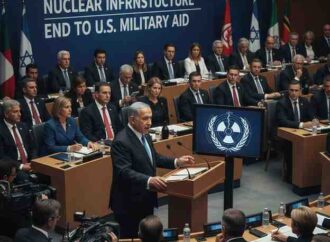
- The Project: A new 1,200-megawatt nuclear unit at the Bohunice plant.
- The Goal: Operational capacity by 2040.
- The Partner: Direct negotiations are underway with U.S.-based Westinghouse to lead a multinational consortium.
This move is designed to decouple Central Europe from Russian energy—a point of friction as Slovakia and Hungary have continued to purchase Russian gas despite U.S. criticism.
Bottom Line
The Rubio visit confirms that Washington is no longer interested in “pleasantries and meetings.” By focusing on concrete military sales and nuclear infrastructure, the U.S. is betting that a stronger, more self-reliant Central Europe will be its most reliable ally in an era of global “renewal.” As Rubio put it, “The stronger you are… the stronger NATO is. That’s just common sense.”

















Leave a Comment
Your email address will not be published. Required fields are marked with *