





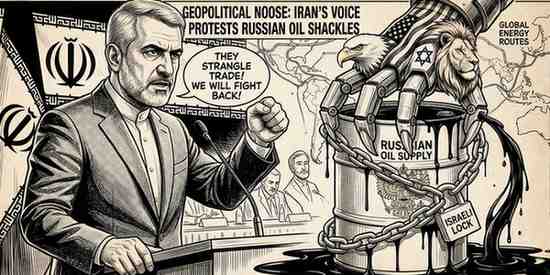
Tehran, March 2026 — In a high-stakes diplomatic confrontation, Iran’s Deputy Foreign Minister, Saeed Khatibzadeh, has declared that the Middle East is witnessing a “war of choice” initiated by the United States and Israel. Accusing Western powers of orchestrating a campaign of “flat lies,” Khatibzadeh warned that Tehran now views the conflict as an existential
Tehran, March 2026 — In a high-stakes diplomatic confrontation, Iran’s Deputy Foreign Minister, Saeed Khatibzadeh, has declared that the Middle East is witnessing a “war of choice” initiated by the United States and Israel. Accusing Western powers of orchestrating a campaign of “flat lies,” Khatibzadeh warned that Tehran now views the conflict as an existential struggle to preserve the oldest continuous civilization on Earth.
What was framed by Washington as a response to imminent threats is, according to Tehran, a calculated betrayal of diplomacy designed to reshape the Middle East through “naked force.”
The “Geneva Betrayal”: Diplomacy as a Smoke Screen
Khatibzadeh revealed a startling timeline of events leading up to the current escalation. According to the Minister, Iranian negotiators were in Geneva just days ago, where they had “nailed down a practical agreement” alongside International Atomic Energy Agency (IAEA) head Rafael Grossi.
The Minister claims that while American negotiators praised the progress and promised a written proposal, they were simultaneously preparing for a military invasion. “This is a TV reality show,” Khatibzadeh remarked, “they invite you to have diplomacy in place while they are making a military buildup.”
Allegations of Intentional Atrocities
The rhetoric grew grimmer as the Minister detailed the human cost of the strikes. He alleged that U.S. forces intentionally bombed a primary school in the opening minutes of their campaign, resulting in the deaths of approximately 200 young girls.
Tehran’s stance is that these are not “surgical strikes” against a regime, but “carpet bombing” out of frustration. He dismissed the Western use of the word “regime” as a negative jargon used to demonize and delegitimize a country that remains functionally governed by a constitution and a division of powers, despite the “reckless martyrdom” of its leaders.
The “Greater Israel” Ambition
At the heart of the conflict, according to Iran, is the “delusion” of a “Greater Israel.” Khatibzadeh accused Israeli Prime Minister Benjamin Netanyahu of dragging the United States into a war to impose regional hegemony.
- Regional Spillover: While Iran claims it has no desire to target its Arab neighbors, it warned that it will strike U.S. assets—such as the Fifth Fleet in Bahrain—wherever they are originated.
- False Flag Warnings: The Minister cautioned that Mossad is actively running “false flag” operations, including attempts to sabotage refineries in the region, to trick GCC countries into a deeper security integration with Israel.
A Civilization Fighting Back
For Tehran, the objective has shifted from mere defense to a strategic expulsion. Khatibzadeh stated that if the U.S. intends to end the existence of Iran, Iran has “no option” but to end the U.S. military presence in the surrounding Persian Gulf area. He pointed to millions of Iranians rallying around the national flag as proof that the invasion has only fueled a “heroic nationalistic” fervor.
Bottom Line
The diplomatic bridge has been burned. By accusing the U.S. of ignoring international norms and “betraying diplomacy for the second time,” Iran has signaled that the time for traditional mediation through Oman or Qatar may have passed. As Khatibzadeh put it, this is no longer a localized conflict; it is a war for the record of history.


















Leave a Comment
Your email address will not be published. Required fields are marked with *