





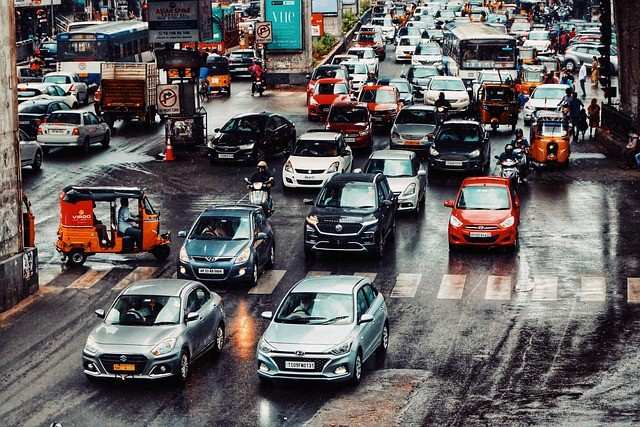
Agra, 2025 – Famous for its architectural marvels and vibrant tourism industry, Agra has seen rapid urban growth in recent years. However, the city’s infrastructure is struggling to keep pace with its expanding population and visitor numbers, leading to chronic traffic congestion. As modernization efforts lag behind rising demands, the question arises: Is Agra’s growth outpacing
Agra, 2025 – Famous for its architectural marvels and vibrant tourism industry, Agra has seen rapid urban growth in recent years. However, the city’s infrastructure is struggling to keep pace with its expanding population and visitor numbers, leading to chronic traffic congestion. As modernization efforts lag behind rising demands, the question arises: Is Agra’s growth outpacing its infrastructure?
The Scope of the Problem
According to the Agra Municipal Corporation, the city’s population has grown from 1.6 million in 2011 to an estimated 2.2 million in 2024, with a steady influx of tourists adding further strain. The Ministry of Tourism reports that Agra welcomed over 8 million visitors in 2024, with most relying on road transport to access key attractions such as the Taj Mahal, Agra Fort, and Fatehpur Sikri.
Data from the Central Road Research Institute (CRRI) reveals that Agra’s average travel speed during peak hours has dropped to just 15 km/h, significantly lower than the national urban average of 25 km/h. Major choke points, including the Fatehabad Road and MG Road intersections, experience severe gridlock daily.
Contributing Factors
Several factors exacerbate Agra’s traffic congestion:
- Inadequate Public Transport: The Uttar Pradesh Transport Department notes that Agra lacks an efficient public transport system, with buses accounting for less than 15% of daily commutes. Most residents rely on private vehicles or auto-rickshaws, adding to road density.
- Tourism-Driven Traffic: The Agra Development Authority (ADA) estimates that 60% of traffic on arterial roads during peak tourist seasons comes from visitor vehicles, many of which are large buses or taxis.
- Poor Urban Planning: A report by the National Institute of Urban Affairs (NIUA) highlights that Agra’s road network was designed decades ago, with little consideration for the current population density and traffic volume.
- Parking Shortages: The lack of adequate parking facilities near major tourist sites and commercial hubs leads to illegal parking, further obstructing traffic flow.
Environmental and Economic Impacts
The consequences of Agra’s traffic congestion extend beyond mere inconvenience:
- Air Pollution: The Central Pollution Control Board (CPCB) identifies vehicular emissions as the leading contributor to Agra’s poor air quality, with PM2.5 levels frequently exceeding safe limits.
- Tourism Experience: According to a survey by the Uttar Pradesh Tourism Department, 25% of tourists cited traffic congestion as a major drawback of their visit, potentially impacting the city’s reputation.
- Economic Costs: A study by the Indian Council for Research on International Economic Relations (ICRIER) estimates that traffic delays cost Agra ₹500 crore annually in lost productivity and increased fuel consumption.
Steps Taken So Far
The government has initiated several measures to address the issue:
- Smart Traffic Management: The Agra Smart City Limited (ASCL) has installed automated traffic signals and surveillance cameras at key intersections to improve flow and reduce violations.
- Ring Road Development: The Agra-Lucknow Expressway and the under-construction Inner Ring Road aim to divert non-local traffic away from city centers.
- Public Transport Expansion: Plans to introduce electric buses and expand the city bus network are underway under the Faster Adoption and Manufacturing of Hybrid and Electric Vehicles (FAME-II) scheme.
Persistent Challenges
Despite these efforts, challenges persist:
- Implementation Delays: A 2024 audit by the Comptroller and Auditor General (CAG) found that only 40% of proposed projects under the Agra Smart City initiative have been completed on time.
- Community Involvement: Limited public awareness and participation hinder the effectiveness of traffic management initiatives.
Recommendations for Improvement
Experts emphasize the need for an integrated approach to tackle Agra’s traffic woes:
- Comprehensive Public Transport System: Develop a modern, efficient public transport network, including metro rail and additional bus routes.
- Parking Solutions: Construct multi-level parking facilities near tourist sites and commercial areas to reduce roadside parking.
- Tourism-Specific Policies: Implement shuttle services for tourists to minimize the number of private vehicles in key areas.
- Urban Planning Reforms: Update the city’s master plan to prioritize pedestrian-friendly zones, dedicated cycling lanes, and better road connectivity.
Conclusion
Agra’s traffic congestion reflects the broader challenges of balancing rapid urban growth with sustainable infrastructure development. While initiatives are underway, achieving meaningful change requires greater urgency, collaboration, and community involvement. The question remains: Can Agra keep pace with its growth, or will its infrastructure continue to lag behind?




















Leave a Comment
Your email address will not be published. Required fields are marked with *