





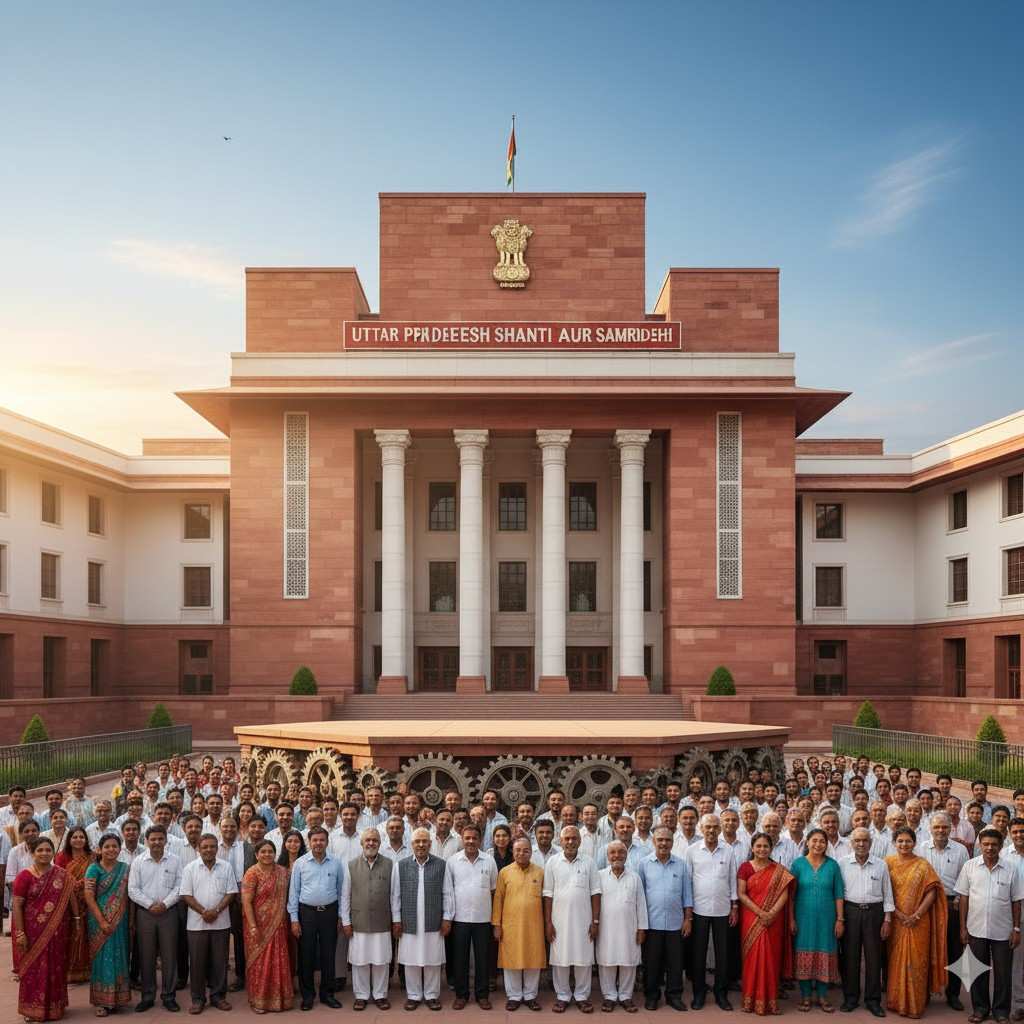
Beneath the Surface of Uttar Pradesh’s Political Landscape Uttar Pradesh, often considered the political heart of India, has long been seen as a barometer for the nation’s democratic health. With its vast population, diverse electorate, and 80 Lok Sabha seats, the state is a crucial player in national politics. Recent years have seen a semblance
Beneath the Surface of Uttar Pradesh’s Political Landscape
Uttar Pradesh, often considered the political heart of India, has long been seen as a barometer for the nation’s democratic health. With its vast population, diverse electorate, and 80 Lok Sabha seats, the state is a crucial player in national politics. Recent years have seen a semblance of stability under the BJP-led government, but is this stability genuine or merely an illusion masking deeper fractures?
Key Highlights
- Leadership: Chief Minister Yogi Adityanath leads a BJP government with a significant majority.
- Opposition Presence: Samajwadi Party (SP) and Bahujan Samaj Party (BSP) remain active but fragmented.
- Caste and Religion: Persistent divides among OBCs, Dalits, and religious communities continue to shape political narratives.
- Development Metrics: Infrastructure projects and welfare schemes bolster the ruling party’s narrative, but gaps in rural development persist.
The Perception of Stability
Under the BJP’s leadership, Uttar Pradesh has projected an image of political consolidation:
- Electoral Dominance: The BJP has maintained a stronghold in both state and national elections, leveraging its coalition-building strategies and grassroots outreach.
- Development Initiatives: Major infrastructure projects like expressways and metro expansions, coupled with welfare schemes like Ayushman Bharat, have reinforced the perception of effective governance.
- Law and Order Focus: Efforts to improve law enforcement and reduce crime rates have been central to the government’s stability narrative.
Cracks in the Façade
Despite this image of stability, several factors suggest underlying volatility:
- Caste Dynamics: The BJP’s dominance is rooted in a realignment of upper-caste and non-Yadav OBC support, but fractures within these alliances could emerge as other parties attempt to consolidate marginalized groups.
- Economic Disparities: Rising unemployment, agrarian distress, and uneven development continue to fuel discontent, particularly in rural areas.
- Opposition Resilience: The SP’s resurgence in the 2022 elections and the BSP’s potential to rally Dalit voters suggest that the opposition is far from irrelevant.
- Communal Polarization: Religious tensions, exacerbated by divisive narratives, threaten social cohesion and could destabilize political alliances.
Case Studies: Signs of Volatility
- Farmers’ Protests: Agrarian unrest in western UP highlighted rural dissatisfaction and the potential for grassroots mobilization against the ruling party.
- Youth Discontent: High unemployment rates among the state’s youth demographic have led to growing frustration with the government’s job creation efforts.
- Caste-Based Mobilizations: Localized protests and movements indicate that caste-based grievances remain potent political forces.
Navigating the Road Ahead
To transform perceived stability into lasting governance success, Uttar Pradesh’s political leadership must address systemic challenges:
- Inclusive Policies: Strengthen welfare programs to address regional and socio-economic disparities.
- Opposition Collaboration: Encourage dialogue between ruling and opposition parties to foster more balanced policymaking.
- Grassroots Engagement: Deepen outreach to rural and marginalized communities to address core grievances.
- Reduce Polarization: Promote narratives of unity and inclusivity to mitigate communal and caste-based tensions.
Conclusion: Stability or a Delicate Balance?
Uttar Pradesh’s political stability, while impressive on the surface, is underpinned by dynamics that could shift rapidly. The state’s leadership faces the dual challenge of maintaining its electoral stronghold while addressing the underlying issues that threaten its long-term governance. Whether this stability proves enduring or illusory will depend on the ability to balance political dominance with genuine socio-economic progress and inclusivity.









Leave a Comment
Your email address will not be published. Required fields are marked with *