





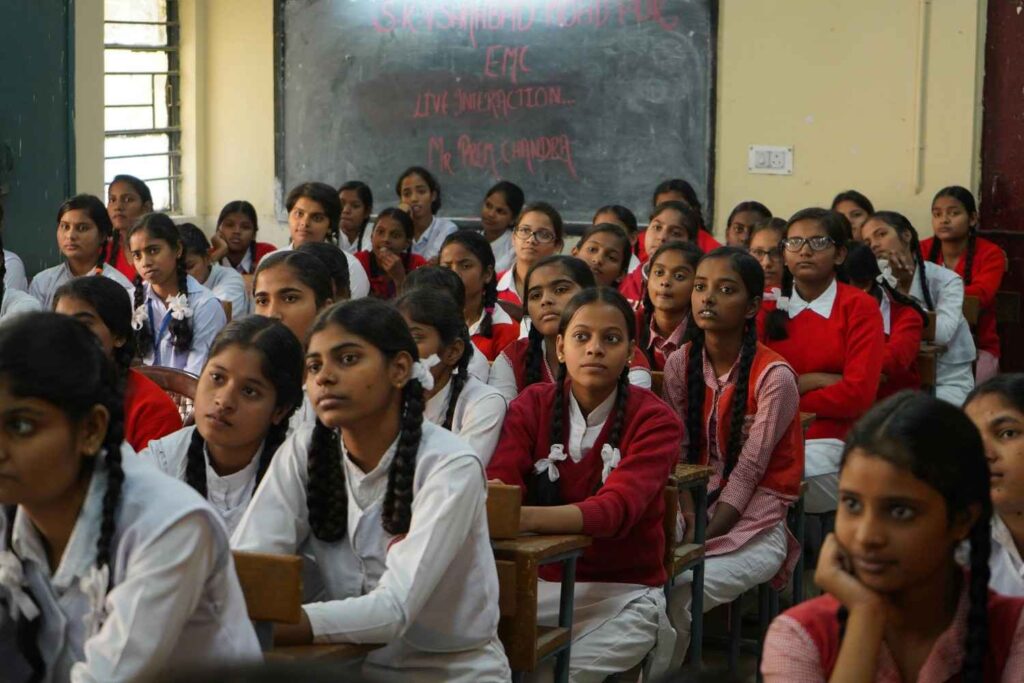
In India, where educational outcomes are often measured by the number of students in a class and the prestige of the institution, the balance between affordability and quality education can feel like a constant tug-of-war. While the desire for smaller class sizes is a universally acknowledged ideal, the reality is much more complicated. In a
In India, where educational outcomes are often measured by the number of students in a class and the prestige of the institution, the balance between affordability and quality education can feel like a constant tug-of-war. While the desire for smaller class sizes is a universally acknowledged ideal, the reality is much more complicated. In a country where the economy and fee structures heavily influence educational access, the dream of smaller classes often comes at a high price.
The Unseen Cost of Smaller Class Sizes
In many parts of India, especially in urban areas, the idea of reducing class sizes to a level that can truly foster individual attention is a distant dream for most schools. Class sizes like 1:30 (one teacher to 30 students) are considered decent and even ideal by Indian standards, but the truth is, anything below that ratio is often deemed a luxury—and one that comes with a hefty price tag. Schools that provide a truly remarkable 1:15 or even 1:10 ratio are few and far between, and most of them belong to private institutions that charge exorbitant fees to cover the cost of such personalized education.
The challenge here is simple: smaller classes require more teachers, more resources, and more infrastructure—all of which come at a significant cost. Schools that aspire to keep their fee structures affordable simply cannot afford to hire the staff needed to reduce class sizes to levels that would enable truly meaningful learning experiences for each student. And while small class sizes undeniably lead to better academic outcomes, the cost of achieving such an ideal is often beyond the reach of the average Indian family.
The Economic Dilemma: Balancing Affordability and Quality
For most middle-class families, the choice between affordable fees and quality education becomes a cruel paradox. In the pursuit of affordable education, parents are often forced to settle for larger class sizes. Larger classes may mean lower fees, but they also mean less attention from teachers, more distractions, and a diminished ability to foster the critical thinking and creativity that are essential in today’s world.
Small schools or those aiming for more personalized attention tend to have higher fees—far beyond the reach of most families who are already stretched thin in an economy that is less than supportive of education. Even when schools manage to keep fees reasonable, they are often forced to increase class sizes to sustain their operations. The unfortunate result is that while the promise of smaller classes remains, the financial reality simply doesn’t allow it to come true for most.
The Ideal Class Size: A Pipe Dream for Most Schools?
What many people don’t realize is that reducing class sizes to a remarkable ratio (1:10, 1:12) is truly an educational luxury—one that is difficult to maintain in a system where affordability is prioritized over quality. For an average school to provide such intimate learning environments, it would need to hire additional teachers, invest in professional development, and possibly restructure its entire financial model. For most schools, especially those catering to middle-class families, this is not a feasible model.
Currently, 1:30 is viewed as a balanced model, but anything lower than that requires significant investment—investment that is often reserved for elite private schools, with fees that can cost an arm and a leg. In India, class sizes below 1:20 are remarkable, but also unsustainable for the majority of educational institutions.
The Hidden Divide: Wealthy Schools vs. Everyone Else
While we continue to hear the importance of smaller class sizes from the top-ranking schools, the reality is that those institutions are often out of reach for the majority of parents. These elite schools not only boast exceptional teacher-student ratios but also employ cutting-edge teaching methods and state-of-the-art resources. But the cost is astronomical.
On the other hand, public schools or low-fee private institutions cater to larger class sizes, sometimes with 40-50 students per class. The learning environment here is often compromised due to lack of resources, and students are left with very little individual attention from teachers. The choice for many families comes down to: “Do we choose affordability or do we choose quality?” Unfortunately, in most cases, affordability trumps quality.
The Path Forward: Can Smaller Classes Be Made Affordable?
The real question lies in whether smaller class sizes can ever be made truly affordable while maintaining the quality of education that India desperately needs. The truth is, it’s a tough balancing act—one that requires not just changes at the institutional level but also sweeping reforms at the policy level.
Government intervention in funding education, providing incentives to schools that prioritize smaller class sizes, and promoting innovations in teaching methods that don’t rely solely on class size could help mitigate this issue. Additionally, alternative models of education, such as hybrid learning or digital classrooms, may offer creative solutions to provide more personalized attention without the enormous costs associated with traditional small classrooms.
However, until such reforms are in place, many families will continue to find themselves stuck in a system where the dream of smaller class sizes remains just that—a dream.
Conclusion: The Struggle Between Quality and Affordability
The fact remains that in India, class size is inextricably linked to cost. As schools strive to provide quality education, they must navigate the economic pressures of affordability. Small class sizes may be the key to better learning outcomes, but they come at a price—one that many cannot afford.
Until the system changes, parents and educators alike will continue to wrestle with the reality that achieving a perfect balance between quality education and affordability is still an elusive goal.










Leave a Comment
Your email address will not be published. Required fields are marked with *