





Mumbai, March 2026 — The Indian Rupee has hit an unprecedented low, breaching the ₹93-₹94 mark against the US Dollar. Triggered by escalating tensions and disrupted supply chains in the Middle East, this historic slide has placed the Reserve Bank of India (RBI) in full-blown emergency mode. What experts call a predictable reaction to geopolitical
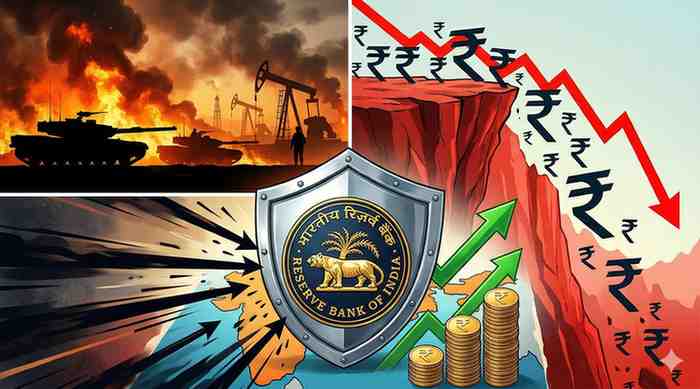
Mumbai, March 2026 — The Indian Rupee has hit an unprecedented low, breaching the ₹93-₹94 mark against the US Dollar. Triggered by escalating tensions and disrupted supply chains in the Middle East, this historic slide has placed the Reserve Bank of India (RBI) in full-blown emergency mode. What experts call a predictable reaction to geopolitical instability is rapidly becoming a severe stress test for India’s macroeconomic stability.
The Oil Shock and a Ballooning Import Bill
At the heart of the crisis is a severe disruption in the global energy market. Crude oil prices have skyrocketed by a staggering 60% in just one month. For an economy that imports over 85% of its fossil fuels and more than 50% of its natural gas, this spells immediate trouble. This surging import bill is steadily widening India’s Current Account Deficit (CAD), forcing the country to demand more dollars to pay for energy, which in turn directly accelerates the Rupee’s depreciation.
Capital Flight and Market Jitters
As the US Dollar strengthens globally as a safe-haven asset, foreign investors are pulling back from emerging markets. In March alone, Foreign Portfolio Investors (FPIs) withdrew a massive ₹88,000 crore from Indian markets. Consequently, the yield on India’s 10-year government bonds has spiked to 6.8%, signaling rising borrowing costs, a dip in bond demand, and mounting caution among investors seeking the safety of US Treasuries.
RBI’s Double-Edged Defense Strategy
To cushion the blow, the RBI has stepped in aggressively, utilizing nearly $100 billion from its forex reserves (which currently sit at approximately $709.76 billion). By selling dollars and absorbing rupees through dollar-rupee swap auctions, the central bank aims to prevent a currency freefall.
However, this defense mechanism has a notable side effect: for the first time in 2026, the Indian banking system is facing a liquidity deficit because the RBI is sucking rupee cash out of the market. To counter this domestic cash crunch, the RBI is simultaneously conducting Open Market Operations (OMOs)—buying government securities to inject liquidity back into the system and keep bond yields from spiraling out of control.
From Firefighting to Fireproofing
While the RBI’s monetary shield offers critical short-term relief, economists emphasize a desperate need for long-term “fireproofing.” True economic resilience relies on reducing India’s heavy import dependency. The path forward demands an aggressive transition toward renewable and nuclear energy. Experts suggest this transition must be backed by concessional lending strategies from the RBI and supported by the government’s proposed ₹1 lakh crore Economic Stabilization Fund to offset inflationary pressures on consumers.
Bottom Line
The current Rupee slide is a stark reminder of India’s vulnerability to global energy shocks. While the RBI is actively burning through its war chest to keep the economy steady today, the ultimate fix isn’t just managing the forex markets—it lies in a structural shift to break the country’s heavy reliance on imported fossil fuels.


















Leave a Comment
Your email address will not be published. Required fields are marked with *