
Washington D.C., May 2026 — The World Bank has issued a sobering forecast for the global economy, warning that commodity prices are set to remain at historic highs, potentially derailing efforts to curb inflation. According to the latest Commodity Markets Outlook report, escalating tensions in the Middle East are threatening to trigger a massive supply
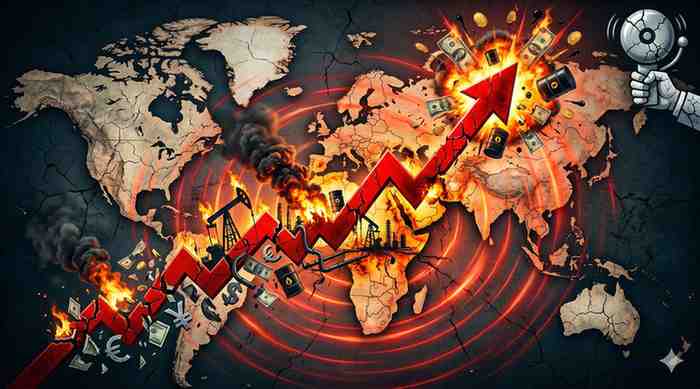
Washington D.C., May 2026 — The World Bank has issued a sobering forecast for the global economy, warning that commodity prices are set to remain at historic highs, potentially derailing efforts to curb inflation. According to the latest Commodity Markets Outlook report, escalating tensions in the Middle East are threatening to trigger a massive supply shock, with energy prices projected to stay significantly above pre-pandemic levels.
The Middle East Factor: A 24% Potential Surge
The primary driver of the current market volatility is the intensifying conflict in the Middle East. The World Bank warns that a major escalation could lead to a significant disruption in oil supplies. In a “large-disruption” scenario—comparable to the 1973 Arab oil embargo—global oil prices could surge by as much as 24%, potentially reaching nearly $150 per barrel.
Even without a total shutdown of major transit routes like the Strait of Hormuz, the “risk premium” is already being baked into market prices. This volatility is complicating the work of central banks worldwide, as rising energy costs act as a persistent headwind against falling inflation.
Beyond Oil: A Ripple Effect on Food and Industry
The shock is not confined to the fuel pump. The report highlights several critical areas where price hikes will hit consumers:
- Fertilizers: High natural gas prices are driving up the cost of production for fertilizers, which in turn threatens global crop yields.
- Food Security: As fertilizer and transport costs rise, food prices—which are already 30% higher than 2015-2019 averages—remain stubbornly elevated, particularly in developing nations.
- Gold as a Safe Haven: With geopolitical uncertainty at a peak, gold prices have hit record highs, reflecting a global flight to safety by investors and central banks alike.
The Divergence: Wealthy vs. Developing Nations
A critical takeaway from the report is the growing divide in how countries absorb these shocks. While developed economies have seen some relief from slowing growth, emerging markets are facing a “double whammy” of high commodity prices and weakening currencies.
For many lower-income countries, the cost of importing essential energy and food has become nearly unsustainable. The World Bank notes that the combination of geopolitical strife and high interest rates has created a “fragile” environment where even a minor supply hiccup could lead to a localized humanitarian crisis.
Transition in Turmoil
The crisis also poses a threat to the global green energy transition. The prices of critical minerals—such as copper, nickel, and lithium—remain volatile. While essential for electric vehicles and renewable grids, these metals are subject to the same geopolitical pressures and supply chain fragilities as fossil fuels. The report suggests that the current instability might actually slow the pace of decarbonization as countries prioritize immediate energy security over long-term climate goals.
Bottom Line
The era of cheap, predictable commodities has been replaced by a “volatility tax” driven by global conflict. With energy markets teetering on the edge of a 24% surge, the World Bank’s report serves as a definitive warning: the global economy is one major escalation away from a severe inflationary relapse. For the average consumer, the “masks are off”—global stability is now the most expensive commodity of all.









Leave a Comment
Your email address will not be published. Required fields are marked with *