





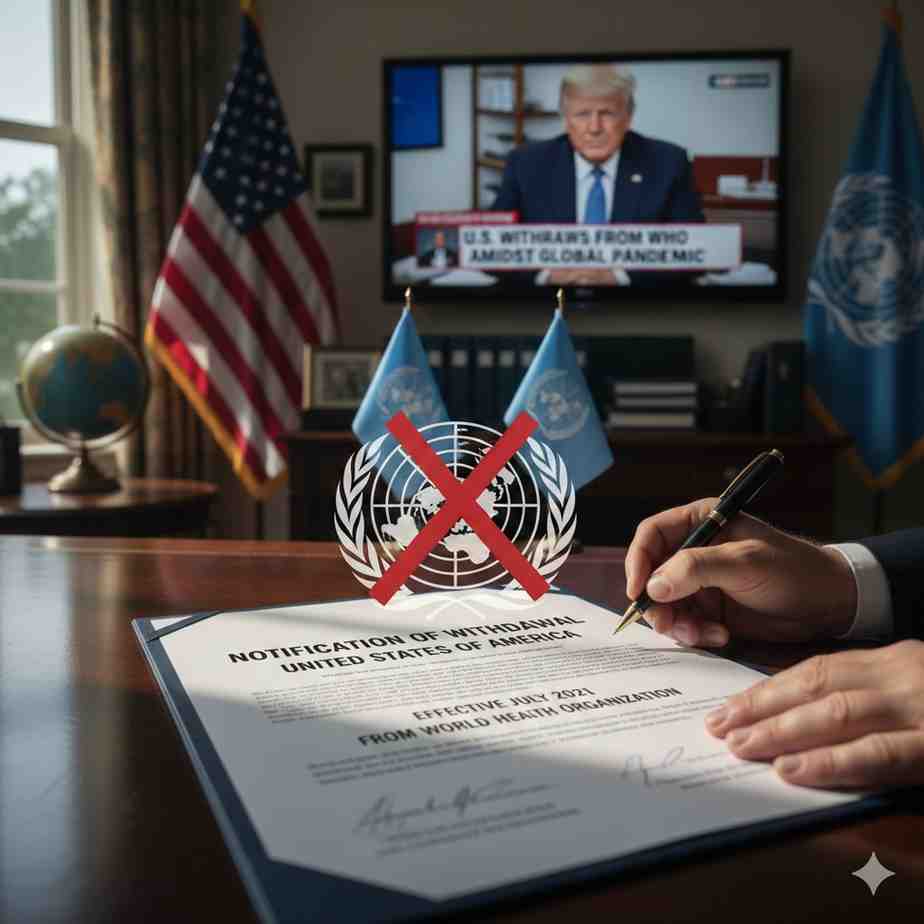
Key highlights If you search “US withdrawal from WHO date 2026,” the reason 22 January 2026 appears is structural: withdrawal processes typically hinge on notice periods and formal communications, and coverage plus policy notes align the effective timeline to that date. New York Post+1 What is confirmed from official sides: Why it matters (especially for non-U.S. readers): For
Key highlights
- The White House issued an order initiating U.S. withdrawal from WHO. Wikipedia
- WHO publicly acknowledged the U.S. intent to withdraw. Digital Library
- Reporting and policy analysis tie the effective date to 22 January 2026 based on notice timing and legal mechanics. New York Post+1
If you search “US withdrawal from WHO date 2026,” the reason 22 January 2026 appears is structural: withdrawal processes typically hinge on notice periods and formal communications, and coverage plus policy notes align the effective timeline to that date. New York Post+1
What is confirmed from official sides:
- The White House issued an executive order to withdraw. Wikipedia
- WHO acknowledged the U.S. intent publicly. Digital Library
Why it matters (especially for non-U.S. readers):
- WHO is a coordination platform in outbreaks, surveillance standards, and cross-border health rules.
- Funding gaps don’t stay local; they shift burdens to other donors and regional systems.
For India, the practical lens is continuity: disease surveillance, global reporting standards, and technical collaboration. Even if domestic health priorities remain sovereign, international coordination affects travel advisories, supply chains for medical goods, and crisis messaging.
A grounded expectation: the world doesn’t lose “global health” overnight—but it may become more fragmented, more regional, and more politically negotiated.




















Leave a Comment
Your email address will not be published. Required fields are marked with *