





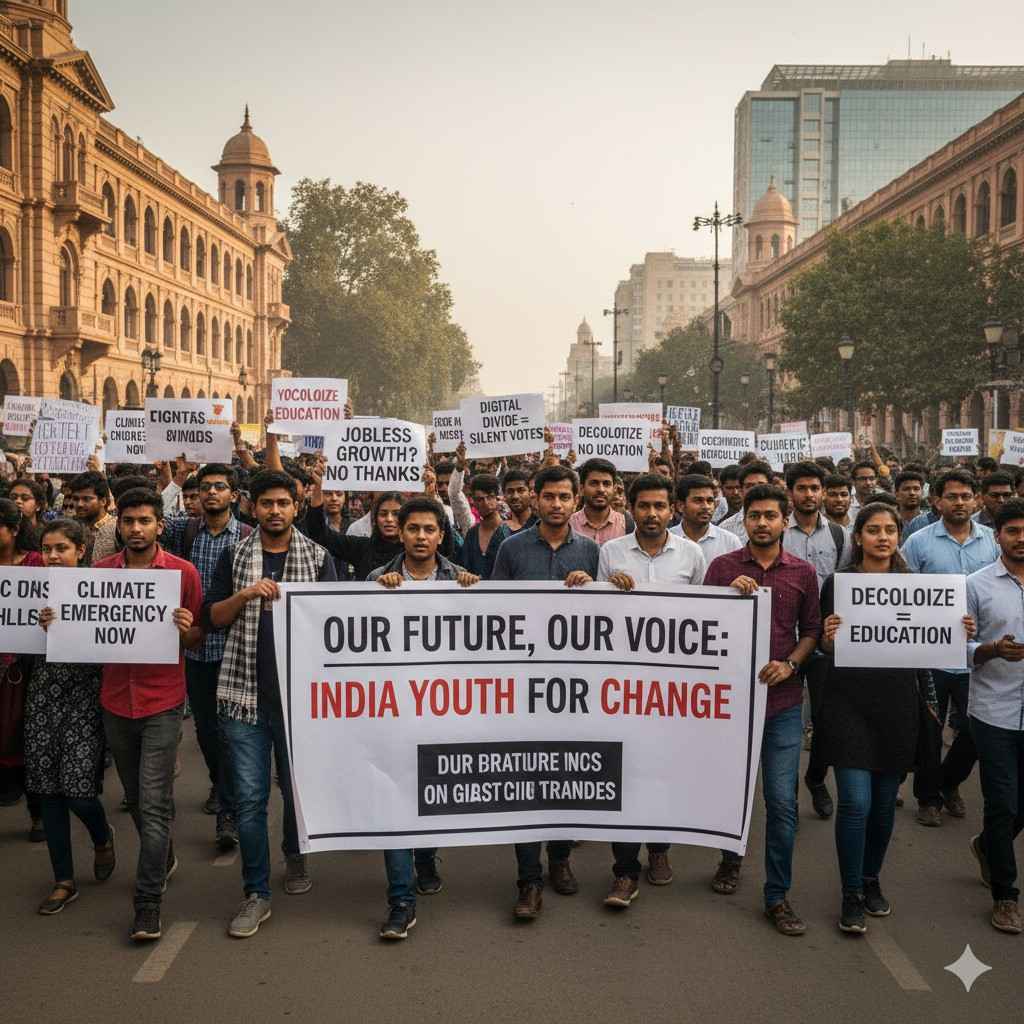
In an increasingly interconnected world, global challenges such as climate change, social justice movements, and technological disruptions are influencing political participation across borders. For India’s youth, these global issues are not just abstract concerns but catalysts driving a new wave of political engagement. As young Indians grapple with the local implications of international phenomena, their
In an increasingly interconnected world, global challenges such as climate change, social justice movements, and technological disruptions are influencing political participation across borders. For India’s youth, these global issues are not just abstract concerns but catalysts driving a new wave of political engagement. As young Indians grapple with the local implications of international phenomena, their activism and political involvement are reshaping the nation’s political landscape.
Introduction
India, home to one of the world’s youngest populations, is witnessing a surge in youth political engagement. While domestic issues like unemployment and education remain at the forefront, global challenges are increasingly shaping how young Indians perceive and participate in politics. From climate action to digital privacy, the ripple effects of global issues are influencing their priorities, activism, and voting behavior.
Global Issues Driving Youth Engagement
1. Climate Change:
The urgency of the climate crisis, amplified by international movements like Fridays for Future, has mobilized Indian youth to demand environmental reforms. Protests against deforestation in the Western Ghats and campaigns to protect the Aravalli Hills illustrate how global climate advocacy has spurred local activism. Young Indians are now advocating for sustainable policies and holding leaders accountable for environmental degradation.
2. Social Justice Movements:
Global movements such as #BlackLivesMatter have found resonance in India, sparking conversations about caste discrimination, gender equality, and LGBTQ+ rights. The influence of these movements is evident in the increased participation of young Indians in protests, online campaigns, and public discourse addressing social inequalities.
3. Digital Privacy and Cybersecurity:
With the rapid rise of technology and global debates over data privacy, young Indians are becoming more vocal about their digital rights. Controversies surrounding data breaches and government surveillance, like the Pegasus spyware scandal, have galvanized youth to demand stronger privacy laws and greater transparency.
4. Economic Globalization and Job Markets:
The global economic landscape, shaped by automation and international trade policies, directly impacts India’s youth. Concerns about job displacement and fair labor practices have driven young Indians to engage with policies on skill development, entrepreneurship, and economic reforms.
The Role of Social Media and Global Connectivity
Amplifying Voices:
Social media platforms like Instagram, Twitter, and YouTube have become powerful tools for youth political engagement, connecting young Indians with global movements and facilitating the rapid exchange of ideas.
Digital Activism:
Hashtags such as #ClimateStrike and #MeToo have transcended borders, allowing young Indians to participate in global conversations while addressing local concerns. This digital activism has broadened their political horizons and strengthened their influence.
Challenges to Sustained Engagement
1. Misinformation:
The same platforms that enable activism are also rife with misinformation, which can distort understanding and hinder effective political engagement.
2. Lack of Institutional Support:
Despite their enthusiasm, young activists often face barriers in translating their efforts into tangible policy changes due to limited access to formal political structures.
3. Polarization:
Global issues often carry ideological baggage, leading to divisions within youth groups and reducing the focus on collaborative problem-solving.
Impact on Indian Politics
Policy Focus:
The growing engagement of youth with global issues has pressured Indian policymakers to address topics such as renewable energy, digital rights, and social justice more seriously.
Youth-Centric Movements:
Political parties are increasingly tailoring their campaigns to appeal to young voters, incorporating global concerns into their manifestos and outreach programs.
Leadership Development:
The rise of youth-driven movements is nurturing a new generation of leaders who combine local knowledge with global awareness, bridging the gap between traditional politics and modern challenges.
Conclusion
Global issues are playing a transformative role in shaping youth political engagement in India. By connecting local struggles with international movements, young Indians are redefining political participation and influencing governance at multiple levels. As this trend continues, the integration of global perspectives into Indian politics has the potential to create a more inclusive, forward-thinking, and impactful political environment that addresses the needs of a rapidly changing world.










Leave a Comment
Your email address will not be published. Required fields are marked with *