
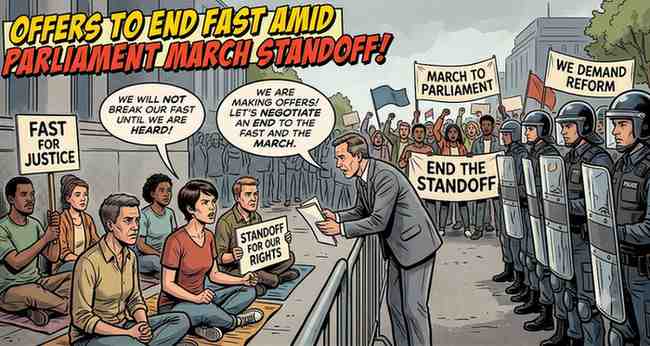
New Delhi, July 2026 — The ongoing education reform protests at Jantar Mantar have taken an dramatic turn. Sonam Wangchuk, the central figure of the agitation, has offered to end his indefinite hunger strike, but only if the government meets two newly established conditions. The breakthrough comes at a critical juncture as the Monsoon Session
New Delhi, July 2026 — The ongoing education reform protests at Jantar Mantar have taken an dramatic turn. Sonam Wangchuk, the central figure of the agitation, has offered to end his indefinite hunger strike, but only if the government meets two newly established conditions.
The breakthrough comes at a critical juncture as the Monsoon Session of Parliament begins, clashing directly with a high-stakes “Sansad Chalo” (March to Parliament) organized by student groups.
A Protest Triggered by Systemic Failure The agitation erupted following a string of high-profile irregularities in India’s competitive examination system, most notably the recent NEET paper leak controversy. Protesters argue that chronic delays in recruitment and recurring exam leaks have compromised the futures of millions of young Indians, shattering public trust in merit-based institutions.
While the movement initially struggled to gain mainstream traction, it intensified rapidly after Wangchuk joined the front lines, drawing widespread emotional and political support across the country.
20 Days of Fasting and an “Illegal Detention” Wangchuk’s condition grew critical after more than 20 days of continuous fasting, resulting in a weight loss of over nine kilograms and severe risks of organ failure. Following an urgent directive from the Delhi High Court ordering the state to protect his life, Delhi Police personnel in civilian clothing removed Wangchuk from Jantar Mantar and admitted him to Safdarjung Hospital.
From his hospital bed, Wangchuk condemned the move as an “illegal detention” and smuggled out a letter urging citizens, parents, and students to proceed with the Parliament march, calling it a “second freedom movement” against institutional corruption and fear.
The Two Conditions to End the Strike Originally, the protesters demanded nothing less than the immediate resignation of Education Minister Dharmendra Pradhan. However, in a major tactical shift announced late last night by his wife, Wangchuk has offered to break his fast today if the ruling BJP-NDA alliance fulfills two demands:
- Direct Dialogue: A formal representative from the ruling government must visit the hospital to meet with Wangchuk.
- Parliamentary Accountability: The government must officially guarantee that the current Monsoon Session will dedicate floor time to debate education reforms and structural accountability.
Capital on Lockdown as March Looms Despite Wangchuk’s call for a disciplined, non-violent march, authorities are taking no chances. The Delhi Police explicitly denied permission for the rally, citing the heavy influx of Members of Parliament to the capital.
To preemptively halt the demonstration, the police have invoked Section 163 of the Bharatiya Nagarik Suraksha Sanhita (formerly Section 144 of the CrPC) across the area for the next 60 days, legally banning gatherings of four or more people.
Bottom Line While the constitutional right to peaceful protest remains protected by Supreme Court precedents, public safety regulations have set up a strict legal barrier in the capital. The fate of the protest now hinges entirely on whether the ruling alliance will step forward to negotiate, accepting Wangchuk’s conditions before the standoff on Delhi’s streets escalates.







Leave a Comment
Your email address will not be published. Required fields are marked with *