
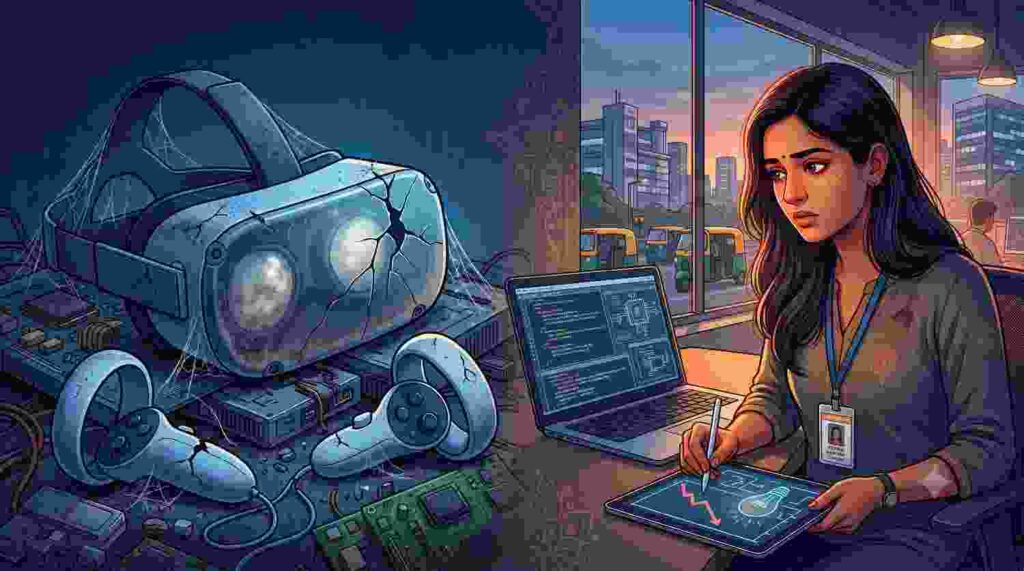
Recent discussions have emerged suggesting that virtual reality (VR) technology is failing to meet its initial hype, with many experts claiming it is nearing obsolescence. This decline raises questions about the future of immersive technologies in India and their potential impact on various sectors. New Delhi, August 2026 — The virtual reality (VR) market, once
Recent discussions have emerged suggesting that virtual reality (VR) technology is failing to meet its initial hype, with many experts claiming it is nearing obsolescence. This decline raises questions about the future of immersive technologies in India and their potential impact on various sectors.
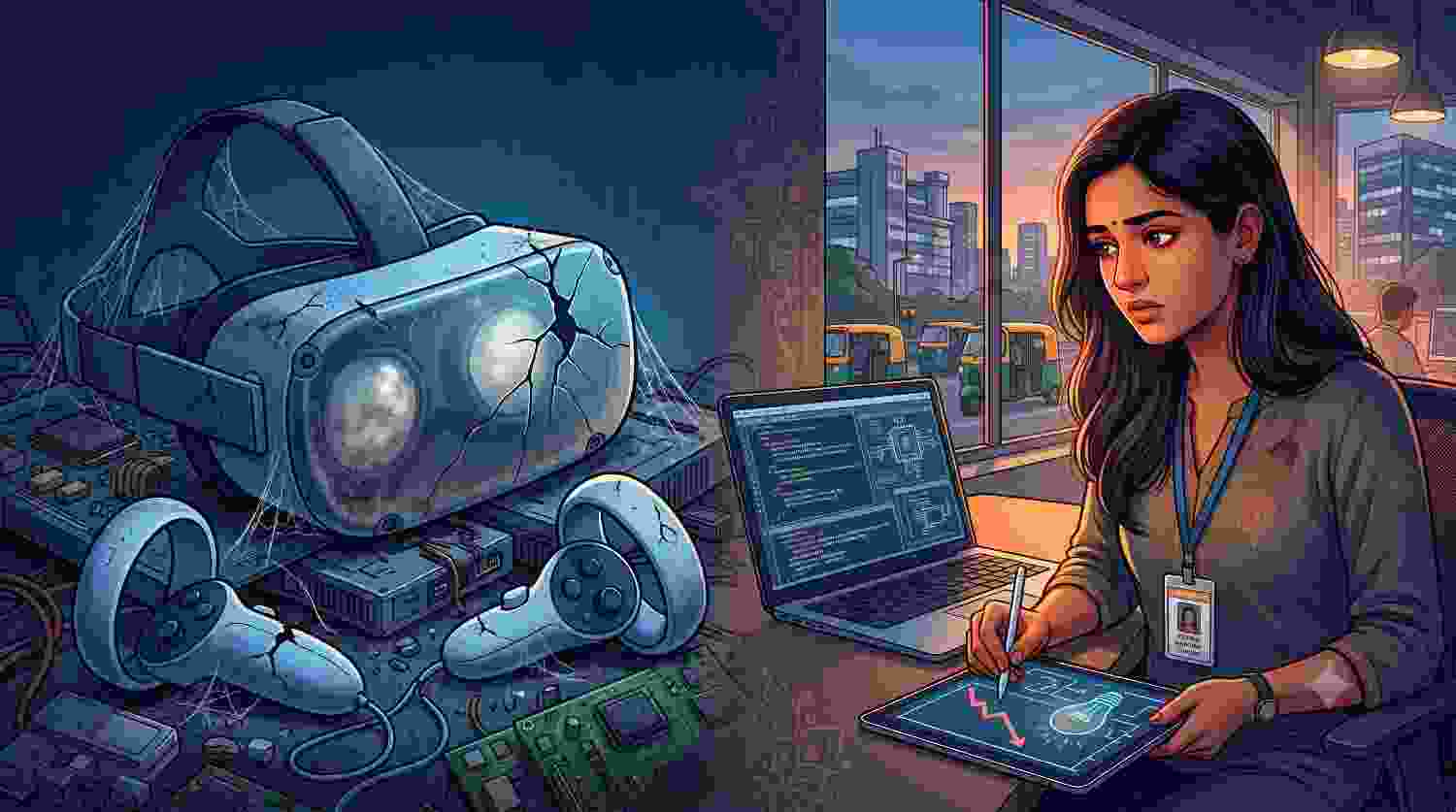
New Delhi, August 2026 — The virtual reality (VR) market, once hailed as the next frontier in digital interaction, is facing significant criticism and skepticism, leading many to declare its imminent decline. Industry analysts note that despite early enthusiasm, VR has not penetrated mainstream markets as anticipated, prompting a reevaluation of its place in the technological landscape.
Why Did This Happen?
The rapid rise and subsequent stagnation of VR can be attributed to several factors. High costs of VR hardware, coupled with a limited catalog of compelling content, have dissuaded consumers from adopting the technology. Additionally, the pandemic accelerated a shift towards more accessible digital experiences, relegating VR to a niche market.
What Does This Mean for India?
For India, the waning interest in VR poses both challenges and opportunities. The country’s burgeoning tech ecosystem has invested heavily in VR startups and applications across sectors such as gaming, education, and healthcare. As VR’s viability comes into question, stakeholders may need to pivot towards augmented reality (AR) and mixed reality (MR), which promise broader applications and easier integration into daily life.
Key Takeaways
- VR technology is experiencing a significant decline in interest and investment.
- High costs and limited content availability are major barriers to widespread adoption.
- India’s tech sector may shift focus from VR to AR and MR technologies.
- The future of immersive technology will likely depend on affordability and practical applications.
What Happens Next?
The future of immersive technologies in India will largely hinge on how industry leaders respond to the challenges facing VR. As companies reassess their strategies, there may be increased investment in AR and MR, which could offer more practical solutions for consumers and businesses alike. Furthermore, the Indian government’s push for digital innovation could see policies that encourage the development of more accessible and affordable technology, thereby revitalizing interest in immersive experiences.








Leave a Comment
Your email address will not be published. Required fields are marked with *