
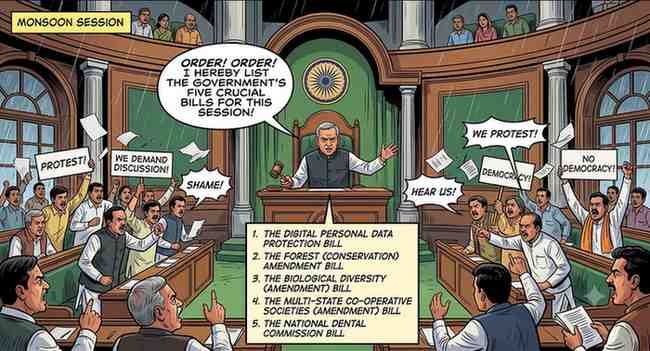
New Delhi, July 2026 — The opening day of Parliament’s Monsoon Session has set the stage for an intense legislative showdown. While political shouting matches and immediate opposition protests forced consecutive adjournments within hours of convening, the government has made its intentions clear: it is moving ahead with five sweeping new bills designed to overhaul
New Delhi, July 2026 — The opening day of Parliament’s Monsoon Session has set the stage for an intense legislative showdown. While political shouting matches and immediate opposition protests forced consecutive adjournments within hours of convening, the government has made its intentions clear: it is moving ahead with five sweeping new bills designed to overhaul India’s regulatory landscape.
From national security and judicial capacity to business laws and data tracking, these bills represent some of the most aggressive legislative pushback seen in recent years.
The NGO Crackdown: Digital Eyes on Foreign Funds The most controversial agenda item is the Foreign Contribution Regulation Amendment (FCRA) Bill, 2026. Building on strict changes made in 2020, the new amendment targets what the government calls “shell NGOs” masking illicit foreign funding.
The law introduces mandatory digital tracking, hyper-strict audit mechanisms, and deeper disclosure rules for every single rupee entering the country from foreign foundations or citizens. While officials call it a national security necessity to block foreign interference in domestic policy, NGOs, universities, and think-tanks warn that increased administrative burdens will severely impact legitimate research and humanitarian relief work.
Taxation and MSMEs: Cutting Red Tape and Forcing Payments On the financial front, the government is introducing the Income Tax Amendment Bill to formally replace an existing ordinance. The goal is simplification: consolidating scattered tax laws, exemptions, and processes into a single, straightforward framework that reduces court litigations and makes compliance easier for everyday taxpayers.
Simultaneously, small businesses are getting a major structural shield via the MSME Development Amendment Bill. To protect small enterprises from collapsing under cash crunches, the bill tightens rules against delayed payments from large corporate buyers while integrating smoother credit access through existing initiatives like the Mudra scheme.
The Digital Registry: Tracking Births and Deaths Nationwide The Registration of Births and Deaths Amendment Bill aims to completely digitize India’s vital statistics. Updating a 1969 law, the bill creates a centralized, real-time digital database for every birth and death in the country. This system is designed to eliminate the need for frequent, costly government surveys while seamlessly updating demographic records used for school admissions, voter IDs, passports, and insurance claims.
Expanding the Supreme Court to Fight Case Backlogs Facing the world’s heaviest judicial workload, the government is proposing an immediate capacity expansion for the nation’s highest court. The new legislation plans to increase the permanent strength of Supreme Court judges from 34 to 38. The addition of four new judges is intended to fast-track long-pending constitutional benches, criminal appeals, and complex commercial disputes that have stalled for years.
Bottom Line Despite severe disruptions in the house and ongoing public hunger strikes outside the gates, the government is treating this Monsoon Session as a major legislative reset. If passed, these bills will fundamentally tighten oversight on foreign money, digitize public registries, and reshuffle judicial power.











Leave a Comment
Your email address will not be published. Required fields are marked with *