
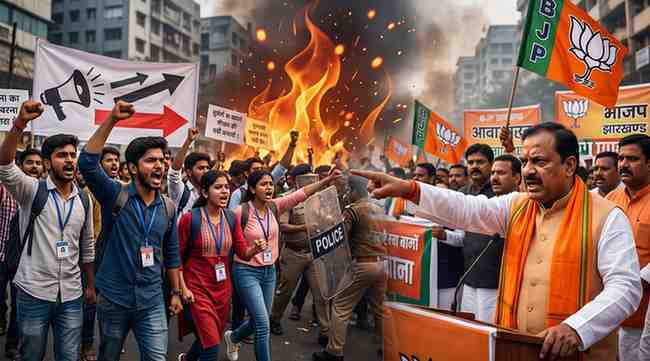
Political tensions are escalating in Jharkhand following a series of student protests, with the BJP accusing Congress leader Rahul Gandhi of selective outrage. The protests, driven by demands for better educational policies and government accountability, have sparked a fierce debate on youth engagement in politics. New Delhi, August 2026 — Student protests in Jharkhand have
Political tensions are escalating in Jharkhand following a series of student protests, with the BJP accusing Congress leader Rahul Gandhi of selective outrage. The protests, driven by demands for better educational policies and government accountability, have sparked a fierce debate on youth engagement in politics.
New Delhi, August 2026 — Student protests in Jharkhand have not only raised concerns about educational reforms but have also ignited a political firestorm, drawing sharp criticism from the BJP directed at Congress leader Rahul Gandhi. The protests, which began over grievances related to university admissions and scholarship disbursements, have been met with strong political reactions, further polarizing an already contentious political landscape.
Why Did the Protests Erupt?
The student protests in Jharkhand were triggered by a series of systemic issues, including delayed scholarship payments and increasing tuition fees. Students rallied to demand immediate action, highlighting the inadequacies in the state’s education system. The protests quickly gained momentum, with students from various universities joining forces to voice their frustrations and demand accountability from the government.
What Is the Political Backdrop?
The BJP has leveraged the student protests to question the effectiveness of the Congress party’s leadership, particularly targeting Rahul Gandhi for his perceived lack of proactive engagement with youth issues. This criticism is set against a backdrop of increased political rivalry in Jharkhand, where both parties are vying for influence over the youth demographic, which is seen as critical for future electoral success.
What Does This Mean for India?
The unfolding events in Jharkhand are emblematic of a larger trend where youth discontent is increasingly manifesting in political mobilization. Students across India are becoming more vocal about their rights and expectations, challenging the status quo. This shift could potentially reshape political strategies for parties across the spectrum, as they seek to address the aspirations and grievances of younger voters.
- Protests initiated over educational grievances in Jharkhand.
- BJP criticizes Rahul Gandhi for not engaging with youth issues.
- Political rivalry intensifies as parties seek to capture youth vote.
- Broader implications for national youth engagement in politics.
- Potential for policy changes in response to student demands.
What Happens Next?
As student protests continue, the pressure on the Jharkhand government could lead to significant policy discussions regarding educational reforms. Both the BJP and Congress will likely intensify their outreach to youth in the upcoming months, aiming to capitalize on the current unrest. Observers suggest that how each party addresses these grievances could not only determine their standing in Jharkhand but also influence broader electoral strategies across India.







Leave a Comment
Your email address will not be published. Required fields are marked with *