





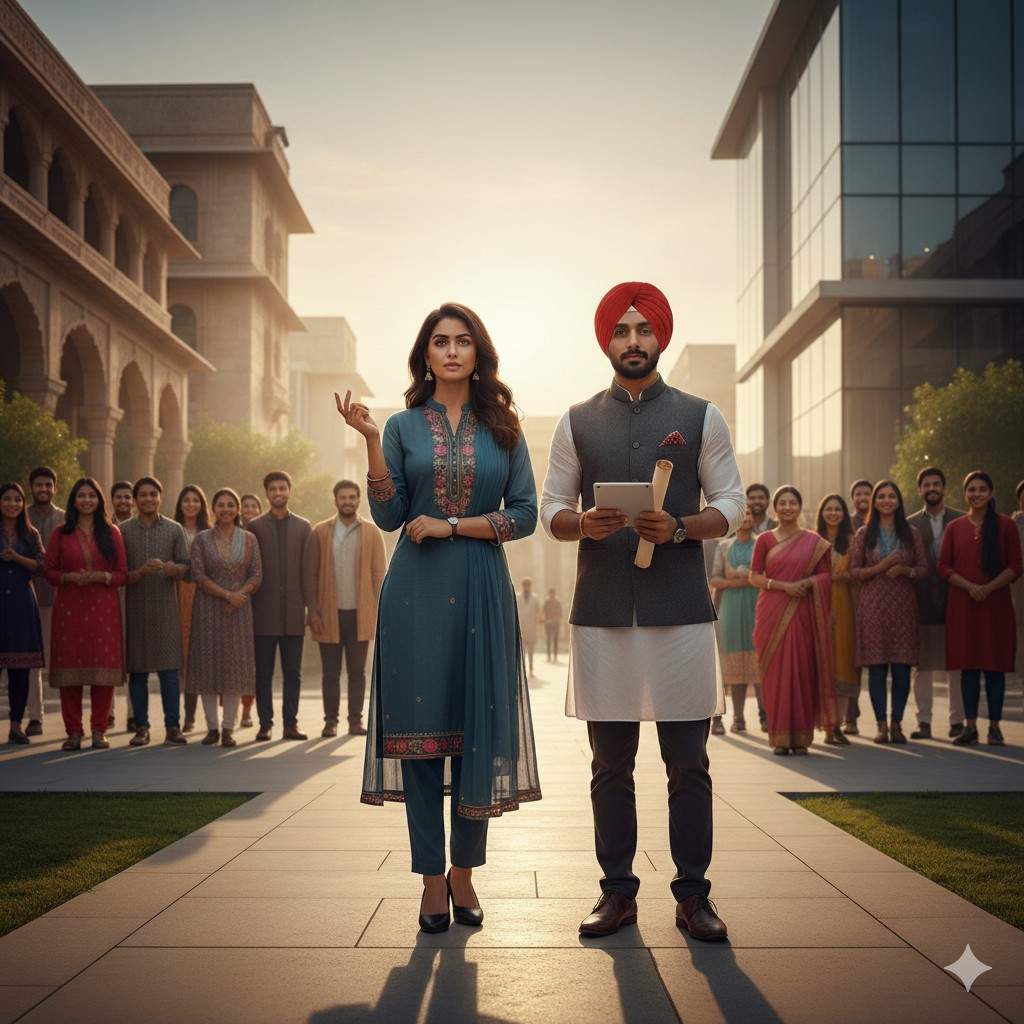
As young leaders increasingly step into political roles worldwide, they face the challenge of balancing tradition with the need for progress. In a country like India, where centuries-old traditions coexist with rapid modernization, this balancing act is particularly significant. Can young leaders navigate the fine line between respecting cultural heritage and driving forward-thinking reforms? Introduction
As young leaders increasingly step into political roles worldwide, they face the challenge of balancing tradition with the need for progress. In a country like India, where centuries-old traditions coexist with rapid modernization, this balancing act is particularly significant. Can young leaders navigate the fine line between respecting cultural heritage and driving forward-thinking reforms?
Introduction
India’s political landscape has always been a complex interplay of deeply rooted traditions and evolving societal needs. The rise of young political leaders brings new energy and perspectives, but it also raises questions about their ability to honor cultural values while addressing contemporary issues like climate change, digitalization, and social equity.
The Role of Tradition in Indian Politics
1. Symbol of Stability:
Traditions in Indian politics often symbolize stability and continuity. Cultural practices, religious identities, and historical legacies play a significant role in shaping voter behavior and political discourse.
2. Connect with Grassroots:
For leaders to resonate with rural and older populations, understanding and respecting traditions is crucial. Policies and messaging that align with cultural sentiments can help build trust and loyalty among constituents.
3. Bridging Generations:
Young leaders often inherit constituencies where older generations expect adherence to traditional values. Successfully balancing these expectations while introducing progressive policies requires political tact and sensitivity.
The Push for Progress
1. Addressing Modern Challenges:
Young leaders are often more attuned to contemporary issues such as climate change, gender equality, and digital transformation. Their focus on long-term sustainability and innovation reflects the priorities of a younger, urban electorate.
2. Breaking Social Barriers:
Progressive young leaders frequently challenge outdated norms, such as caste-based discrimination or gender biases, advocating for a more inclusive society.
3. Leveraging Technology:
Young politicians are adept at using technology to connect with voters, improve governance, and promote transparency. Digital platforms allow them to communicate directly with constituents, bypassing traditional media gatekeepers.
Challenges in Balancing Tradition and Progress
1. Resistance from Established Systems:
Young leaders often face pushback from older, entrenched political systems resistant to change. Balancing progressive policies with respect for traditional institutions can be a tightrope walk.
2. Risk of Alienation:
Introducing reforms that challenge longstanding traditions can alienate conservative voter bases, creating potential political risks.
3. Navigating Identity Politics:
In India, where identity politics plays a significant role, young leaders must tread carefully to avoid polarizing communities while advocating for inclusive progress.
Case Studies
1. Aaditya Thackeray (Maharashtra):
Thackeray has worked to modernize urban infrastructure while respecting the Shiv Sena’s traditional Marathi ethos. His policies on sustainable transportation and climate action reflect a careful balance of progress and tradition.
2. Sanna Marin (Finland):
As one of the youngest world leaders, Marin demonstrates how to merge tradition with innovation. Her policies on gender equality and digital governance have modernized Finnish politics while maintaining a connection to the country’s values of transparency and social equity.
3. Justin Trudeau (Canada):
Trudeau’s approach to reconciliation with Indigenous communities highlights the importance of respecting cultural heritage while pushing for progressive policies on diversity and inclusion.
Opportunities for Young Leaders
1. Building Bridges Across Generations:
Young leaders can use their unique position to act as a bridge between older generations who value tradition and younger populations seeking progress. By fostering dialogue, they can create policies that address the needs of all demographics.
2. Reinterpreting Traditions:
Rather than discarding traditions, young leaders can reinterpret them in ways that align with contemporary values. For example, promoting environmental conservation through traditional practices rooted in respect for nature.
3. Inclusive Leadership:
By involving diverse voices in decision-making, young leaders can ensure that both traditional values and progressive ideals are represented in governance.
Conclusion
Balancing tradition and progress is not just a challenge but an opportunity for young leaders to redefine political leadership in a way that respects the past while embracing the future. In India and beyond, the ability to navigate this balance will determine how effectively young politicians can address modern societal needs while preserving the cultural fabric that binds communities together. By fostering inclusive, forward-thinking governance, young leaders can pave the way for a political landscape that harmoniously blends heritage with innovation.
















Leave a Comment
Your email address will not be published. Required fields are marked with *