





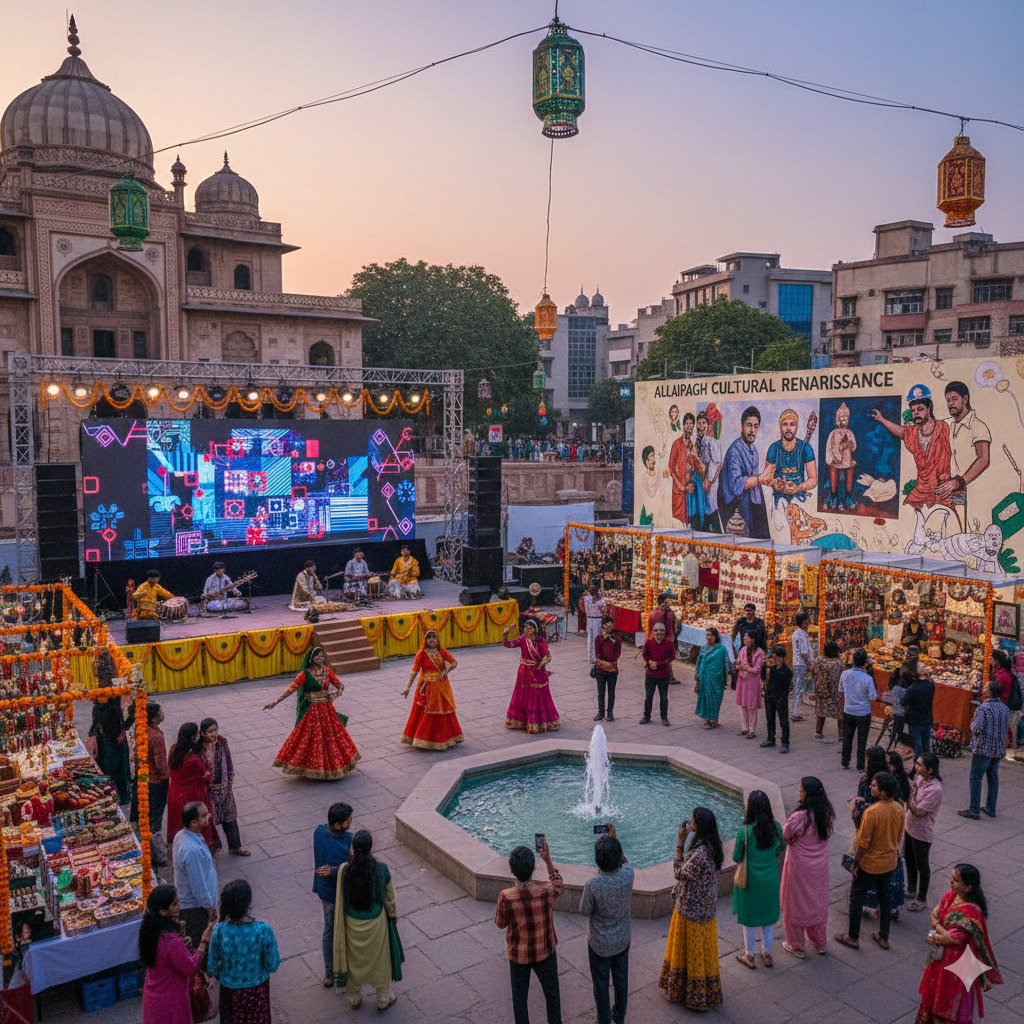
Aligarh, a city known for its rich historical legacy and vibrant cultural heritage, is home to a diverse mix of traditions, art forms, and crafts that have evolved over centuries. As India modernizes and globalizes, the preservation of cultural traditions becomes increasingly important. The question arises: Are the citizens and institutions of Aligarh doing enough
Aligarh, a city known for its rich historical legacy and vibrant cultural heritage, is home to a diverse mix of traditions, art forms, and crafts that have evolved over centuries. As India modernizes and globalizes, the preservation of cultural traditions becomes increasingly important. The question arises: Are the citizens and institutions of Aligarh doing enough to preserve their cultural heritage, and how are they contributing to its continuation in the face of rapid urbanization?
A City Steeped in Tradition
Aligarh, best known for its prestigious Aligarh Muslim University (AMU), is a city that has long been a center of education, intellectual activity, and cultural dialogue. The city’s historical significance dates back to the Mughal period, with its architectural landmarks and rich traditions offering a glimpse into a bygone era. However, as Aligarh transforms into a modern city, some fear that the deep-rooted cultural practices might fade away amidst the pressures of urban growth and economic development.
Cultural Festivals and Celebrations
One of the most prominent ways Aligarh’s residents engage with their traditions is through festivals and public celebrations. Events such as Eid, Diwali, and Holi are celebrated with great enthusiasm across the city, bringing together communities of all backgrounds. These celebrations are not just religious observances; they are cultural milestones that reinforce social bonds and create spaces for collective identity.
In recent years, initiatives like the Aligarh International Film Festival have also added to the city’s cultural calendar, blending traditional elements with modern artistic expressions. These events offer a platform for both local artists and global talents to showcase their work, fostering an environment where cultural preservation is seen as dynamic and evolving rather than static.
Promoting Handicrafts and Traditional Arts
Aligarh is home to a variety of traditional crafts, from Zardozi embroidery to brassware and woodwork, each representing the intricate skills passed down through generations. Institutions like the Aligarh Handicraft Development Institute work tirelessly to promote these arts, providing training to local artisans and showcasing their work to a global audience. This not only helps preserve the craft itself but also empowers the artisans who continue to practice these skills in an increasingly commercialized world.
The city’s famed Aligarh locks—a product of centuries of craftsmanship—continue to be one of the most well-known traditional industries of the region. The Aligarh Locks Industry provides a livelihood to thousands of families, and efforts are being made to integrate these traditional skills with contemporary design and technology to keep the craft relevant in today’s global market.
The Role of Educational Institutions
The Aligarh Muslim University (AMU) plays a pivotal role in preserving and promoting the cultural heritage of the region. With its centuries-old library, archives, and collections, AMU serves as a repository for the intellectual and cultural history of Aligarh. The university also hosts cultural events such as music concerts, theatrical performances, and literary festivals that celebrate both local and global cultures.
Moreover, AMU offers academic programs in fields such as history, literature, and Islamic studies, ensuring that future generations are well-equipped to understand and appreciate the city’s cultural roots. These educational initiatives play an essential role in fostering cultural preservation while providing students with a platform to explore and innovate within traditional frameworks.
Efforts to Revive Folk Music and Dance
Another crucial aspect of Aligarh’s cultural preservation is its folk music and dance traditions, which have been the heartbeat of the region for centuries. Organizations such as the Aligarh Cultural Society are working to revive these forms of music and dance, hosting regular performances and workshops to educate the younger generation about their cultural heritage.
Qawwali, the devotional music that has roots in Aligarh’s Sufi traditions, is particularly prominent in the region. The city hosts a number of qawwali performances throughout the year, and renowned singers from across India and beyond travel to Aligarh to perform at these events. By engaging younger audiences and involving them in both the performance and appreciation of traditional music, the city hopes to ensure that these arts are passed down and appreciated for generations to come.
Challenges to Preservation
Despite these efforts, Aligarh faces several challenges in preserving its cultural heritage. The rapid pace of urbanization has led to the loss of historical sites, with some of the city’s traditional markets and neighborhoods being replaced by modern infrastructure. This has caused a disconnect between the younger generation and the cultural practices of the past, with many of them gravitating toward more globalized, commercialized lifestyles.
Moreover, while initiatives to preserve traditional crafts and arts are commendable, there is still a lack of large-scale government support for many local artisans. Without continued investment and awareness, there is a risk that these traditions could fade into obscurity, leaving future generations without a connection to their cultural roots.
The Way Forward
To ensure the continued preservation of Aligarh’s cultural heritage, there needs to be a more concerted effort from both government and civil society. The city’s rich history must be celebrated through the creation of heritage zones and the restoration of historical sites, while also integrating modern amenities that can support tourism and local crafts.
The role of educational institutions such as AMU is crucial in fostering a deeper understanding of the city’s cultural history. By continuing to offer programs that emphasize cultural studies and by supporting research into traditional practices, these institutions can ensure that Aligarh’s cultural identity is preserved in both academic and practical ways.
Additionally, the city’s youth must be encouraged to take an active role in cultural preservation. Through workshops, youth-centered events, and platforms to showcase their talents, the younger generation can help carry forward the traditions that make Aligarh unique.
Conclusion
Aligarh’s cultural initiatives are a testament to the city’s deep connection to its history, traditions, and artistic practices. While there are challenges in preserving these traditions amidst the pressures of modernization, the concerted efforts from local institutions, educational bodies, and cultural organizations show promise. By embracing both innovation and tradition, Aligarh can ensure that its cultural heritage remains a vital part of its future, enriching the lives of its citizens and attracting global attention for years to come.





















Leave a Comment
Your email address will not be published. Required fields are marked with *