





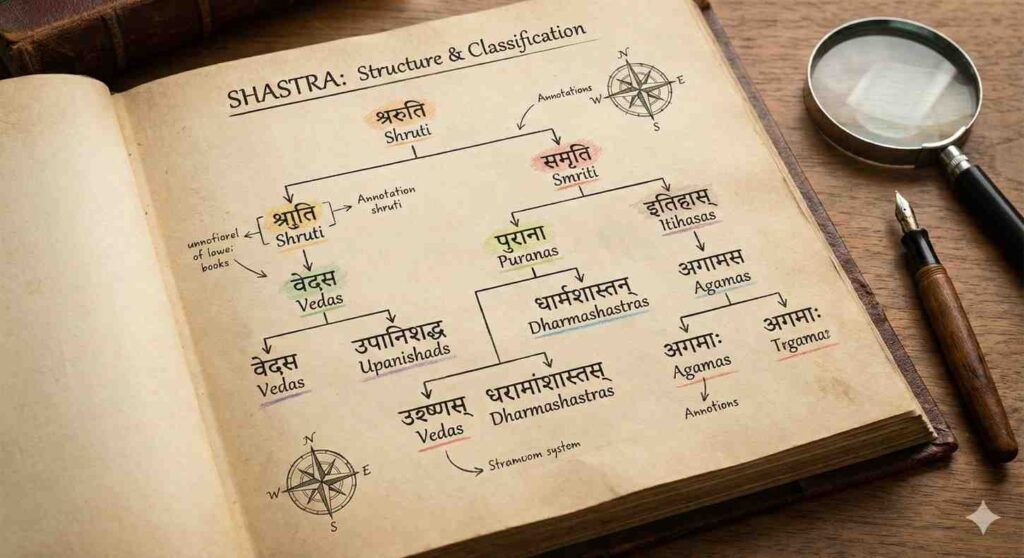
“Ancient Guidelines or Outdated Rules? The Debate Over the Relevance of Shastras” The Shastras, integral to Hindu philosophy, serve as systematic texts that codify knowledge across diverse domains, including ethics, governance, health, spirituality, and aesthetics. Unlike the Vedas, which are considered divinely revealed (shruti), the Shastras are categorized as smriti (that which is remembered), reflecting their human authorship and
“Ancient Guidelines or Outdated Rules? The Debate Over the Relevance of Shastras”
The Shastras, integral to Hindu philosophy, serve as systematic texts that codify knowledge across diverse domains, including ethics, governance, health, spirituality, and aesthetics. Unlike the Vedas, which are considered divinely revealed (shruti), the Shastras are categorized as smriti (that which is remembered), reflecting their human authorship and adaptability to societal contexts. Despite their profound influence, the Shastras have sparked debates about their relevance in contemporary India, with some questioning their alignment with modern values.
What Are Shastras?
Derived from the Sanskrit root śās (to instruct), the Shastras are treatises designed to organize and disseminate Vedic principles for practical application. They provide detailed frameworks for individual and societal conduct, combining philosophy with actionable guidance.
The Shastras are not a single text but a collection of works categorized by their focus:
- Dharma Shastras: Ethical and legal codes.
- Arthashastra: Governance and statecraft.
- Kama Shastra: Texts on relationships, aesthetics, and desires.
- Yoga Shastras: Manuals on spiritual and physical discipline.
- Ayurveda Shastras: Guides to holistic health and medicine.
The Structure of Shastras: Categorization and Focus
- Dharma Shastras:
- Texts such as the Manusmriti and Yajnavalkya Smriti outline social norms, familial duties, and legal principles.
- These texts were historically used to guide governance and societal structures, emphasizing duties (dharma) across life stages (ashramas) and social classes (varnas).
- Controversy: Critics argue that some interpretations of the Dharma Shastras, particularly caste-based regulations, conflict with modern egalitarian values.
- Arthashastra:
- Kautilya’s Arthashastra is a seminal text on politics, economics, and military strategy.
- It provides practical advice for rulers, including taxation, foreign policy, and economic management.
- Recognized as an early treatise on governance, the Arthashastra is often studied for its relevance to modern policymaking.
- Kama Shastra:
- The Kamasutra by Vatsyayana explores human relationships, aesthetics, and societal roles related to love and desire.
- While often reduced to its erotic elements, it encompasses broader themes of art, cultural refinement, and social harmony.
- Yoga Shastras:
- Texts like Patanjali’s Yoga Sutras provide a systematic approach to physical and mental well-being, blending philosophy with techniques like meditation and breath control.
- These texts remain globally relevant, underpinning the modern yoga movement.
- Ayurveda Shastras:
- Foundational texts such as the Charaka Samhita and Sushruta Samhita detail holistic approaches to health, emphasizing preventive care and natural remedies.
- Ayurveda’s principles are integrated into contemporary wellness practices, with government initiatives promoting its global adoption.
Government Initiatives and Preservation Efforts
Recognizing the importance of the Shastras, the Indian government and organizations have taken steps to preserve and promote their teachings:
- National Manuscripts Mission: Dedicated to digitizing and cataloging ancient texts, including Shastras, ensuring accessibility for future generations.
- Ministry of AYUSH: Actively supports research and promotion of Ayurveda Shastras, integrating traditional medicine with modern healthcare.
- ICHR and ICPR Projects: The Indian Council of Historical Research and Indian Council of Philosophical Research conduct studies to contextualize and reinterpret Shastric knowledge for contemporary relevance.
The Relevance Debate: Ancient Wisdom or Obsolete Rules?
While the Shastras offer timeless insights into governance, health, and ethics, their application in modern society is complex:
- Criticism of Outdated Norms: Elements of texts like the Manusmriti have been criticized for promoting caste and gender hierarchies. Efforts to reinterpret these texts often focus on their philosophical core while discarding socially regressive elements.
- Adaptability and Modernization: Proponents argue that the Shastras’ adaptability allows them to remain relevant, provided they are contextualized within today’s ethical and social frameworks.
Educational Value of the Shastras
The Shastras provide:
- A Holistic Framework: Addressing all aspects of life—spiritual, intellectual, and practical.
- Historical Insight: Offering a window into ancient Indian society, culture, and governance.
- Global Relevance: Influencing fields like yoga, Ayurveda, and sustainable living.
Conclusion
The Shastras, as repositories of ancient wisdom, continue to shape India’s cultural and intellectual heritage. While debates about their relevance persist, their adaptability and philosophical depth make them invaluable guides for ethical living and societal organization. By preserving their essence and contextualizing their teachings, we can harness the Shastras’ potential to address modern challenges while honoring their historical significance.










Leave a Comment
Your email address will not be published. Required fields are marked with *