





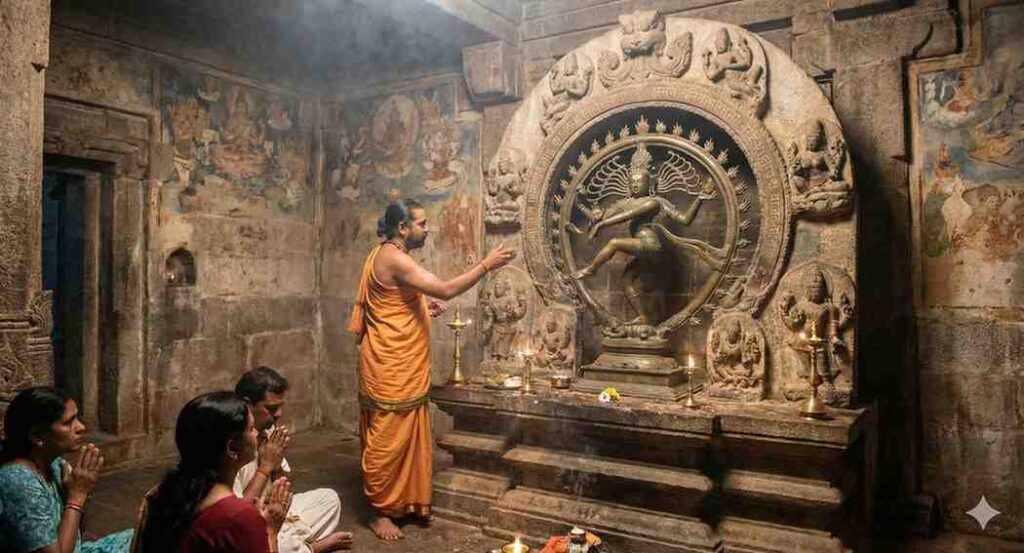
Shiva, the enigmatic figure in Hindu philosophy, is revered as the cosmic dancer, Nataraja, whose dance symbolizes the perpetual cycles of creation, preservation, and destruction. This dynamic imagery, central to Hindu thought, holds profound philosophical significance. While the fully developed concept of Nataraja emerges in later Hindu texts, the seeds of Shiva’s cosmic symbolism can be traced back
Shiva, the enigmatic figure in Hindu philosophy, is revered as the cosmic dancer, Nataraja, whose dance symbolizes the perpetual cycles of creation, preservation, and destruction. This dynamic imagery, central to Hindu thought, holds profound philosophical significance. While the fully developed concept of Nataraja emerges in later Hindu texts, the seeds of Shiva’s cosmic symbolism can be traced back to the Vedic literature, where he is revered in his early form as Rudra.
Shiva in the Vedic Context
In the Vedic texts, particularly the Rigveda, Shiva is referred to as Rudra, a deity of storms, destruction, and healing. Rudra’s attributes lay the foundation for Shiva’s later characterization:
- Dual Nature: Rudra is both feared as the “Howler” and venerated as the healer and granter of boons. This duality reflects the paradoxical nature of Shiva as both destroyer and restorer.
- Connection to Nature: Vedic hymns associate Rudra with the wilderness and natural elements, foreshadowing Shiva’s later role as the lord of ascetics and the cosmos.
In the Shatarudriya hymn of the Yajurveda, Rudra is invoked as the universal force encompassing all forms and functions. This invocation aligns with the cosmic essence that Shiva would embody in later philosophical and artistic expressions.
Symbolism of Shiva’s Cosmic Dance
The concept of Shiva’s dance, fully developed in the Nataraja form during the Chola period (9th–13th centuries CE), draws from deeper Vedic and Upanishadic principles:
- Creation, Preservation, and Destruction:
- The dance’s rhythmic movements symbolize the cosmic cycle of birth, sustenance, and dissolution, aligning with the Vedic idea of perpetual flux (rita).
- This cyclicality mirrors the concept of yajna (sacrifice) in the Vedas, where destruction paves the way for renewal.
- Ananda Tandava (Dance of Bliss):
- Shiva’s dance represents the ultimate bliss (ananda) of self-realization, as described in the Upanishads.
- The cosmic dance dissolves illusion (maya), revealing the unity of atman (individual self) and Brahman(universal consciousness).
- The Elements in Harmony:
- In the Nataraja iconography, Shiva dances within a circle of fire, representing the cyclical nature of the universe and the five elements (pancha bhutas).
- His lifted foot signifies liberation (moksha), a central theme in Vedic philosophy.
- Destruction as Transformation:
- The destructive aspect of Shiva’s dance is not annihilation but transformation—a return to the primordial state, akin to the dissolution described in the Nasadiya Sukta of the Rigveda.
Philosophical Connections to the Vedas
- Unity of Opposites:
- Shiva’s dance embodies the Vedic principle of duality within unity: creation arises from destruction, and stillness coexists with motion.
- Sound and Vibration:
- The Rigveda emphasizes the primordial sound (Om), which resonates with Shiva’s drum (damaru) in the Nataraja depiction. The drumbeat represents the rhythm of the universe, echoing the Vedic view of sound as a creative force.
- Cosmic Order (Rita):
- Shiva’s dance reflects rita, the Vedic principle of cosmic order. His movements symbolize the maintenance of universal balance.
- Liberation (Moksha):
- The raised foot in the Nataraja iconography represents liberation, aligning with the Upanishadic pursuit of transcending the cycle of birth and death.
Relevance in Modern Times
- Art and Philosophy:
- The imagery of Nataraja is celebrated globally as a symbol of cosmic rhythm and interconnectedness. It has inspired art, music, and literature, demonstrating its timeless appeal.
- Science and Symbolism:
- The Nataraja statue at CERN, the European Organization for Nuclear Research, symbolizes the connection between Shiva’s dance and the dynamics of subatomic particles, highlighting the fusion of ancient philosophy and modern science.
- Personal and Spiritual Growth:
- Shiva’s dance encourages self-reflection, emphasizing the cyclical nature of life’s challenges and transformations. Its symbolism inspires resilience and renewal in the modern context.
Conclusion
The cosmic dance of Shiva, rooted in the Vedic portrayal of Rudra and fully realized in later Hindu philosophy, represents the eternal cycle of existence. It is a profound metaphor for creation, preservation, and transformation, echoing the Vedic principles of rita and yajna. Far from being a mere religious motif, Shiva’s dance offers timeless insights into the nature of life and the universe, making it a universal symbol of balance, resilience, and liberation. By studying its origins and symbolism, we not only honor an ancient tradition but also uncover profound lessons for navigating the complexities of modern life.









Leave a Comment
Your email address will not be published. Required fields are marked with *