





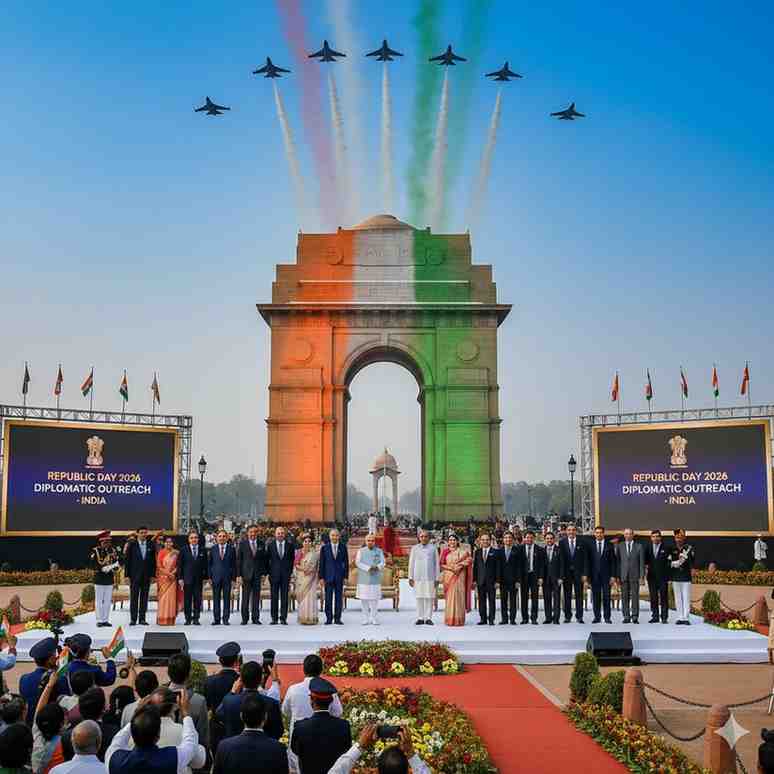
Key highlights Republic Day is pageantry, yes—but it’s also policy language spoken in visuals. The claim that bilateral legislative agreements will be signed with a visiting chief guest (likely a BRICS+ leader) is speculative until a confirmed guest is announced and outcomes are published. The safer way to read Republic Day diplomacy is as a directional indicator: who stands
Key highlights
- Republic Day is a diplomatic theatre—chief guest optics matter, but the 2026 chief guest is not officially confirmed yet.
- Bilateral outcomes (MoUs/agreements) are possible, but not guaranteed and must be tracked through official announcements.
- The real signal is alignment: trade, technology, defence, or Global South coalition-building.
Republic Day is pageantry, yes—but it’s also policy language spoken in visuals.
The claim that bilateral legislative agreements will be signed with a visiting chief guest (likely a BRICS+ leader) is speculative until a confirmed guest is announced and outcomes are published. The safer way to read Republic Day diplomacy is as a directional indicator: who stands beside India tells you which corridors might get widened in the coming year—defence production, critical minerals, trade, digital public infrastructure, or energy.
For readers tracking geopolitics: don’t chase predictions; chase documents. The day after the parade is where the real deliverables show up—joint statements, MoUs, sectoral cooperation notes.
What to watch next: MEA announcements on the chief guest and any joint statements released around Jan 26.



















Leave a Comment
Your email address will not be published. Required fields are marked with *