





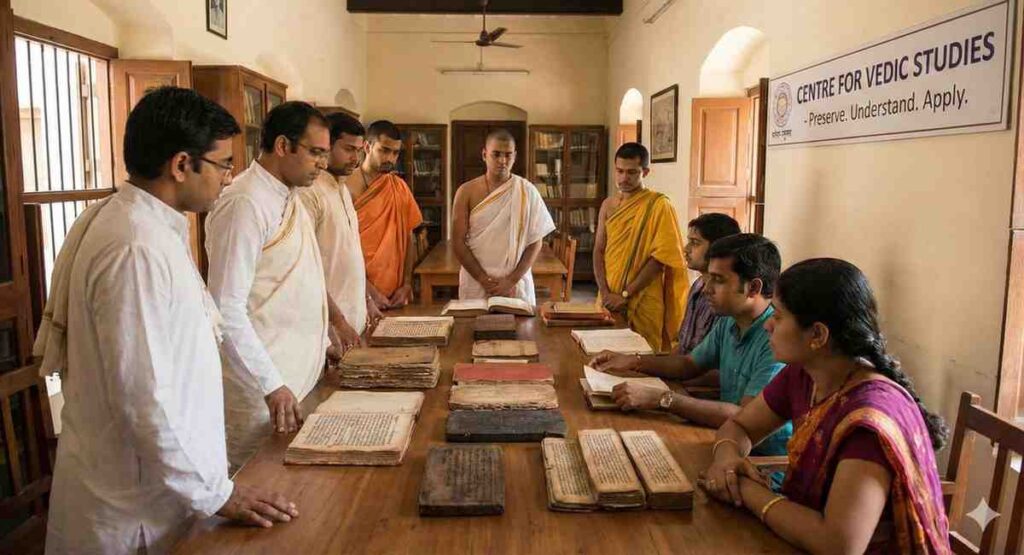
“Ancient Wisdom or Outdated Doctrine? Revisiting the Relevance of the Vedas” The Vedas, revered as the foundational texts of Hindu philosophy, are among the oldest scriptures known to humanity. Composed between 1500 BCE and 500 BCE, these ancient texts transcend their historical origins to provide universal insights into spirituality, science, and societal harmony. Despite their
“Ancient Wisdom or Outdated Doctrine? Revisiting the Relevance of the Vedas”
The Vedas, revered as the foundational texts of Hindu philosophy, are among the oldest scriptures known to humanity. Composed between 1500 BCE and 500 BCE, these ancient texts transcend their historical origins to provide universal insights into spirituality, science, and societal harmony. Despite their profound teachings, the relevance of studying the Vedas in modern times remains a topic of debate, with critics questioning their applicability to contemporary life. However, an exploration of the Vedas reveals a wealth of knowledge that continues to guide individuals and societies alike.
What Are the Vedas?
The word Veda originates from the Sanskrit root vid, meaning “to know.” The Vedas are considered shruti (divinely revealed knowledge) and comprise four main texts:
- Rigveda: Hymns praising cosmic forces and deities, emphasizing harmony and order.
- Samaveda: Melodic chants integral to rituals.
- Yajurveda: Instructions for sacrificial ceremonies.
- Atharvaveda: Practical knowledge covering medicine, governance, and daily life.
Each Veda is further divided into four sections:
- Samhitas: Hymns and mantras.
- Brahmanas: Ritual commentaries.
- Aranyakas: Meditative reflections.
- Upanishads: Philosophical discourses on ultimate reality (Brahman) and the self (Atman).
What Can We Learn from the Vedas?
- Universal Truths and Spiritual Insights:
- The Rigveda’s mantra “Ekam Sat Vipra Bahudha Vadanti” (Truth is one, but the wise call it by many names) underscores the Vedas’ emphasis on unity and inclusivity, encouraging respect for diverse perspectives.
- Ethical Living and Cosmic Order (Rita):
- The concept of rita, the universal law governing existence, provides the foundation for dharma (righteous living) and karma (action and consequence). These principles remain relevant in fostering personal and societal ethics.
- Meditation and Self-Realization:
- The Upanishads, as part of the Vedas, delve into profound questions about consciousness and liberation (moksha), offering tools for introspection and mental well-being.
- Environmental Harmony:
- The Vedas emphasize the interconnectedness of nature and humanity, advocating for the preservation of natural resources and ecological balance—a message increasingly critical in the face of climate change.
- Scientific and Mathematical Knowledge:
- The Vedas contain early references to astronomical calculations, herbal medicine, and concepts of zero, highlighting their contributions to the development of science. The Ministry of AYUSH promotes Vedic-based practices like Ayurveda globally, integrating traditional knowledge into modern healthcare.
Contemporary Efforts to Promote Vedic Studies
The Indian government and academic institutions are actively working to preserve and promote Vedic knowledge:
- National Manuscripts Mission: Focused on digitizing and cataloging ancient manuscripts, including Vedic texts, for global accessibility.
- Ministry of Culture: Organizing seminars and workshops to encourage the study of Vedas and their relevance to contemporary life.
- UNESCO Recognition: The oral tradition of Vedic chanting is recognized as an Intangible Cultural Heritage of Humanity, ensuring its preservation and transmission.
Criticism and Controversies
While the Vedas are celebrated for their philosophical depth, they are not without controversy:
- Relevance in Modern Contexts: Critics argue that the ritualistic aspects of the Vedas may seem outdated in today’s secular and scientific world.
- Selective Interpretation: Misinterpretations of Vedic principles have occasionally been used to justify social hierarchies, contrary to their universal and inclusive spirit.
- Accessibility: The complex language and symbolism of the Vedas pose challenges for modern readers, necessitating simplified translations and commentaries.
Why Should We Study the Vedas Today?
- A Timeless Repository of Knowledge:
- The Vedas provide insights into universal questions about existence, consciousness, and the cosmos that remain relevant across cultures and epochs.
- Fostering Global Harmony:
- The Vedic emphasis on interconnectedness and respect for diversity aligns with contemporary efforts to build a more inclusive and sustainable world.
- Cultural Preservation:
- Studying the Vedas ensures the transmission of India’s intellectual heritage, enriching global philosophical discourse.
- Personal and Societal Growth:
- The principles of dharma and karma inspire ethical living, while meditative practices foster mental well-being and resilience.
Conclusion
The Vedas, far from being relics of the past, are living texts that continue to inspire and guide humanity. Their teachings on unity, ethics, and self-realization address contemporary challenges, from mental health crises to environmental sustainability. By studying the Vedas with an open mind and contextual understanding, we can uncover timeless wisdom that transcends cultural and temporal boundaries, ensuring their relevance for generations to come.










Leave a Comment
Your email address will not be published. Required fields are marked with *