





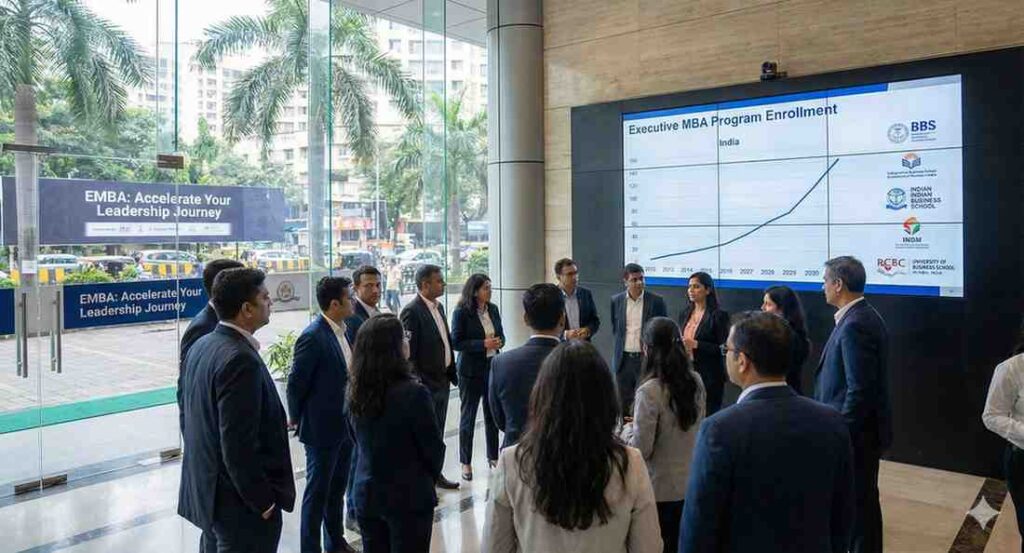
In the evolving landscape of higher education, Executive MBA (EMBA) programs are gaining significant traction in India. Designed specifically for mid-career professionals and senior executives, EMBA programs offer a pathway to career advancement, leadership development, and skill enhancement without the need to take a career break. As industries embrace innovation and rapid technological advancements, the demand for
In the evolving landscape of higher education, Executive MBA (EMBA) programs are gaining significant traction in India. Designed specifically for mid-career professionals and senior executives, EMBA programs offer a pathway to career advancement, leadership development, and skill enhancement without the need to take a career break. As industries embrace innovation and rapid technological advancements, the demand for such flexible, industry-aligned programs is surging. Here’s a closer look at the growth of EMBA programs in India, their appeal, and their impact on professionals and businesses alike.
1. Why Executive MBA Programs Are Thriving in India
The popularity of EMBA programs in India can be attributed to several factors that resonate with the aspirations of working professionals and the evolving needs of industries.
Rising Demand for Leadership Skills
As organizations face increased global competition and market complexities, there is a growing need for leaders who possess a mix of strategic thinking, analytical skills, and business acumen. EMBA programs are tailored to nurture such leadership qualities, making them a preferred choice for professionals aiming to climb the corporate ladder.
Flexibility for Working Professionals
Unlike traditional MBA programs, EMBAs offer flexible schedules, including weekend classes, online modules, and hybrid learning models. This makes it possible for professionals to pursue higher education while continuing to work.
Industry-Aligned Curriculum
EMBA programs focus on real-world applications and practical learning, addressing current business challenges. The emphasis on case studies, live projects, and peer learning ensures that students can directly implement their learnings at work.
2. The Appeal of EMBA Programs for Professionals
EMBA programs in India are appealing to a wide range of professionals across industries.
Career Advancement
For mid-career professionals looking to transition into leadership roles, an EMBA provides the skills and credentials to accelerate growth. With a focus on strategic management, leadership, and decision-making, these programs equip participants to handle high-level responsibilities.
Networking Opportunities
EMBA cohorts are typically composed of experienced professionals from diverse industries, offering unparalleled networking opportunities. Peer-to-peer learning, group projects, and alumni events create a strong professional network that can open doors to collaborations and career opportunities.
Global Exposure
Many Indian EMBA programs include international immersion modules, giving participants exposure to global business practices, cross-cultural management, and international markets.
3. Growth Drivers for Executive MBA Programs in India
Corporate Sponsorships
Many companies in India are investing in their employees by sponsoring or partially funding EMBA programs. This trend underscores the value that businesses place on upskilling their workforce to stay competitive.
Digital Transformation
The rise of online and hybrid learning models has made EMBA programs more accessible. Platforms like Coursera, edX, and partnerships between universities and online learning platforms have further fueled this growth.
Increased ROI Awareness
As professionals become more ROI-focused in their education decisions, the return on investment from EMBA programs—higher salaries, promotions, and enhanced skills—is becoming a key motivator.
4. Top Institutions Offering EMBA Programs in India
Several premier institutions in India are leading the charge in offering top-tier EMBA programs:
1. Indian School of Business (ISB): Post Graduate Program in Management for Working Professionals (PGPpro)
- Highlights: Focus on leadership and strategic management.
- Duration: 18 months (weekend classes in multiple cities).
- Unique Feature: International immersion module.
2. Indian Institutes of Management (IIMs)
- Popular Programs:
- IIM Ahmedabad: Executive Post Graduate Program (EPGP).
- IIM Bangalore: Executive MBA (Weekend format).
- IIM Calcutta: Advanced Program in Management for Executives (APMEX).
- Highlights: Case-based teaching, industry-relevant curriculum, and strong alumni networks.
3. XLRI Jamshedpur: Executive Diploma in Management
- Highlights: Focus on HR, operations, and finance for mid-level professionals.
- Format: Weekend and online modules.
4. SP Jain Institute of Management and Research (SPJIMR): Post Graduate Executive Management Program
- Highlights: Strong emphasis on entrepreneurial leadership and global business strategies.
5. NMIMS Global Access School for Continuing Education
- Highlights: Affordable online and hybrid EMBA programs tailored for working professionals.
5. Challenges Faced by EMBA Programs in India
Despite their growing popularity, EMBA programs face certain challenges:
Cost Factor
The tuition fees for EMBA programs in India, particularly those offered by premier institutions, can range from ₹10 to ₹30 lakh. While companies may sponsor some candidates, self-funded professionals might find these costs prohibitive.
Time Management
Balancing work, studies, and personal life can be overwhelming for EMBA participants, especially those in demanding roles.
Market Perception
While EMBAs are highly regarded in certain industries, there is still a gap in awareness about their value among some employers and sectors.
6. The Future of EMBA Programs in India
The future of EMBA programs in India looks promising, driven by several emerging trends:
1. Increased Digital Adoption
With more institutions offering online or hybrid formats, accessibility is set to improve further, particularly for professionals in Tier 2 and Tier 3 cities.
2. Sector-Specific EMBAs
Programs tailored for specific industries, such as healthcare, technology, and sustainability, are expected to grow, addressing the unique needs of these sectors.
3. Global Collaborations
Indian institutions are increasingly collaborating with international universities, bringing in global faculty, cross-border case studies, and international credentials.
4. Executive Micro-Credentials
Short-term executive certifications and micro-credentials are becoming a stepping stone to full-fledged EMBA programs, offering professionals the chance to test the waters before committing to longer courses.
Conclusion: A Strategic Investment for Career Growth
The rise of Executive MBA programs in India reflects the growing need for flexible, high-impact education tailored to working professionals. For mid-career executives, an EMBA offers the opportunity to sharpen their skills, broaden their perspectives, and fast-track their career progression.
However, it’s essential for aspirants to carefully evaluate their goals, financial resources, and time commitments before enrolling in an EMBA program. With the right choice, an EMBA can be a transformative experience, bridging the gap between where professionals are and where they aspire to be in their careers. As the demand for skilled leadership continues to grow, the importance of EMBA programs in shaping India’s business landscape cannot be overstated.










Leave a Comment
Your email address will not be published. Required fields are marked with *