





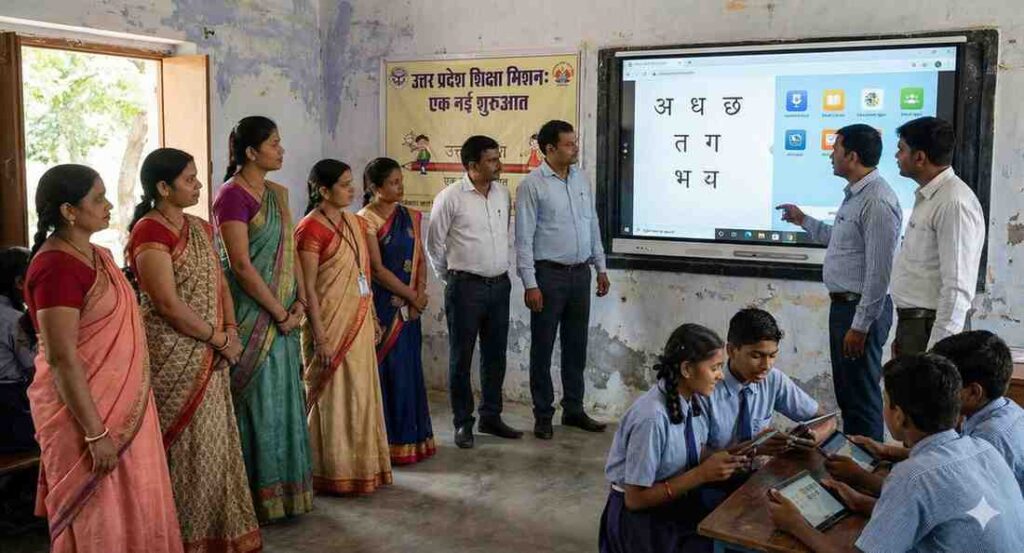
A System Under ScrutinyUttar Pradesh, home to over 20% of India’s school-going children, has undertaken ambitious educational reforms aimed at transforming its vast and often criticized education system. From modernizing infrastructure to introducing new curriculums, the state claims to be making strides in improving access and quality. But beneath the announcements and glossy statistics lies
A System Under Scrutiny
Uttar Pradesh, home to over 20% of India’s school-going children, has undertaken ambitious educational reforms aimed at transforming its vast and often criticized education system. From modernizing infrastructure to introducing new curriculums, the state claims to be making strides in improving access and quality. But beneath the announcements and glossy statistics lies a pressing question: Are these reforms driving real change, or are they just an exercise in optics?
The State of Education in Uttar Pradesh
Key Metrics (2023-24):
- Enrollment Numbers: Over 2.1 crore students are enrolled in government schools, accounting for the largest number of public school attendees in India.
- Dropout Rate: Reduced to 8.4% in secondary education, down from 17% a decade ago.
- Teacher-Student Ratio: Improved to 1:35, closer to the national average of 1:30 but still falling short in rural areas.
- Digital Learning Access: Only 30% of students in rural areas have access to digital resources for education, compared to 70% in urban regions.
The Promises of Educational Reform
1. Infrastructure Modernization
The Operation Kayakalp program has been instrumental in upgrading school infrastructure. Over 1 lakh government schools have been provided with basic amenities like functional toilets, clean drinking water, boundary walls, and electricity.
2. Curriculum Overhaul
The introduction of NEP 2020 (National Education Policy) guidelines has brought a competency-based curriculum to government schools, emphasizing skill development over rote learning. Early childhood care and education (ECCE) have been integrated into primary education.
3. Teacher Training
The state has initiated programs to upskill teachers through digital platforms like DIKSHA and periodic workshops, focusing on modern pedagogical techniques. Over 1.5 lakh teachers were trained in 2023 alone.
4. Digital Inclusion
Under the Digi Shakti Mission, the state has distributed tablets and smartphones to over 25 lakh students in higher education and secondary schools, aiming to bridge the digital divide.
5. Scholarships and Financial Assistance
Schemes like Kanya Sumangala Yojana and pre-matric scholarships for economically weaker sections have increased enrollment and retention rates among marginalized communities.
The Gaps in Implementation
1. Quality vs. Quantity
While enrollment numbers have surged, learning outcomes remain a concern. A 2023 ASER report revealed that only 46% of Class 5 students in rural UP can read a Class 2-level text, indicating a significant gap in foundational learning.
2. Teacher Shortages
Despite recruitment drives, over 50,000 teaching positions remain vacant, particularly in rural schools, leading to overcrowded classrooms and inconsistent learning experiences.
3. Digital Divide
The push for digital education through tablets and online platforms has overlooked infrastructure gaps. Many rural schools lack reliable electricity or internet access, rendering these initiatives ineffective for a large portion of students.
4. Bureaucratic Inefficiencies
Delayed fund disbursements and procedural hurdles have slowed the implementation of scholarship schemes and infrastructure upgrades, leaving many schools without promised resources.
5. Neglect of Vocational Training
While the curriculum now emphasizes skill development, vocational training remains underfunded and limited, with only 10% of secondary schools offering such programs.
Recommendations for Genuine Reform
1. Strengthening Foundational Education
- Focus on improving reading, writing, and arithmetic skills in primary education.
- Regularly assess and adapt teaching methods to bridge learning gaps identified in ASER and similar reports.
2. Bridging the Digital Divide
- Expand infrastructure for digital learning by providing reliable electricity and internet access in rural schools.
- Offer training programs for teachers and students to effectively utilize digital tools.
3. Filling Teacher Vacancies
- Expedite recruitment processes to address teacher shortages, especially in underserved regions.
- Introduce incentives for teachers to work in rural and remote areas, such as housing allowances and career growth opportunities.
4. Promoting Vocational Education
- Establish vocational training labs in secondary schools, with a focus on local industries like agribusiness, manufacturing, and IT.
- Partner with private sector companies to create internship opportunities for students.
5. Ensuring Accountability
- Implement robust monitoring mechanisms to track fund allocation and project completion timelines.
- Encourage community involvement through school management committees to ensure reforms address local needs.
Conclusion: Reform or Rhetoric?
Uttar Pradesh’s educational reforms represent a crucial step toward addressing the state’s long-standing challenges in access, quality, and inclusivity. Programs like Operation Kayakalp and digital inclusion initiatives show promise, but significant gaps in implementation and outcomes highlight the need for sustained efforts.
The true measure of these reforms lies not in enrollment numbers or infrastructure upgrades, but in the learning outcomes and life opportunities they provide for students. The question remains: Is Uttar Pradesh building an education system that empowers its youth, or are these reforms just a facade for deeper systemic issues? The answer will shape the state’s future for generations to come.










Leave a Comment
Your email address will not be published. Required fields are marked with *