





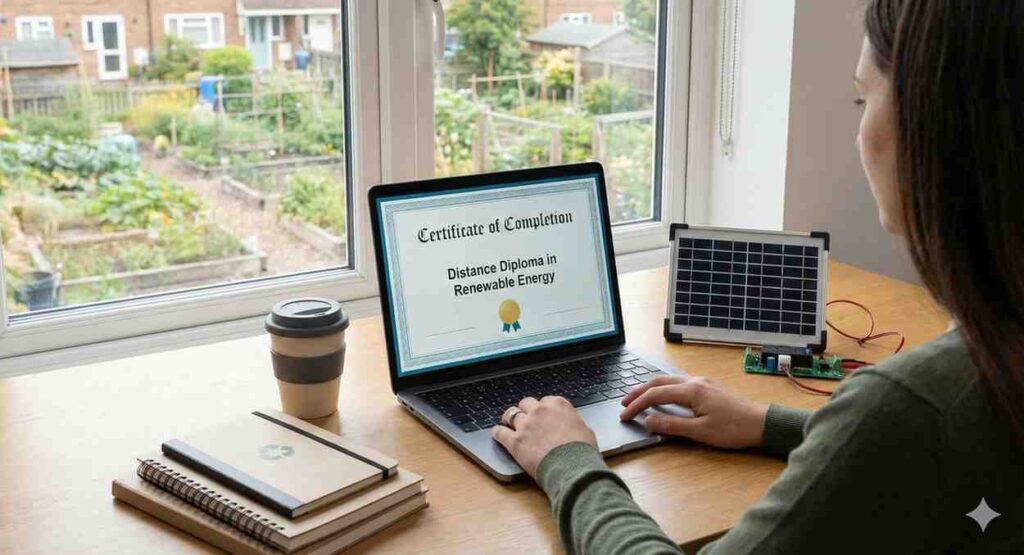
In the context of global challenges like resource constraints, environmental concerns, and the need for inclusive education, distance diplomas emerge as a sustainable approach to skill development. These programs not only address the educational needs of diverse populations but also align with the principles of sustainability by reducing the carbon footprint associated with traditional schooling.
In the context of global challenges like resource constraints, environmental concerns, and the need for inclusive education, distance diplomas emerge as a sustainable approach to skill development. These programs not only address the educational needs of diverse populations but also align with the principles of sustainability by reducing the carbon footprint associated with traditional schooling. Here’s a detailed look at why distance diplomas represent a sustainable and forward-thinking solution in today’s education sector.
1. Minimizing Environmental Impact
- Reduced Commute and Campus Resources: Distance learning significantly cuts down on the need for daily commutes and physical classroom spaces, which in turn reduces energy consumption and emissions related to transportation and campus operations. This environmental saving is crucial in the context of global efforts to reduce carbon footprints.
- Digital Material Over Paper: By using digital resources instead of printed materials, distance diplomas decrease paper consumption, contributing to forest conservation and waste reduction. This shift not only promotes environmental sustainability but also encourages a more dynamic and interactive learning experience.
2. Enhancing Resource Efficiency
- Optimized Resource Allocation: Distance learning allows educational institutions to serve more students without the corresponding increase in physical infrastructure. This efficiency makes better use of educational resources and can help in scaling quality education without the proportional environmental cost.
- Energy Efficiency: Virtual classrooms and digital resources are more energy-efficient compared to traditional educational methods that require physical spaces, heating, cooling, lighting, and so on, especially at scale.
3. Promoting Inclusivity and Accessibility
- Broadened Access: Distance diplomas make education more accessible to individuals in remote or underserved regions, promoting inclusivity and equality in educational opportunities. This broadened access is essential for building a more educated and skilled population without exacerbating social inequalities.
- Flexible Learning Opportunities: They provide opportunities for learners who might be unable to participate in traditional education due to disabilities, financial constraints, or other personal circumstances. This flexibility supports lifelong learning and continuous professional development, key components of a sustainable educational model.
4. Supporting Global Education Goals
- Alignment with SDGs: Distance education aligns well with several United Nations Sustainable Development Goals (SDGs), including Quality Education, Reduced Inequality, and Climate Action. By promoting an educational model that is both inclusive and environmentally friendly, distance diplomas contribute to these global targets.
- Cross-Border Education: They enable cross-border education without the carbon footprint associated with international travel, supporting cultural exchange and global education networks sustainably.
5. Long-Term Career Sustainability
- Skill Relevancy: Distance diplomas focus on providing up-to-date, relevant skills that are in demand in the job market, which can reduce the rate of unemployment and underemployment. Keeping skills relevant helps sustain careers over longer periods, reducing the economic and social costs of job turnover and retraining.
- Adaptive Learning Technologies: Utilizing advanced learning technologies, distance education can adapt more rapidly to changes in educational needs and practices, ensuring that the educational content remains relevant and sustainable over time.
Conclusion: Pioneering Sustainable Education
Distance diplomas are not just a practical solution for today’s learners; they are a pioneering approach in sustainable education. By reducing physical resource needs, extending accessibility, and promoting lifelong learning, these programs are shaping an educational future that is environmentally, economically, and socially sustainable. As we continue to confront global sustainability challenges, the role of distance education in fostering an adaptable and inclusive learning environment will be increasingly vital. This sustainable model points the way forward, promising a greener, more equitable world.








Leave a Comment
Your email address will not be published. Required fields are marked with *